Beyond Vision: How to Choose Glasses That Reshape Your Face
Glasses are architecture for the face. They can slim your jawline, straighten your nose, and balance your proportions. It's not just about seeing better—it's about looking better.
The Power of a Good Frame
A well-chosen pair of glasses is a powerful aesthetic tool. It can achieve results comparable to contouring makeup or even a new hairstyle:
Make the face look slimmer, longer, or shorter.
Modify eyebrow shapes (including "sad" eyebrows).
Make the nose bridge look straighter, narrower, or smaller.
Soften high cheekbones and improve facial contours.
Balance the "Three Courts" (facial proportions).
Brighten your complexion and enhance your temperament.
Wait, what is my Face Shape?
Before choosing a frame, you need accurate metrics. Is your mid-face long? Is your face square or round? Stop guessing.
Pros: High hardness, corrosion resistance, sleek look.
Cons: Can slip when sweaty.
Synthetic (Plastic, Acetate)
Pros: Lightweight, colorful, trendy.
Cons: Easier to break, softens with heat.
Natural (Wood, Horn)
Pros: Skin-friendly, unique texture, durable.
Cons: Can deform, expensive maintenance.
2. Frame Structures
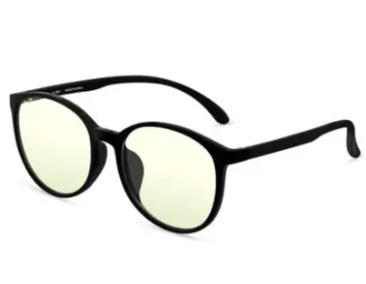
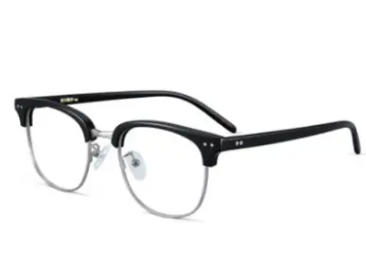
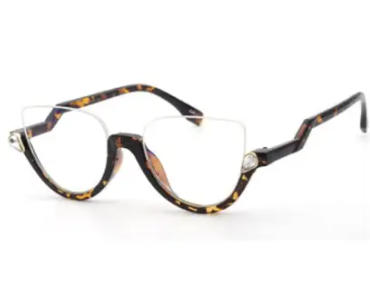
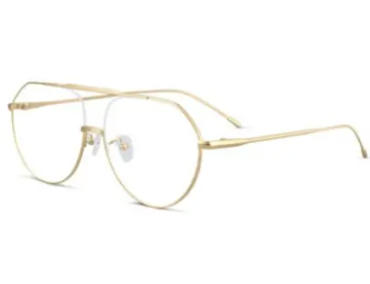
Frames generally fall into specific shapes: Rectangle, Trapezoid, Round, Oval, etc. Structurally, they are:
Full Rim
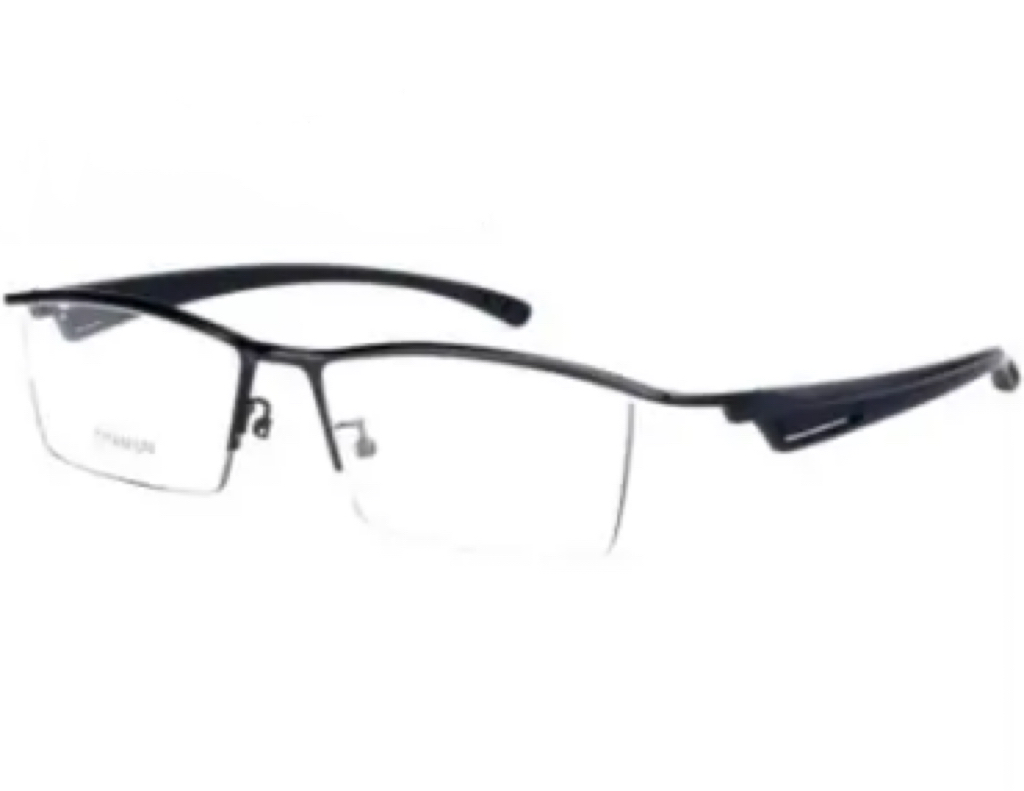
Semi-Rimless (Top)
Semi-Rimless (Bottom)
Double Bridge
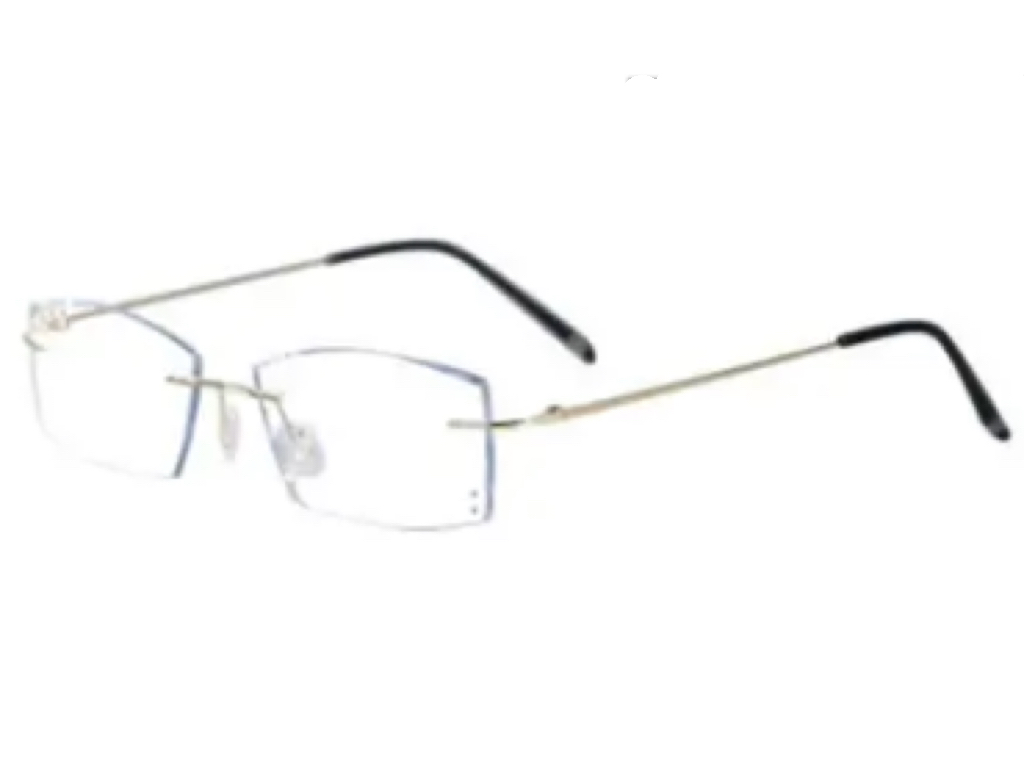
Rimless
Browline
3. General Face Shape Guide
Below is a general matching guide, but remember: this is just a starting point. For precision, we need to look at your specific metrics.
2
Matching by "Three Courts" (Proportions)
Golden Fitting Rule: The upper rim should not cover the eyebrows completely. The lower rim should not extend below the middle of the nose wing. The temples should not press too tightly against the head.
Upper Court (Forehead)
Too Long: Glasses have little effect here. Use bangs/hairstyle to cover this area.
Too Short: You can use Semi-Rimless (Bottom) frames to shift the visual center downwards. However, changing your hairstyle is still the most effective method.
Middle Court (Nose Area)
Glasses have the biggest impact here.
Too Long: Choose taller frames. The longer your mid-face, the taller the frame can be. Pay attention to the nose bridge design.
Too Short: If facial features feel crowded, choose rimless, thin frames, or frames without a lower rim to shift the visual center up and elongate the area.
Lower Court (Chin)
Too Long / Too Short: Shift the visual center upwards to emphasize the eyes and nose, distracting from the chin. Browline or Semi-Rimless (Top) frames are excellent for this.
3
Using Lines to Modify Face Shape
Position matters. Generally, glasses should sit middle-to-high on the face to lift the features. Never let glasses sit horizontally across the dead center of your face.
1. Repetition (Enhance)
Lines parallel to your features emphasize them. E.g., a straight top rim emphasizes straight brows. Warning: Don't repeat "bad" features. A square frame on a square face makes it look more square.
2. Extension (V-Shape)
Long, flat glasses widen the face. Choose frames with slightly uplifted outer corners (Cat-eye style) to create a visual "V-shape" and slimming effect.
3. Breaking (Correction)
Use a line to disrupt a flaw. For "Eight-shaped" (sad) eyebrows, choose a frame where the top rim cuts across the brow to break the drooping line. Curved lines work best here.
4. Contrast (Balance)
Opposites attract. A Square face needs Round frames to soften angles. An Oval frame is often the safest bet as it provides contrast without being too extreme.
5. Substitution
Using the glasses' bridge to visually replace or modify the appearance of your nose bridge.
4
Specific Solutions: Slimming, Brows & Nose
Goal: Make Face Look Slimmer & Longer
Use the outer frame to create a V-shape. Ensure the glasses sit in the upper-middle of your face. Raise the position of the nose bridge (on the glasses) to visually elongate the Middle Court. Ideal for Heart-shaped or Round faces.
Goal: Modify Eyebrows
Nice Brows: Use a frame that mimics their shape (Repetition) to highlight them.
Pale/Light Brows: Choose frames with a thick, dark upper rim to act as a substitute for bold brows.
Goal: Perfect the Nose
Wide Nose Tip: Choose a wider bridge angle (keyhole bridge) to make the nose tip look smaller.
Thin/Narrow Nose: Keep the bridge angle similar to your nose but slightly wider to add substance.
Flat/Low Nose: The frame's bridge should be high, positioned near the inner eye corners.
Wide Nose Wings: Choose acetate frames with integrated nose pads. Crucial: The nose pads must be low and invisible to avoid highlighting the width.
Start with Your Metrics
Choosing glasses is science, not luck. To apply these rules, you first need to know your exact face shape and proportions (Three Courts).