There is a specific silhouette that dominates the runways of Milan, the covers of international Vogue editions, and the campaigns of the world's most prestigious fashion houses. It is a face shape that defies the conventional pursuit of "perfect symmetry" and instead embraces a striking, vertical elegance: the oblong face. Far from being a styling challenge, your face shape is the "Supermodel Canvas"—a structural masterpiece designed for high-impact fashion statements and cutting-edge trends.
In the fashion capitals of 2026, the "long face" aesthetic is being celebrated with a fervor not seen since the heyday of the 90s supermodels. This guide is not about "correcting" your features; it is about mastering the art of balance, proportion, and architectural styling. We will explore why the oblong face is the darling of high fashion, decode the geometry that sets you apart, and reveal the specific trends—from the "Mob Wife" Italian Bob to the voluminous Butterfly Cut—that will define your look this year.
The Supermodel Silhouette
When casting directors scan for the next "It Girl," they are often subconsciously searching for the oblong face. Why? Because this shape acts as a hanger for fashion—it displays clothes, jewelry, and avant-garde makeup with an elegance that feels editorial rather than commercial. Think of the industry’s most enduring chameleons: Bella Hadid, Sarah Jessica Parker, and the iconic Kate Moss. All share that distinctive, elongated structure that photographers describe as "infinite canvas."
The power of the oblong face lies in its architectural integrity. Unlike rounder shapes, which can struggle with sharp, severe cuts, or square shapes that can clash with harsh geometry, the oblong face is a study in vertical lines. This means it can support—and indeed requires—hairstyles that introduce horizontal interest. The goal isn't to hide the length; it's to dress it. In 2026, the runways were dominated by looks that played with this verticality. At Balenciaga, models wore hair slicked back with severe precision, accentuating the length, while at Versace, voluminous waves expanded the silhouette outward.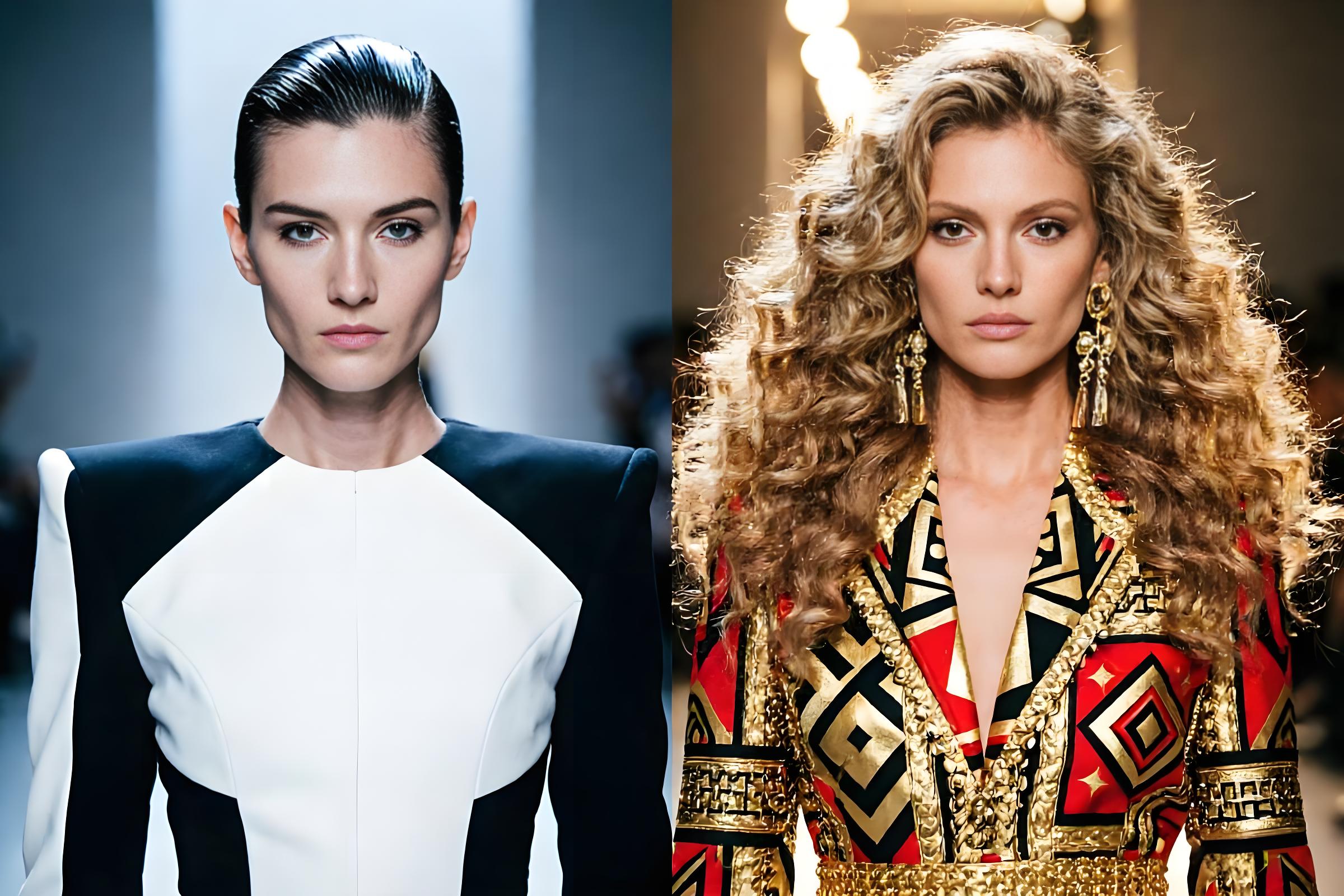
This shape allows you to carry off extremes. You can wear your hair scraped back into a severe ballet bun (a look that would widen a round face unflatteringly) because your features can handle the exposure. Conversely, you are the perfect candidate for the "Wall of Hair" look—thick, heavy curtains of hair that frame the face, a trend that has seen a massive resurgence on TikTok and Instagram, championed by the "Indie Sleaze" revival.
The Power of Architectural Styling
Architectural styling is about treating the hair as a structural element that interacts with your face's geometry. For the oblong face, this means understanding that you are building "out," not "up." Volume is your best friend, but it must be directed laterally. A stylist working with an oblong face thinks like an architect adding flying buttresses to a tall tower—they provide support and width, creating a balanced structure.
This is why the oblong face is so prized in high fashion. It is a shape that invites experimentation. You are not constrained by the need to "elongate" or "slim"—that work is already done by nature. Instead, you are free to play with volume, texture, and horizontal lines. You are the ideal candidate for the bold, the daring, and the transformative. This guide will show you exactly how to wield that power.
The Geometry of an Oblong Face
Before we can style, we must understand the architecture we are working with. The term "oblong" is often used loosely, but for a stylist, it has a precise geometric definition. Understanding these measurements will not only confirm your face shape but also explain why certain styles are recommended and others are strictly "off-limits."
The Width-to-Length Ratio
An oblong face is defined by a specific ratio: the length of the face is significantly greater than its width. While an oval face typically has a length-to-width ratio of about 1.5:1, an oblong face pushes this ratio further, often approaching 1.8:1 or even 2:1. To measure this at home, take a flexible tape measure. Measure the length from the center of your hairline to the tip of your chin. Then, measure the width at the widest point of your cheekbones. Divide the length by the width. If the result is significantly higher than 1.5, you have an oblong shape.
While both are "long," the rectangular face features a strong, angular jawline and a forehead of equal width, creating a boxy effect. The oblong face, conversely, often has a softer, more tapered jawline and cheekbones that may be the widest point, similar to an oval, but stretched vertically. This distinction is crucial: rectangular faces need softening, while oblong faces need widening.
The forehead, cheekbones, and jawline of an oblong face are usually in gentle alignment, but the sheer vertical distance between the hairline and chin is what sets this shape apart. You might notice that you have a high forehead—a feature common among the intellectual and the stylish. This vertical space is your primary styling real estate.
Understanding this geometry changes how you approach the salon. You are not looking for styles that add height—this would only exacerbate the length. Instead, every decision should be filtered through one question: Does this add horizontal interest? Whether it's through bangs that cover the forehead (effectively shortening the face visually) or layers that flair out at the cheeks, your geometry dictates your style.
2026 Trend: The 'Italian Bob'
If there is one hairstyle that defines 2026, it is the "Italian Bob." This blunt, chin-length cut has swept through the fashion world, hailed as the "Holy Grail" for oblong faces. It is the cornerstone of the "Mob Wife Aesthetic"—a trend that embraces excess, luxury, and unapologetic glamour. For the woman with an oblong face, this cut is not just a style; it is a structural miracle.
Why the Italian Bob is the Holy Grail
The genius of the Italian Bob lies in its geometry. It ends precisely at or slightly below the chin, drawing a strong horizontal line across the face. This line visually "breaks" the verticality of the oblong shape, creating the illusion of width and balance. It is blunt—there are no wispy ends—which adds weight and density, preventing the face from looking "dragged down."
The "Mob Wife Aesthetic" popularized by TikTok and high-end editorial spreads has redefined luxury hair. It is big, it is styled, and it is often paired with heavy bangs. The Italian Bob fits perfectly into this. It is not the "wash-and-go" bob of the 2010s. It is a styled bob, often blow-dried under at the ends to create a volumous curve that expands the cheekbone area. This "underflip" is crucial for oblong faces, as it pushes the silhouette outward, counteracting the length.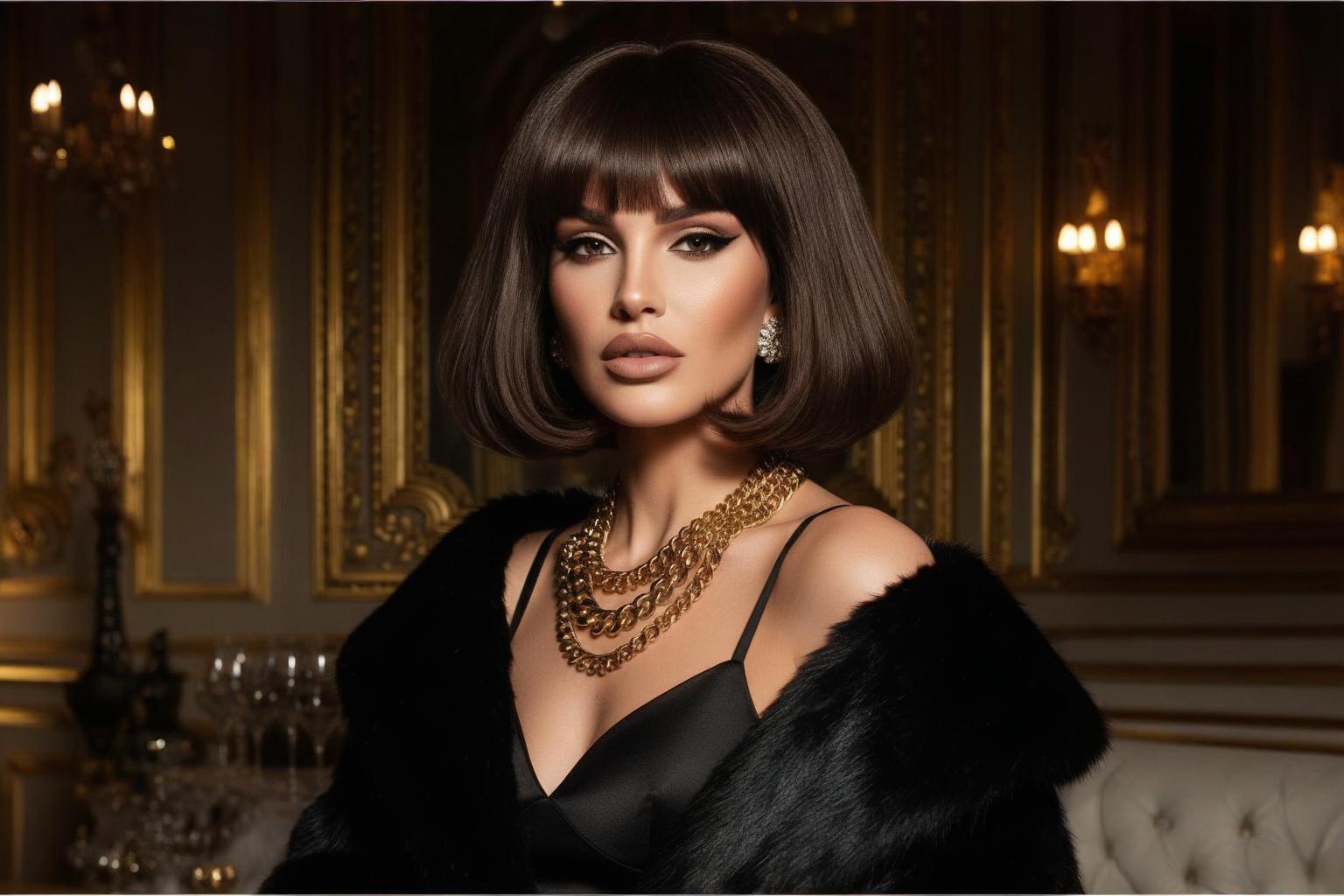
Styling for Horizontal Volume
To maximize the potential of the Italian Bob for an oblong face, volume is non-negotiable. The hair should not lie flat against the skull. Instead, use a round brush during your blow-dry to lift the roots and roll the ends under. This creates a "ball" of volume at the sides. Products are your allies here: a volumizing mousse at the roots and a shine spray on the mid-lengths will give you that high-gloss, expensive finish.
Variations of this trend include the "Texture Italian Bob," which incorporates subtle waves to add even more width. However, for the true Mob Wife look, sleek, shiny, and blunt is the gold standard. It is a confident, powerful cut that says you understand the architecture of your face and know how to dress it.
Medium Lengths & The Butterfly Cut
While the bob offers a bold statement, medium-length hair remains the most versatile option for many. For the oblong face, 2026's obsession with 90s-inspired layers—specifically the "Butterfly Cut"—is a match made in styling heaven. This cut is all about movement, volume, and, most importantly, "wings" of hair that extend the visual width of the face.
The 2026 Obsession with 90s Layers
The Butterfly Cut, popularized by celebrities like Jennifer Lopez and Zendaya, is essentially a modern shag with a specific intent: to create volume that flairs out from the face. It features shorter layers that cascade from the cheekbone down, blending into longer lengths. The name comes from the way the layers "flutter" and expand outward, mimicking the shape of butterfly wings.
For an oblong face, this outward flair is transformative. Where long, one-length hair would hang vertically (emphasizing length), the butterfly layers are cut to encourage the hair to flip outwards. This adds instant width to the cheekbone area, which is often the widest part of the oblong face but can look narrow if the hair falls flat.
"The Butterfly Cut is essentially architecture for the face. We are building a structure that expands outward. For oblong faces, it is the easiest way to create balance without sacrificing length." — Celebrity Hairstylist, Vogue 2026
The "Wings" Effect
The key to this cut is the face-framing layers. These should hit right around the cheekbone and be styled to curve away from the face. This creates a shadow and depth that mimics the width of a wider face shape. It is visual trickery at its finest. To style, use a large-barrel curling iron or round brush to direct the hair away from the face, focusing on the mid-lengths. The ends can be styled either under or flipped out, depending on whether you want a more polished or "bouncy" look.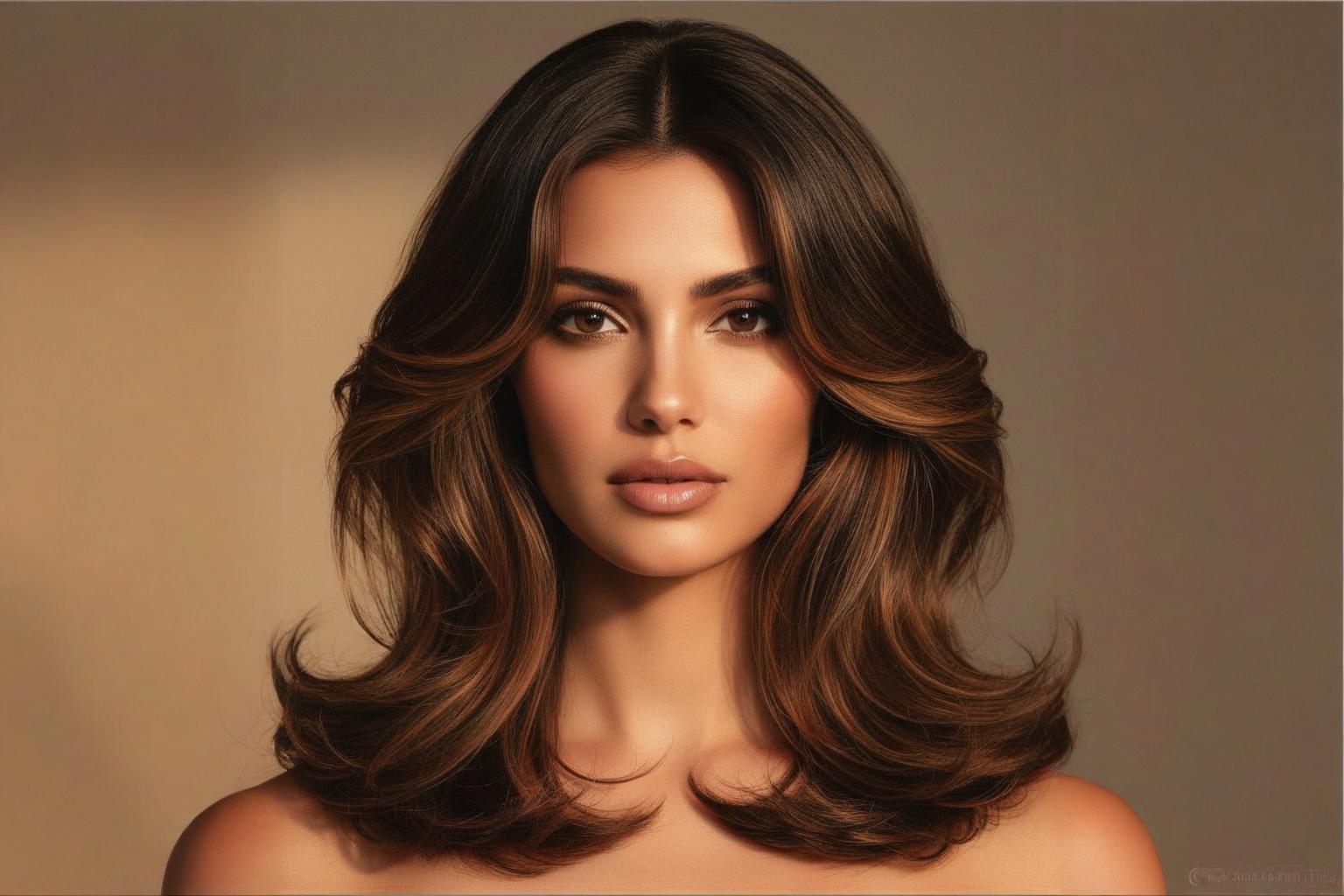
This cut also ties into the "Old Money" and "Quiet Luxury" trends, offering a look that is polished and expensive but not overly styled. It moves with you, creating a dynamic silhouette that ensures your face shape never feels static or severe.
Long Hair & The "Volume Rule"
Long hair is a timeless aspiration, but for the oblong face, it comes with a critical warning label. Length without volume is the single most common mistake made by those with this face shape. Long, pin-straight hair that lies flat against the head is a "vertical offender"—it creates a continuous line that visually stretches the face even further. However, long hair is far from off-limits; it simply requires adherence to the "Volume Rule."
Mermaid Waves vs. Flat Hair
Mermaid waves—loose, tousled curls that begin around the ear and cascade down—are the gold standard for long hair on oblong faces. These waves create a wide silhouette. They force the hair to expand horizontally, occupying space on the sides of the face rather than just the front and back. This is the difference between a style that "drags" and one that "dresses."
The "Volume Rule" states that for every inch of length past the shoulders, you must add a corresponding element of horizontal texture. If your hair is very long (past the bra line), it should not be one-length. It needs long, subtle layers that allow the ends to have movement and "fluff." Hair that is too heavy at the bottom will pull the silhouette down, creating a narrow, elongated look.
The Horizontal Texture Checklist
- ✓ Waves should start at the cheekbone or ear level, not just at the ends.
- ✓ Use a volumizing spray at the roots to prevent the "flat top" effect.
- ✓ Avoid center parts that split the face vertically; opt for a slight side part or "zigzag" parting.
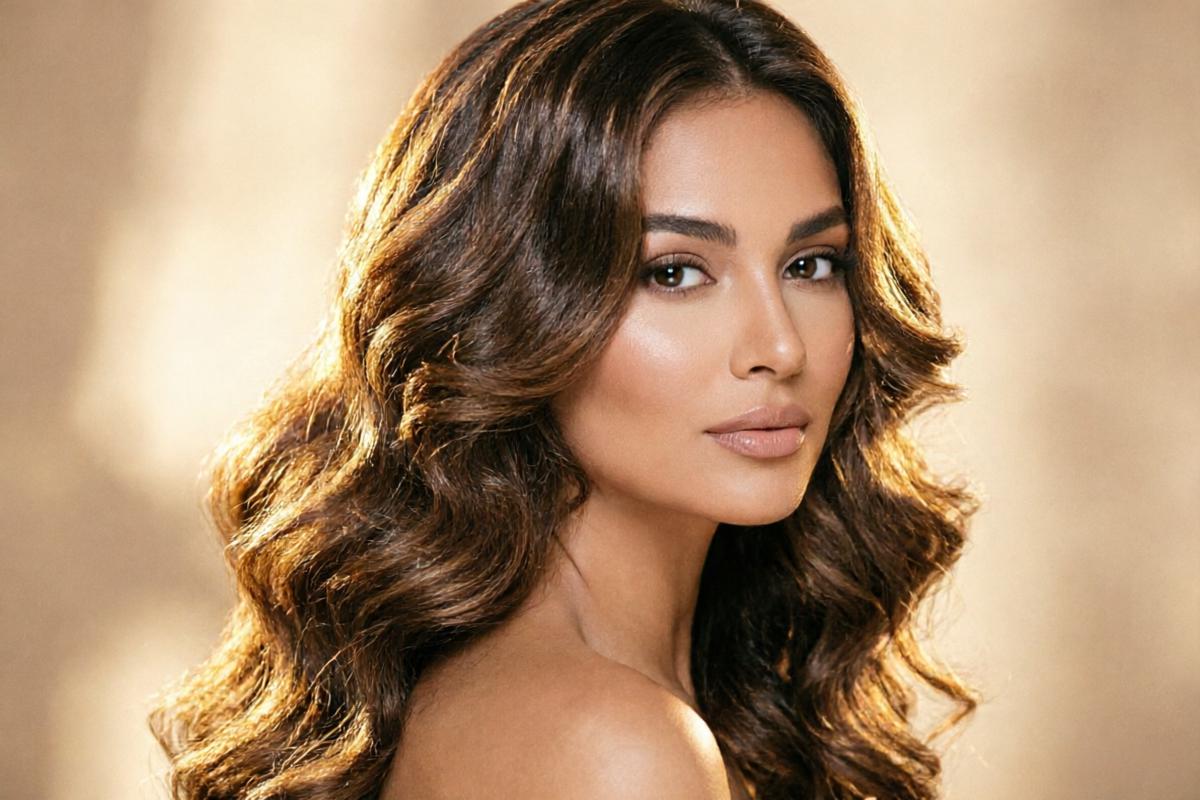
Styling long hair for an oblong face is about building a foundation. Velcro rollers at the crown (while your makeup sets) are a non-negotiable pro tip. They lift the roots, ensuring that the volume starts at the top and continues down. Flat roots with wavy ends can look disjointed; you want a seamless expansion of volume from root to tip.
Bangs: The Ultimate Face-Shortener
If there is a secret weapon in the arsenal of oblong face styling, it is bangs. No other feature can so dramatically and instantly alter the perceived geometry of the face. By covering a portion of the forehead, bangs visually shorten the face length, bringing the ratio closer to the ideal oval. But not all bangs are created equal. For 2026, the trends are bold, thick, and statement-making.
From Heavy Blunt to "Birkin Bangs"
The "Mob Wife" and "Indie Sleaze" revivals have brought heavy, blunt bangs back into the spotlight. A thick, straight-across bang that hits at or below the eyebrow is the most powerful tool for shortening a long face. It draws a hard horizontal line, essentially "chopping off" the upper portion of the vertical length. This creates a sense of mystery and intensity.
For those seeking a softer approach, 2026's "Birkin Bangs" (inspired by Jane Birkin) offer a piece-y, eyelash-skimming alternative. These are thick like curtain bangs but cut straight across and texturized to be wispy. They provide coverage but with movement. They are less severe than a full blunt bang but still effectively reduce the visual length of the forehead.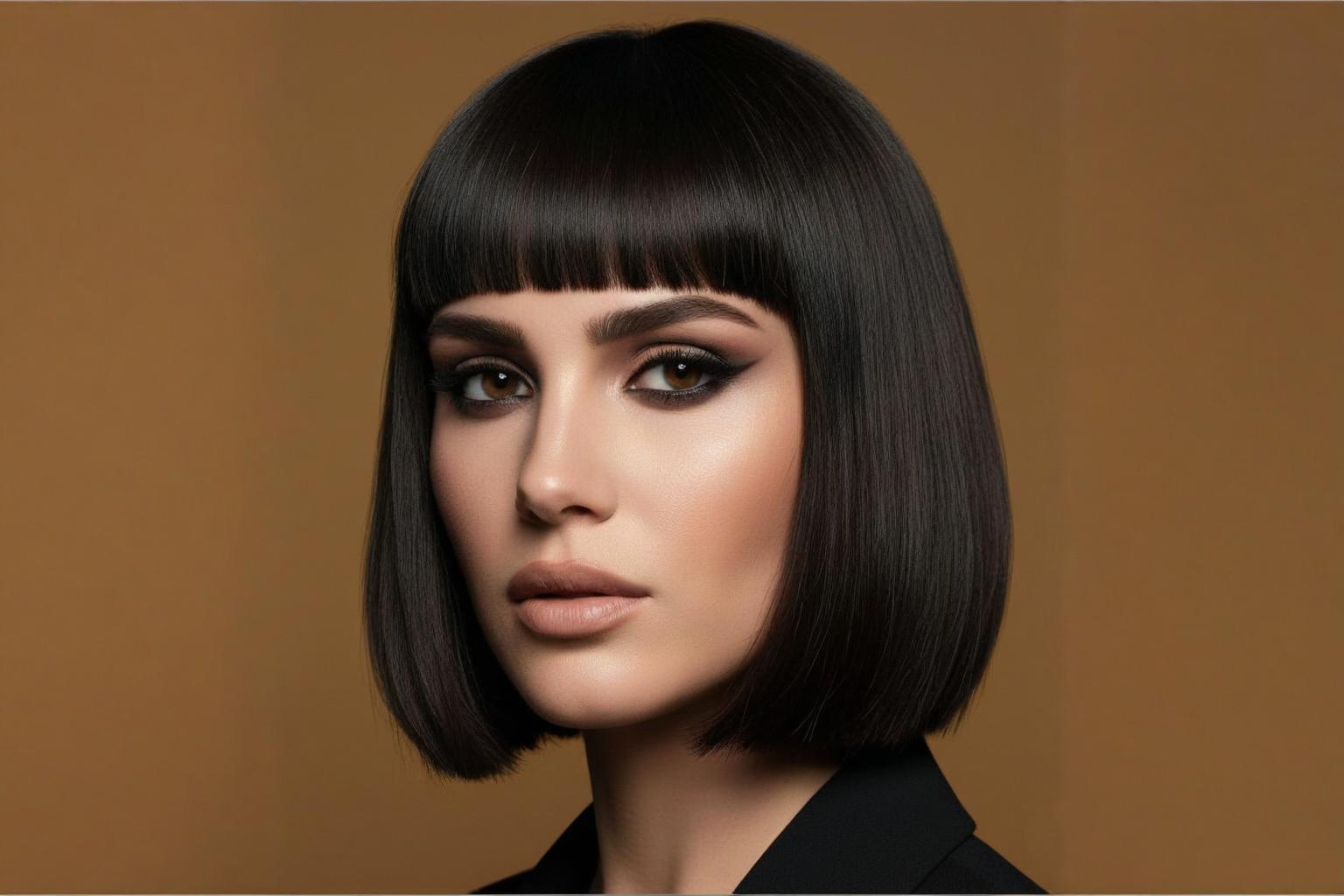
The Visual Trickery
The mechanics are simple but effective. By concealing the hairline and a portion of the forehead, you are visually "ending" the face higher than it actually is. The eye of the viewer is forced to start at the brows or eyes, rather than the hairline. This resets the proportions instantly.
Curtain bangs are also an option, but they must be styled correctly. Unlike for round faces (where curtain bangs are often used to elongate), for oblong faces, they should be cut slightly shorter and fuller at the root to add height on the sides, creating an "A-line" effect that adds width. The worst option for oblong faces? Wispy, see-through bangs that do not provide enough coverage to impact the vertical length.
Men's Style: Taming the Length
For men with oblong faces, the styling philosophy mirrors that of women, but with masculine application: add width, avoid excessive height. The goal is to create a square-ish or oval illusion. The male oblong face is often characterized by a long forehead and a narrow chin, making the choice of cut vital for balancing the masculine silhouette.
The Textured Crop and Side-Parts
The "Textured Crop" is a modern classic that works exceptionally well for oblong faces. It features short back and sides with length left on top, but—crucially—the top hair is styled forward and slightly to the side or messy. This adds "bulk" to the top and sides without creating vertical height. A side-part, where the hair is swept across the forehead, introduces a diagonal line that breaks the verticality and can cover a portion of the forehead.
The "Fringe" (or "Caesar Cut" influence) is also highly effective. A textured fringe that sits on the forehead shortens the face and adds a youthful, contemporary edge. This is seen in many K-Pop and European runway trends for 2026.
Beard Grooming and the "No-Go" Pompadour
Facial hair is a powerful tool for men with oblong faces. A beard can add bulk to the jawline, effectively widening the lower face. A full beard that is kept slightly longer on the sides than at the chin point will make the face appear more square. Avoid beards that are shaped into a "point" at the chin, as this only adds more length.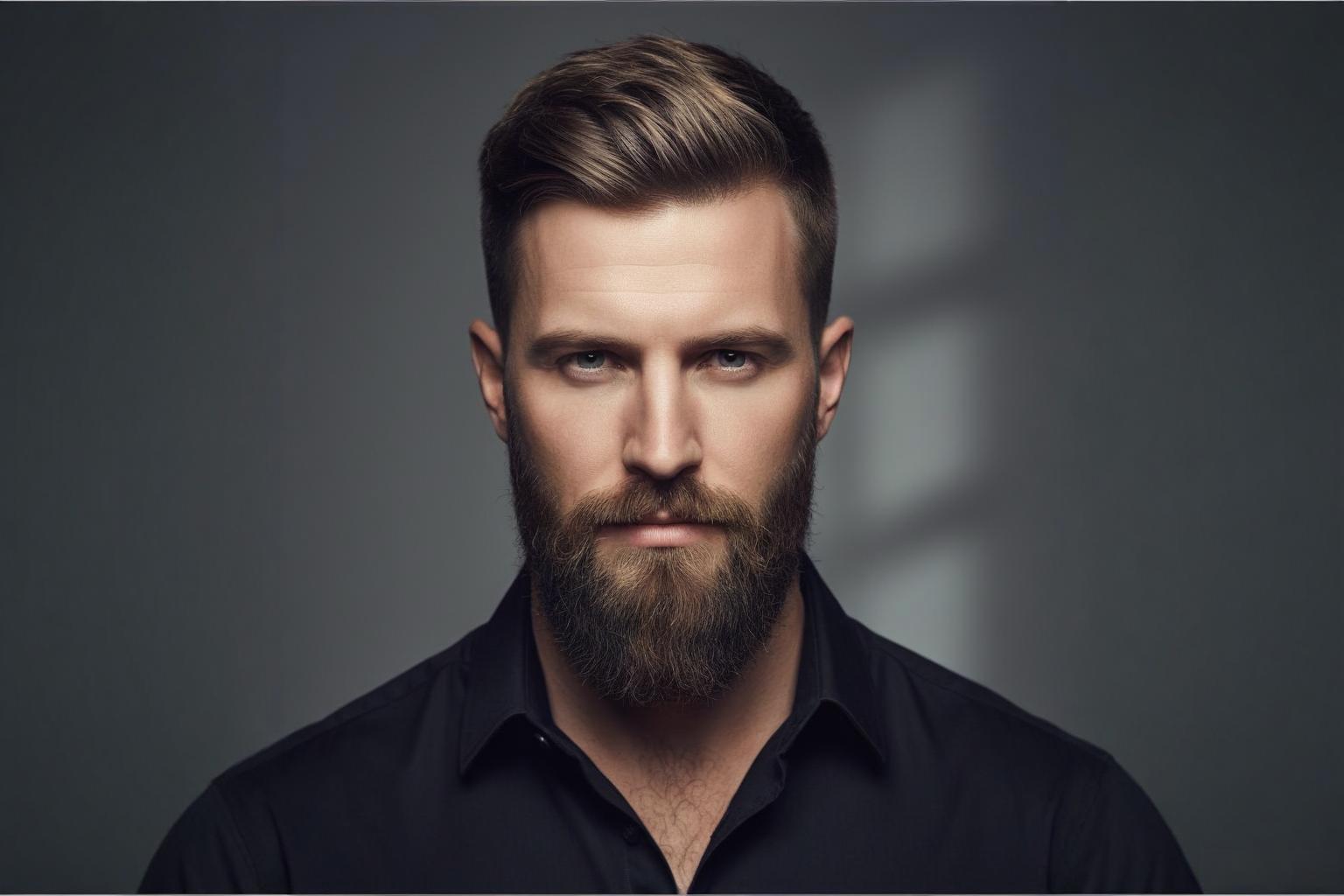
The biggest mistake a man with an oblong face can make is the classic "Pompadour" or "Quiff." Styles that sweep hair upwards add significant height, which is the exact opposite of what the oblong face needs. While the vintage look is trendy, it will only exaggerate the length of your face. Instead, keep the styling flat or forward-focused.
Styling Mistakes to Avoid
Even with the best intentions, certain styles will work against the oblong geometry. These are the "vertical offenders"—styles that draw the eye up and down or flatten the silhouette. Recognizing these pitfalls is just as important as knowing the trends.
The High Top-Knot
Sweeping all hair to the very top of the head adds vertical height and exposes the full length of the face. It is the most unflattering style for this shape. A low, loose bun at the nape is a better alternative.
The Sleek Center-Part Ponytail
A tight ponytail with a center part creates a vertical line down the middle of the head, slicing the face in half and emphasizing its narrowness. A side part or a ponytail with volume at the crown is a quick fix.
Pin-Straight, One-Length Hair
As discussed, "curtain" hair that lies flat is the enemy. It creates a "drape" effect. Even if you want straight hair, use a flat iron to curve the ends slightly outward or add a root-lift product.
The common thread among these mistakes is that they all either add height or remove width. The fix is almost always to "fluff" the sides, lower the style (e.g., a lower bun), or introduce a horizontal element like bangs or a side-sweep.
Occasion Styling
Special occasions demand updos and formal styling, areas where the oblong face often feels challenged. But with the right approach, your formal hair can be your most stunning asset. The rule for updos is simple: think wide, not high.
Bridal Updos: The Low Chignon
For brides or formal events, the high ballerina bun is a common request but a poor choice for oblong faces. Instead, opt for a low, wide chignon. This style sits at the nape of the neck and can be styled to fan out horizontally. It creates an elegant, horizontal base that balances the face. Leave a few soft tendrils or waves framing the face at the sides—this adds the necessary width and softness.
Festival Hair: Boho Width
Festival styles often involve braids and half-up looks. The key here is to use braids as a "headband" across the forehead or crown (adding a horizontal element) rather than braids that go straight back. A "crown braid" that sits like a halo adds width to the top of the head. Half-up styles should be teased at the crown to create volume, not pulled tight.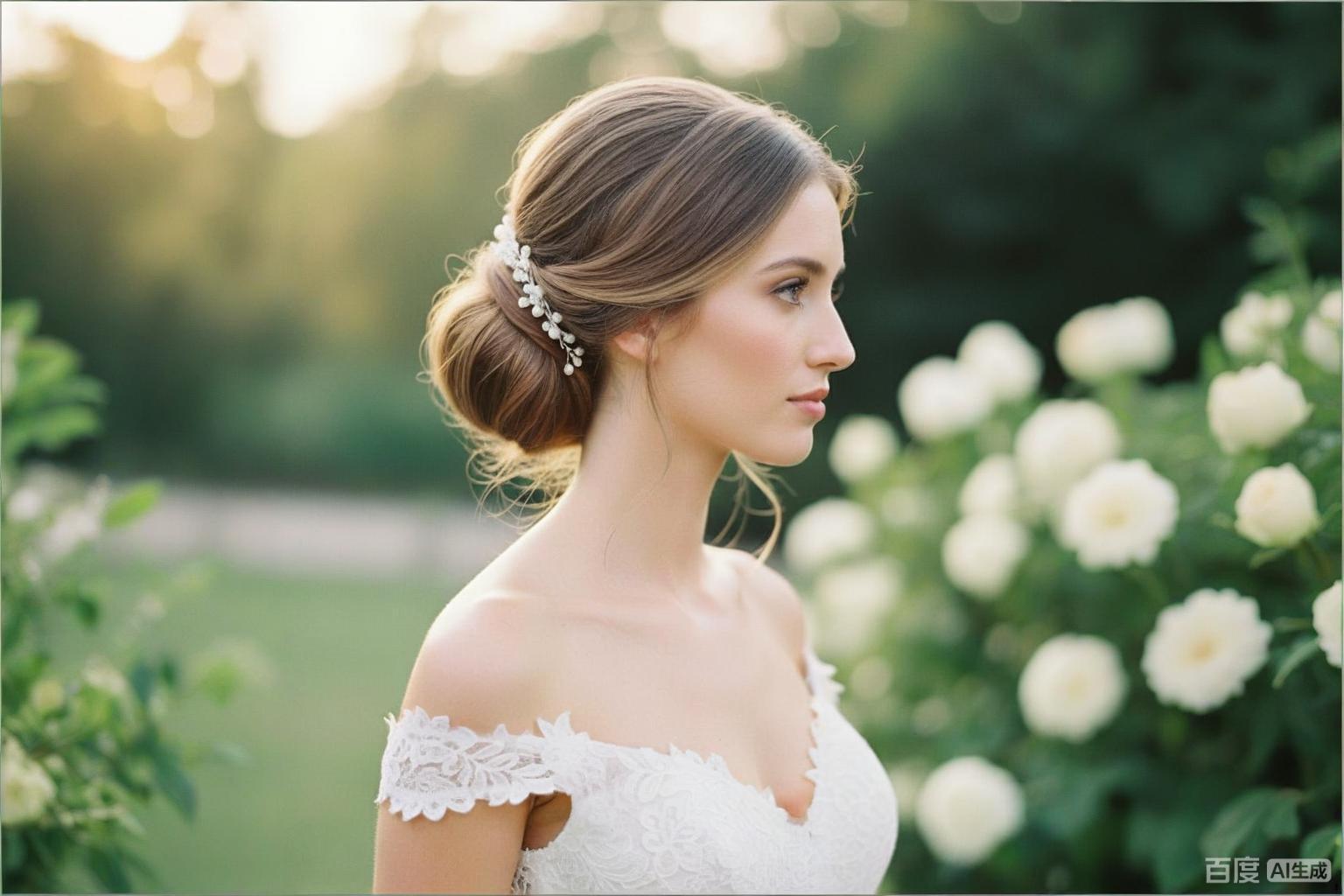
Accessories are your friend. A wide headband, a tiara worn across the forehead (boho style), or large earrings can all draw the eye outward, creating the illusion of width. Always remember: your hairstyle is an accessory to your face shape. Make it work for you, not against you.
The AI Revolution in Personal Styling
The fashion industry has always relied on the expert eye of a stylist to navigate face shapes and trends. But in 2026, a new consultant has entered the salon: Artificial Intelligence. We are witnessing a paradigm shift in how we discover and commit to our looks, and for those with oblong faces, this technology is nothing short of revolutionary.
Neural Networks for Your Hair
AI Hair Studio (https://www.aihair.studio) has pioneered a platform that uses advanced neural networks to solve the biggest problem in hairstyling: the "imagination gap." Clients with oblong faces often struggle to visualize how a "widening" style like a Butterfly Cut or Italian Bob will actually look on them. Magazine photos are of models with different face shapes; salon consultations rely on rough sketches or verbal descriptions.
The AI works by analyzing the geometry of your uploaded photo. It identifies the specific measurements of your face—detecting the oblong ratio—and then renders hairstyles with photorealistic accuracy. It doesn't just paste a wig onto your photo; it simulates how the hair falls, how the volume interacts with your head shape, and how the light hits the texture. For oblong faces, this means you can see exactly how much width a style will add, and whether a specific set of bangs will successfully "shorten" your forehead.
Why AI is Essential for the Oblong Face
The oblong face has a lower margin for error. A style that adds too much height is instantly unflattering. AI allows you to:
- Preview horizontal volume before you cut.
- Compare "with bangs" vs. "without bangs" side-by-side.
- Simulate texture changes (curly vs. straight) to see which adds better width.
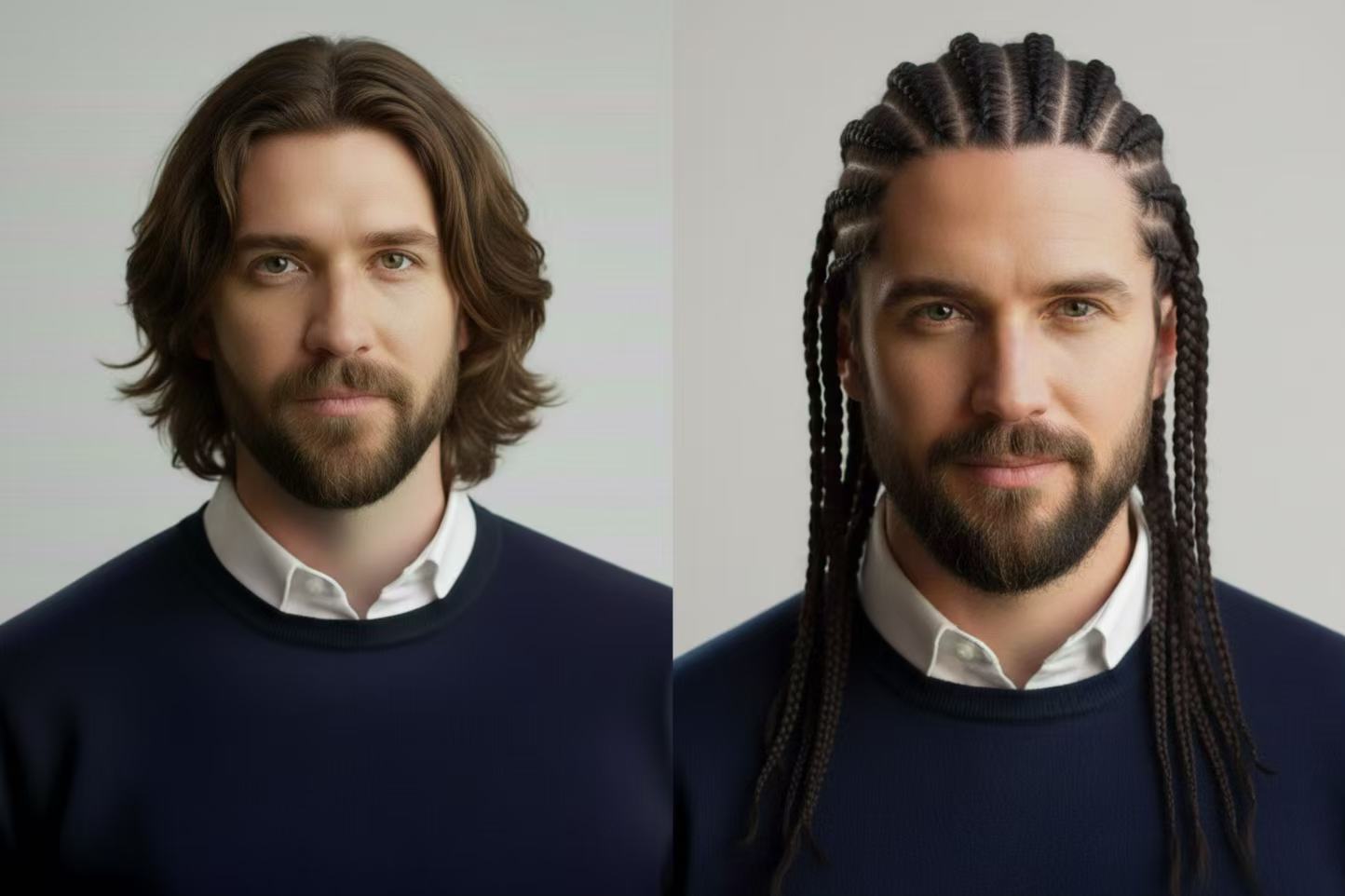
This technology empowers you to walk into a salon with confidence. You are no longer at the mercy of a stylist's whim or your own uncertainty. You can show your stylist a photorealistic image of exactly what you want, tailored to your face. It is the end of "salon regret" and the beginning of intentional, architectural styling. Visit AI Hair Studio to begin your transformation.