If you've ever stood in front of a mirror, hairbrush in hand, wondering why some hairstyles make you look like a red carpet ready celebrity while others leave you feeling less than inspired — the answer might be simpler than you think. It all comes down to your face shape, and if you're among the lucky ones with an oval face, you've hit the genetic jackpot.
The oval face shape is often called the "ideal" by hairstylists, makeup artists, and beauty editors alike. But what does that actually mean for you? It means that virtually every hairstyle, from the boldest pixie cut to the most dramatic long layers, has the potential to look stunning on you. The oval face is the chameleon of face shapes — adaptable, balanced, and endlessly versatile.
In this comprehensive guide, we'll explore the science behind why oval faces are so harmonious, teach you exactly how to measure and confirm your face shape, and walk you through hundreds of hairstyle options tailored specifically for your features. Whether you're considering a dramatic transformation or simply want to understand why your current style works (or doesn't), this guide will be your definitive resource.
The "Holy Grail" of Face Shapes
Walk into any high-end salon in New York, Paris, or Milan, and mention that you have an oval face shape. Watch the stylist's eyes light up. There's a reason for that unmistakable spark of excitement — you've just handed them a blank canvas, and every artist dreams of a perfect canvas.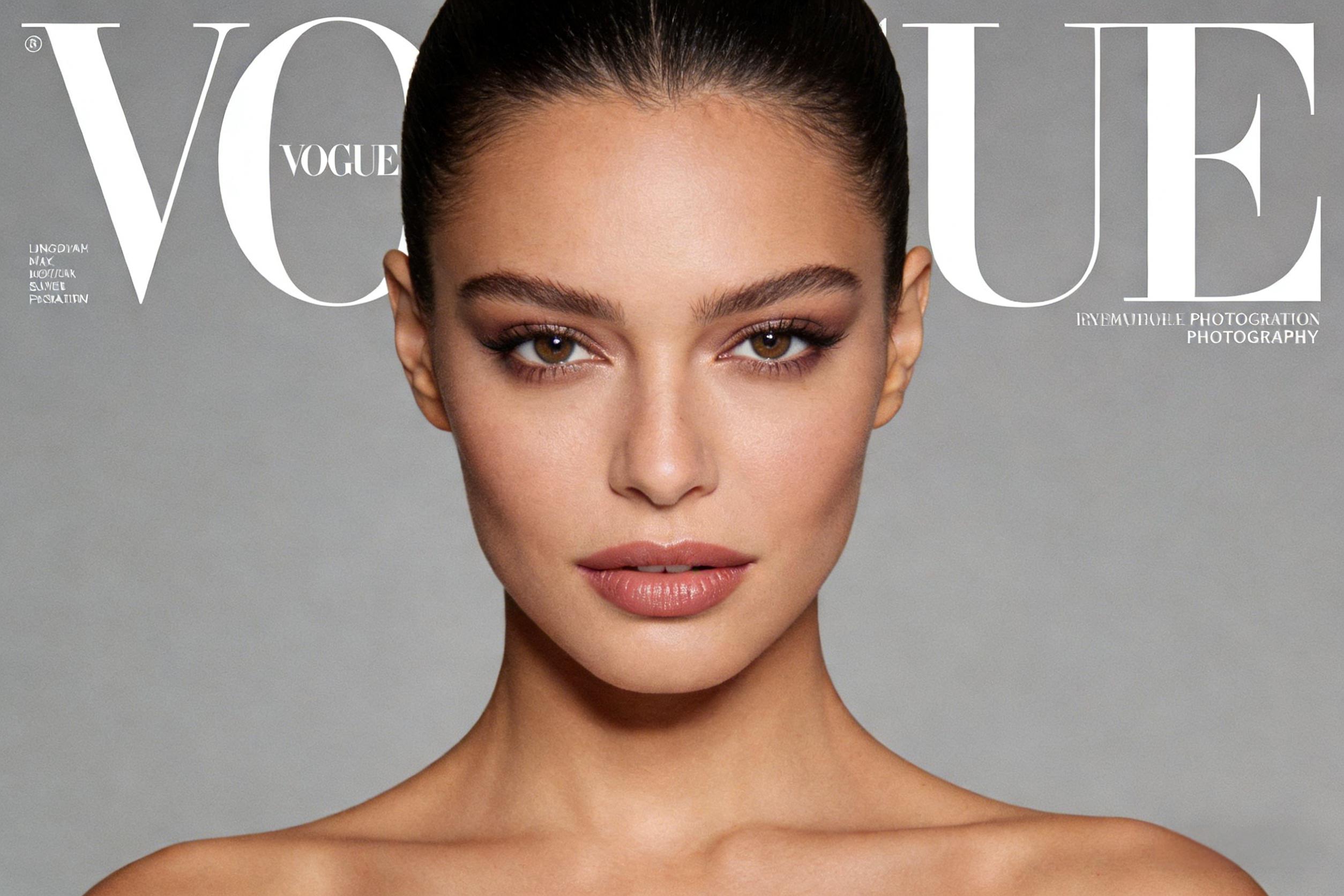
But what exactly makes the oval face so prized in the beauty industry? The answer lies in a fascinating intersection of mathematics, psychology, and aesthetic theory that has influenced art and beauty standards for over two thousand years.
The Golden Ratio and Facial Harmony
The ancient Greeks discovered something profound about human perception: we find certain proportions inherently pleasing. They called it the "Golden Ratio" (approximately 1.618:1), and this mathematical principle appears throughout nature, architecture, and yes — the human face. The oval face shape naturally embodies these proportions in ways that other face shapes require styling tricks to achieve.
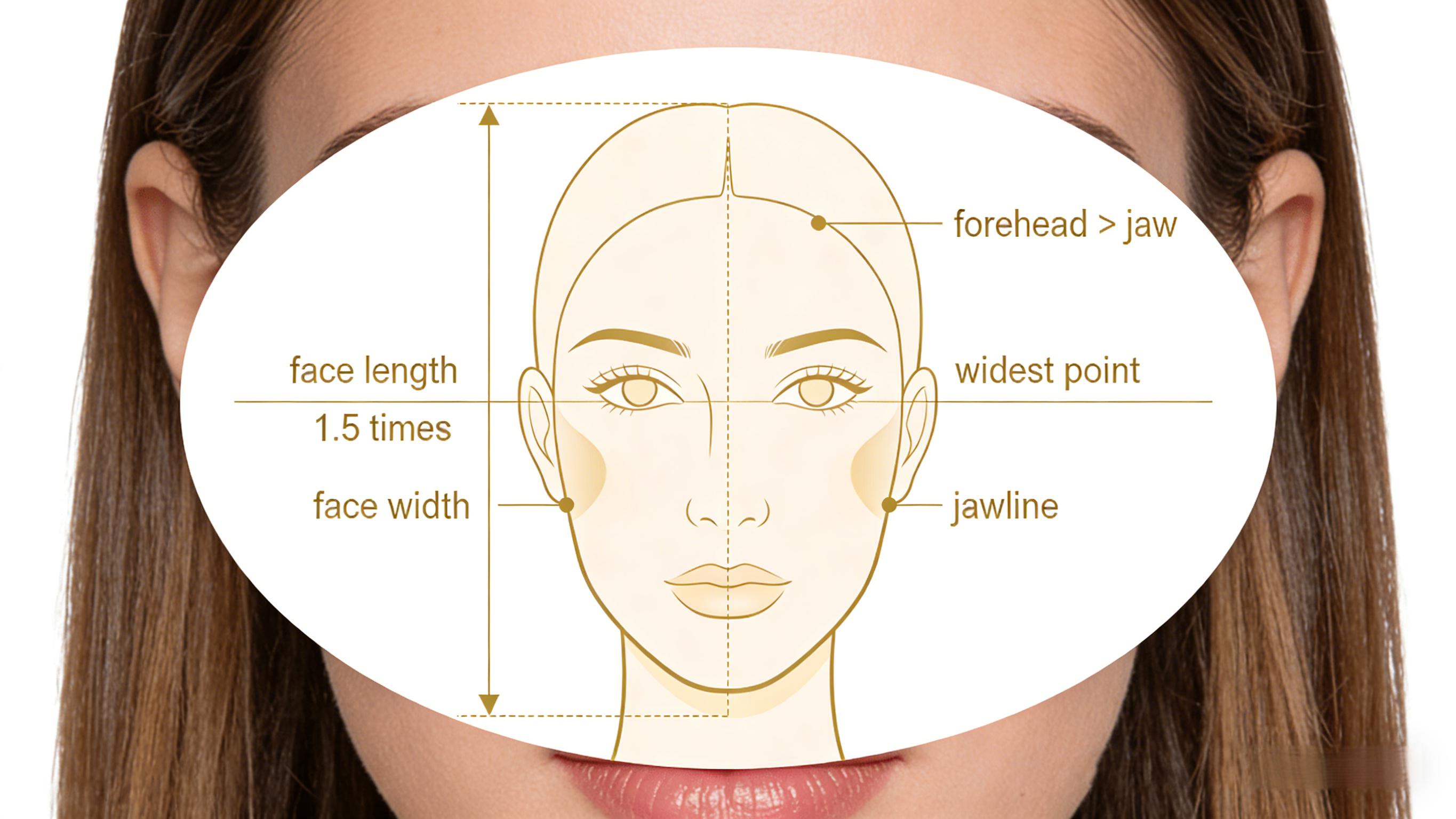
When we analyze an oval face mathematically, we find that the length is approximately one and a half times the width. The forehead is slightly wider than the chin, and the cheekbones are the widest point of the face. This creates a gentle, natural taper that guides the eye smoothly from top to bottom without any jarring interruptions.
"The oval face is the only shape where I can honestly say to a client: 'What do you want to try?' rather than 'Here's what will work for you.' It's creative freedom." — Celebrity Hairstylist, New York Fashion Week
Why Stylists Celebrate the Oval
For hairstylists, every face shape presents a puzzle. Round faces need lengthening. Square faces need softening. Heart-shaped faces need balance at the jaw. Long faces need the illusion of width. But the oval face? It needs nothing — which means it can have everything.
This doesn't mean that every hairstyle looks identical on every oval-faced person. Hair texture, density, color, and personal features all play crucial roles. But the fundamental architecture of the face — the canvas upon which hairstyles are painted — provides no limitations. A pixie cut won't make your face look too round. Long layers won't drag your features down. A center part won't create harsh angles.
The Celebrity Proof
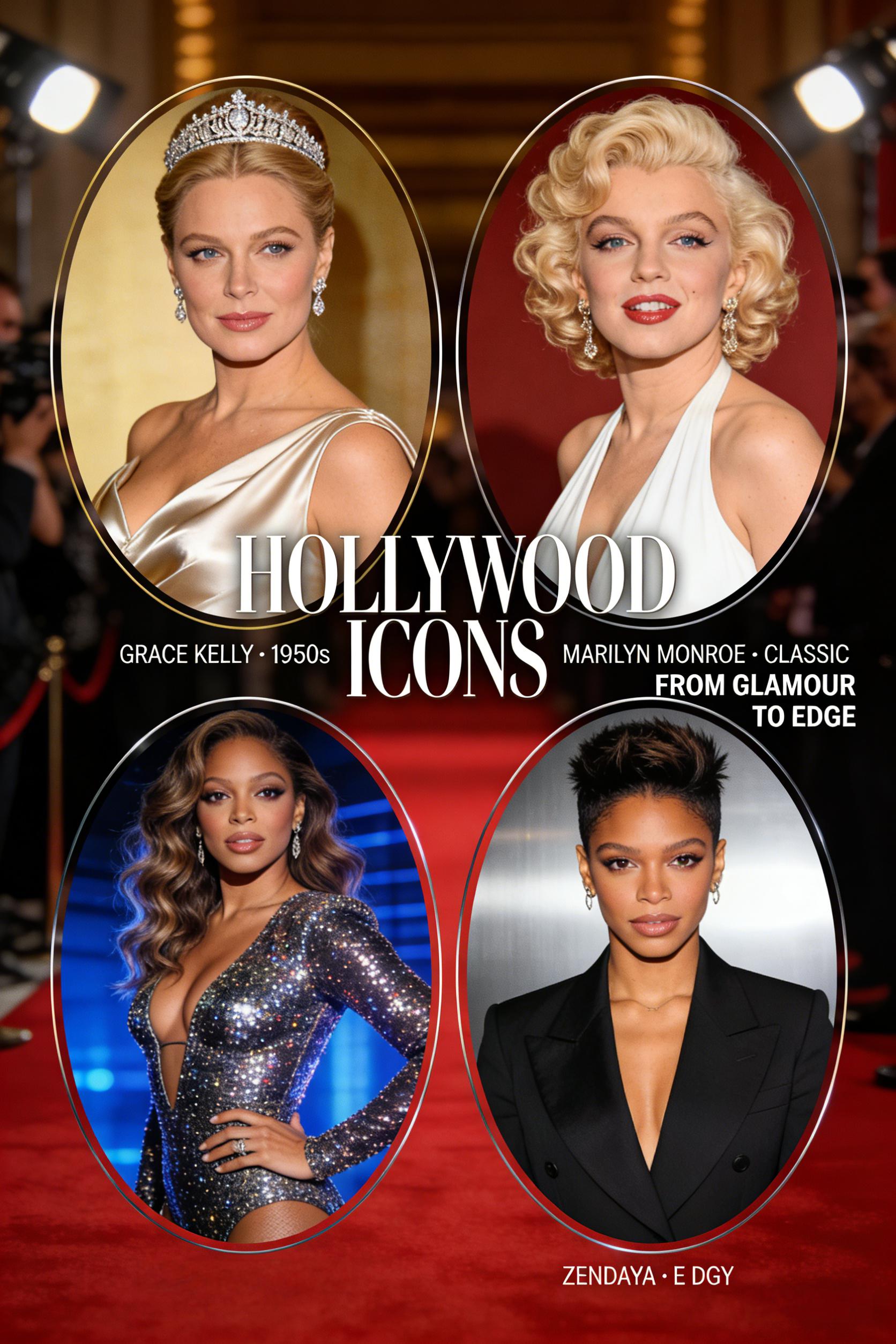
Look at the faces that dominate magazine covers, movie screens, and fashion runways. A disproportionate number share this coveted shape. From classic Hollywood icons like Grace Kelly and Marilyn Monroe to contemporary stars like Beyonce, Meghan Markle, and Zendaya, the oval face has been a constant through decades of changing beauty standards.
What's particularly striking is the range of hairstyles these celebrities have successfully worn throughout their careers. The same face that looked stunning with a sleek bob can effortlessly transition to beach waves, a dramatic updo, or a closely cropped pixie. This versatility isn't coincidence — it's the natural advantage of balanced proportions.
How to Identify an Oval Face
Before we dive into styling recommendations, let's confirm that you indeed have an oval face shape. While many people assume they know their face shape, studies show that up to 60% of people misidentify their face shape when guessing. Let's bring some scientific precision to this determination.
The Measurement Method
You'll need a flexible measuring tape and a mirror. If possible, have a friend assist for the most accurate results. Take all measurements with your hair pulled completely away from your face.
Step-by-Step Measurement Guide
- 1Forehead Width: Measure across the widest part of your forehead, typically halfway between your eyebrows and hairline. Record this number.
- 2Cheekbone Width: Measure from the peak of one cheekbone to the peak of the other, just below the outer corner of each eye.
- 3Jawline Width: Measure from the tip of one jaw corner to the other, following the curve under your chin.
- 4Face Length: Measure from the center of your hairline to the tip of your chin, straight down through the center of your face.
Interpreting Your Measurements
For a classic oval face, your measurements should reveal these characteristic relationships:
- Face length exceeds width by approximately 1.5 times. If your face length is 9 inches, your width should be around 6 inches.
- Cheekbones are the widest point of the face, followed by a gentle narrowing at the forehead and jaw.
- The jawline is softly curved rather than angular or sharply pointed.
- Forehead width is slightly wider than the jawline, creating a gentle egg shape when viewed head-on.
Visual Assessment Tips
If you don't have a measuring tape handy, there are visual indicators you can check. Pull your hair completely back and take a selfie directly facing the camera. Trace the outline of your face on the photo with your finger or a digital tool. If the shape resembles an egg standing upright — wider at the top, gently tapering to a soft curve at the chin — you likely have an oval face.
Remember: very few faces are mathematically perfect. You might have a slightly longer oval (sometimes called an "oblong" face) or a slightly wider oval. The principles in this guide will still apply, with minor adjustments that we'll note throughout.
Short Hairstyles: From Bold Pixies to Italian Bobs
Short hair has long been associated with confidence, boldness, and a certain je ne sais quoi that turns heads. For oval-faced individuals, short styles represent an opportunity to showcase those balanced proportions without the "safety net" of length. Let's explore the short hairstyle universe and discover why each works harmoniously with your face shape.
The Classic Pixie Cut
No short hairstyle makes a statement quite like the pixie. Originally popularized in the 1950s by Audrey Hepburn and later revolutionized by Twiggy, Winona Ryder, and more recently, Zendaya and Florence Pugh, the pixie cut is the ultimate "face-framing" style because it leaves almost nothing to hide behind.
For oval faces, the pixie is particularly flattering because it puts those balanced proportions front and center. Where a round face might appear rounder with a pixie (requiring added height or texture on top to elongate), and a square face might emphasize angularity (needing softer edges), the oval face simply shines. The natural symmetry of your features becomes the focal point.
Fine Hair Pixie Strategy
If you have fine hair, opt for a textured pixie with longer layers on top. This creates the illusion of volume and movement. Ask your stylist for point-cutting rather than blunt cuts — the feathered edges add dimension that fine hair sometimes lacks.
Thick Hair Pixie Strategy
Thick hair can become unruly in short styles. Request substantial texturizing and perhaps an undercut at the nape. The undercut reduces bulk while maintaining the appearance of fullness on the surface. Consider a slightly longer pixie variation that allows for styling versatility.
The Italian Bob: Sophistication Redefined
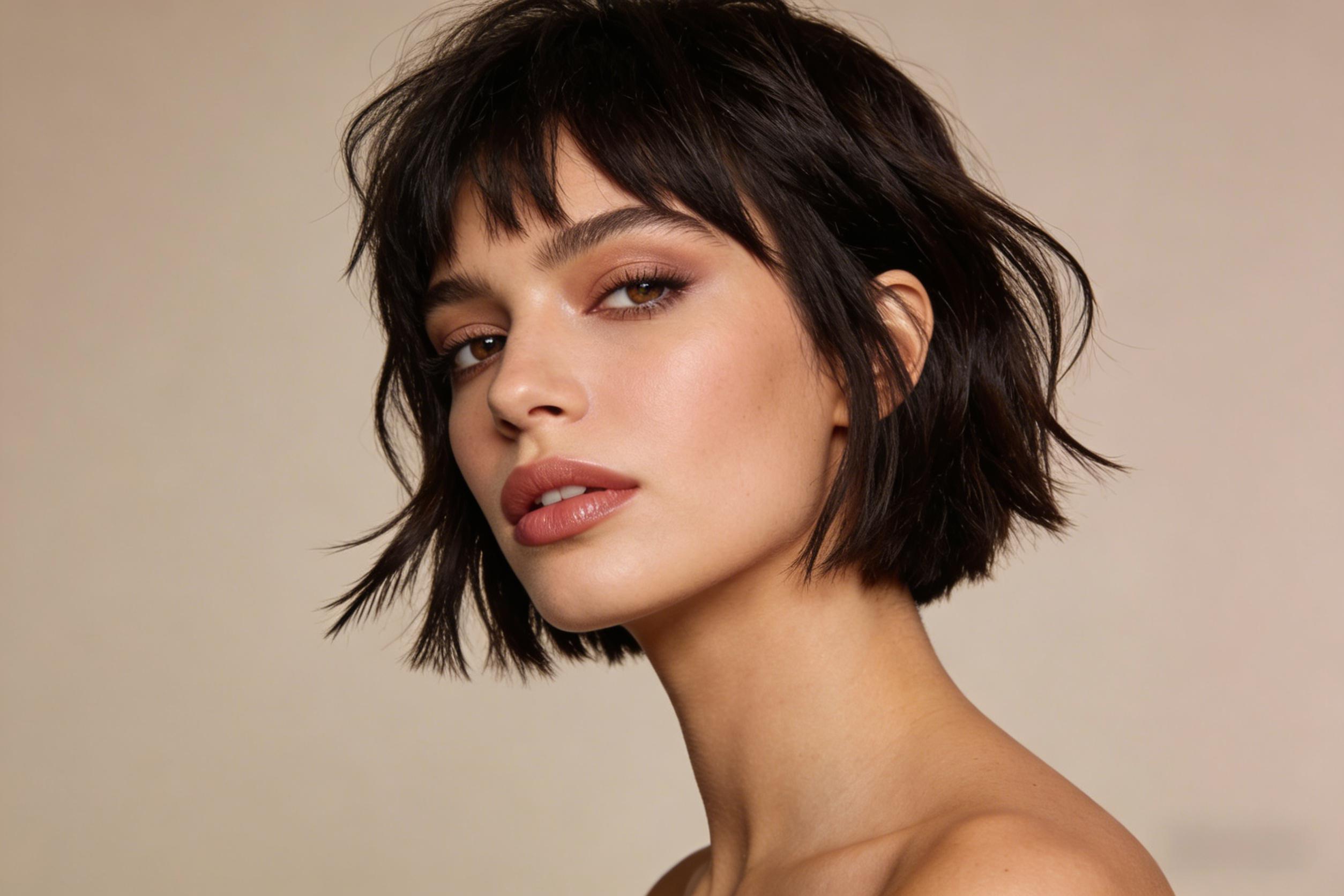
The "Italian bob" has emerged as one of the most coveted short styles of recent years, and for good reason. This chin-grazing cut, typically falling somewhere between the jawline and chin, combines effortless European sophistication with modern edge. Think of iconic images of Italian cinema — the effortless glamour that seems to say "I woke up like this."
What makes the Italian bob particularly suited to oval faces is its length. Falling at or near the chin, it creates a horizontal line that subtly widens at the jaw area. For other face shapes, this can be problematic — a square jaw might appear boxier, a round face might lose definition. But for the oval face, this gentle horizontal emphasis simply highlights the face's natural balance without disrupting proportions.
The Italian bob typically features blunt ends (which create a sense of density and health) with subtle layering near the face for movement. It works beautifully with air-dried texture or can be polished smooth for a more formal aesthetic. Many stylists recommend a slight tuck-under at the ends using a round brush, creating a soft curve that mirrors the oval shape of the face.
The French Bob: Shorter, Edgier, Effortless
Slightly shorter than its Italian cousin, the French bob typically falls at jaw level or even slightly above, often paired with bangs (more on those in Chapter Six). This is the style that says you have better things to do than spend hours on your hair — and yet somehow looks impossibly chic.
The French bob's cheekbone-grazing length is particularly strategic for oval faces. By hitting right at or near the cheekbones (the widest point of the oval face), the cut accentuates your best structural feature. It's a subtle highlighting technique using hair instead of makeup.
"When a client with an oval face sits in my chair and asks for a short cut, I genuinely get excited. I know that whatever we do will work. It's just a matter of what vibe they want to project." — Lead Stylist, Paris Salon
The Textured Crop
For those who want short hair but aren't ready for a pixie's drama, the textured crop offers a perfect middle ground. This style typically features longer layers on top (sometimes long enough to sweep across the forehead) with shorter, tapered sides and back. The key word is "texture" — this isn't a sleek, sculpted look but rather one that embraces movement and natural hair patterns.
Oval faces benefit from the textured crop's versatility. The length on top can be styled forward, back, to the side, or even in a small pompadour for events. Because your face shape doesn't require length to create balance, you can play with these styling variations without worrying about whether they "work" with your features.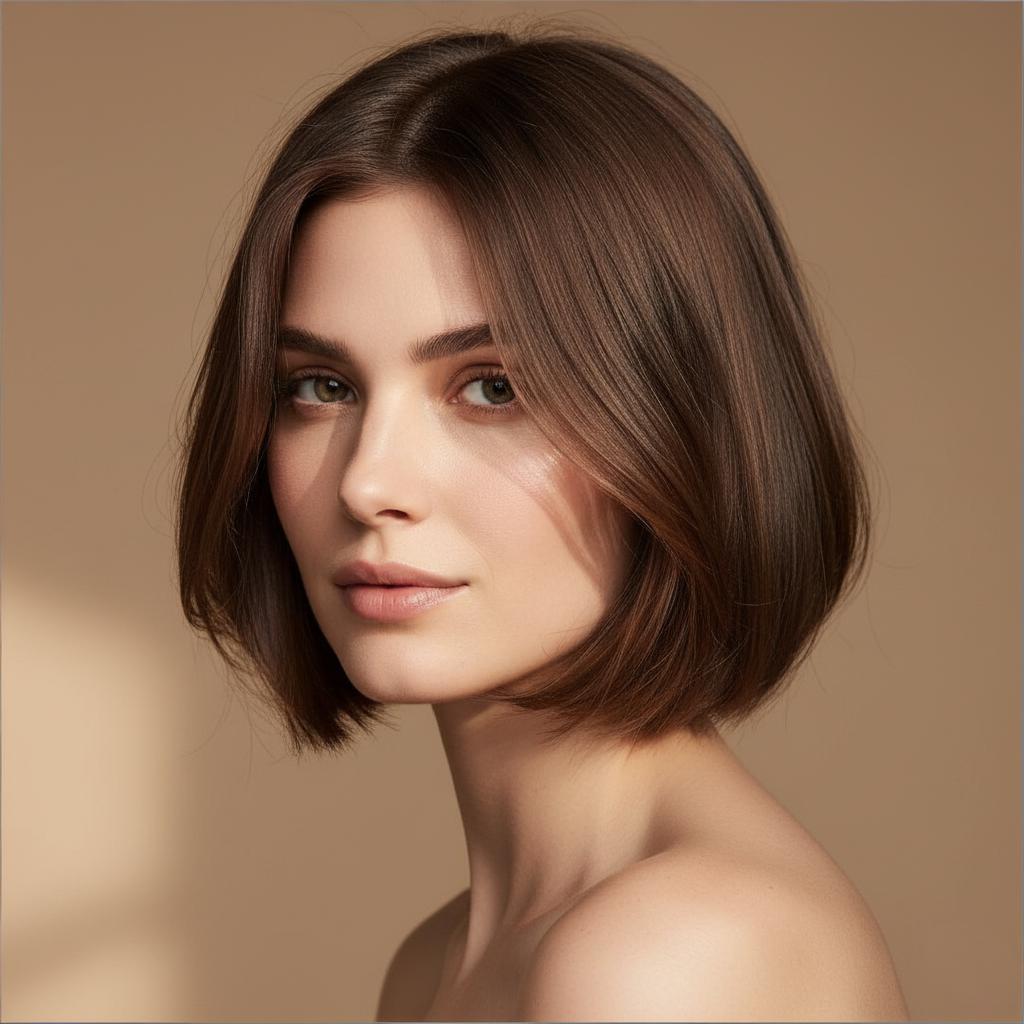
The Modern Shag: Short Edition
The shag haircut has undergone a massive revival, and the short shag (sometimes called the "wolf cut" when it blends shag elements with a mullet silhouette) offers a rock-and-roll aesthetic that's surprisingly wearable for oval faces. The layered, piece-y nature of this cut adds dimension and movement without requiring length.
For oval faces, the shag's face-framing layers are particularly complementary. Where other face shapes need to carefully consider where layers hit (avoiding widening effects on round faces, softening angles on square faces), oval faces can embrace any layer configuration. Curtain-style face-framing layers? Perfect. Choppy, piece-y layers? Equally stunning. The oval face is the shag's ideal partner because it offers no structural limitations.
Consider your hair texture when choosing a short style: fine hair benefits from blunter cuts that preserve density at the ends, while thick hair thrives with substantial texturizing and potentially an undercut to manage bulk. Your oval face will support either approach beautifully.
Medium Lengths: The Power of the 'Lob' and Shags
Medium-length hair occupies a sweet spot in the hairstyling world — long enough to pull back, short enough to manage easily, versatile enough for countless styling options. For oval faces, medium lengths offer the best of all worlds: the face-framing benefits of short cuts with the styling flexibility of longer hair.
The Long Bob ("Lob"): Modern Classic
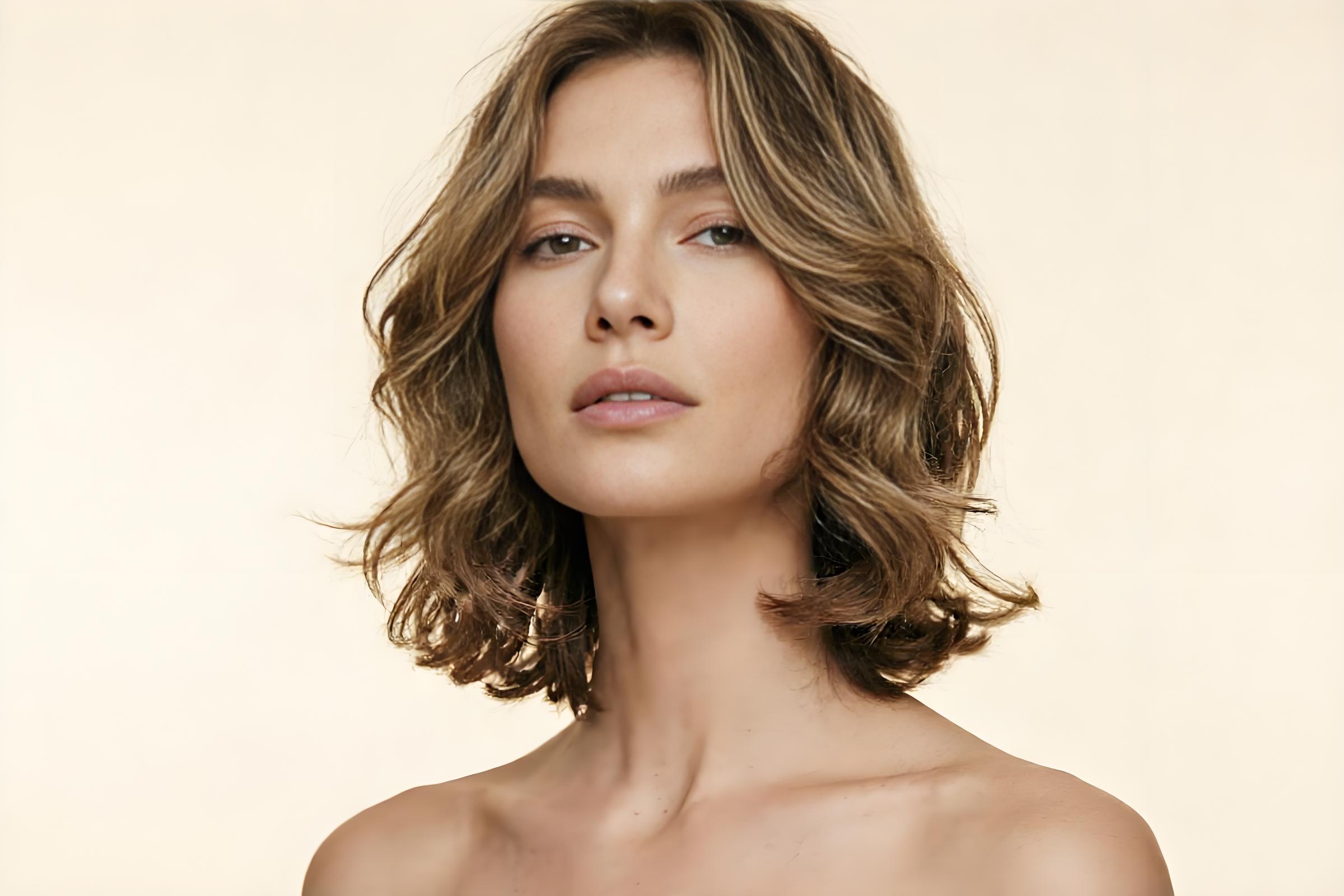
If there's one hairstyle that has defined the past decade of hair trends, it's the lob. Falling anywhere from collarbone to shoulder-blade length, the lob offers the sophistication of a bob with the versatility of longer hair. It's the style that launched a thousand Pinterest boards and Instagram saves — and for good reason.
For oval faces, the lob is particularly strategic. The length — typically falling below the chin — ensures that the horizontal line of the cut doesn't interfere with the face's natural taper. Instead, the lob creates a vertical line that subtly elongates the neck and draws attention downward, highlighting the balanced proportions of the oval shape.
Blunt Lob
Clean, sharp ends create an illusion of thickness
Layered Lob
Movement and dimension for all textures
A-Line Lob
Shorter back, longer front for modern edge
The Modern Shag: Medium Length
The medium-length shag deserves its own spotlight. This layered, feathered style has ancient roots (think Jane Fonda in Klute, Stevie Nicks in her prime) but has been thoroughly modernized for today's aesthetic. The result is a cut that looks lived-in, effortless, and impossibly cool.
What makes the shag work so well for oval faces is its face-framing architecture. The layers cascade around the face, creating a soft frame that highlights your features. For oval faces, this framing effect enhances rather than corrects — you're not trying to elongate or widen, you're simply adding another layer of visual interest to an already balanced canvas.
The shag's natural texture emphasis is particularly beneficial if you have wavy or curly hair. This cut is designed to enhance your natural pattern rather than fight it. Air-drying becomes a legitimate styling option, and "messy" becomes a deliberate aesthetic choice rather than a bad hair day.
The Butterfly Cut: 2020s Innovation
A relatively recent addition to the hairstyling lexicon, the butterfly cut has taken social media by storm. This style features heavy layering that creates a "butterfly wing" effect — shorter layers around the face that blend into longer layers at the bottom, creating volume and movement that seems to defy gravity.
The butterfly cut is particularly flattering for oval faces because it maintains length while adding substantial volume at the crown and around the face. This volumizing effect is purely additive for oval faces — it doesn't need to compensate for any structural imbalances, so it simply adds drama and dimension.
"The butterfly cut was made for the oval face. The way the layers frame the face, the volume at the crown, the movement — it's like the style was designed with this face shape in mind." — Editorial Hairstylist, Vogue
Styling Versatility: The Medium Advantage
Perhaps the greatest advantage of medium-length hair is its styling versatility. You can wear it down for a casual brunch, curl it for an evening event, pull it into a half-up style for the office, or even create a surprisingly elegant updo for formal occasions. This flexibility is particularly valuable for oval-faced individuals because you're not limited by face-shape considerations.
Consider these styling options for your medium-length hair: smooth and sleek for professional settings (using a flat iron and shine serum), beachy waves for casual weekends (using a curling wand with a large barrel and texturizing spray), or a blowout with volume at the roots for special occasions. Your oval face will support all of these equally well.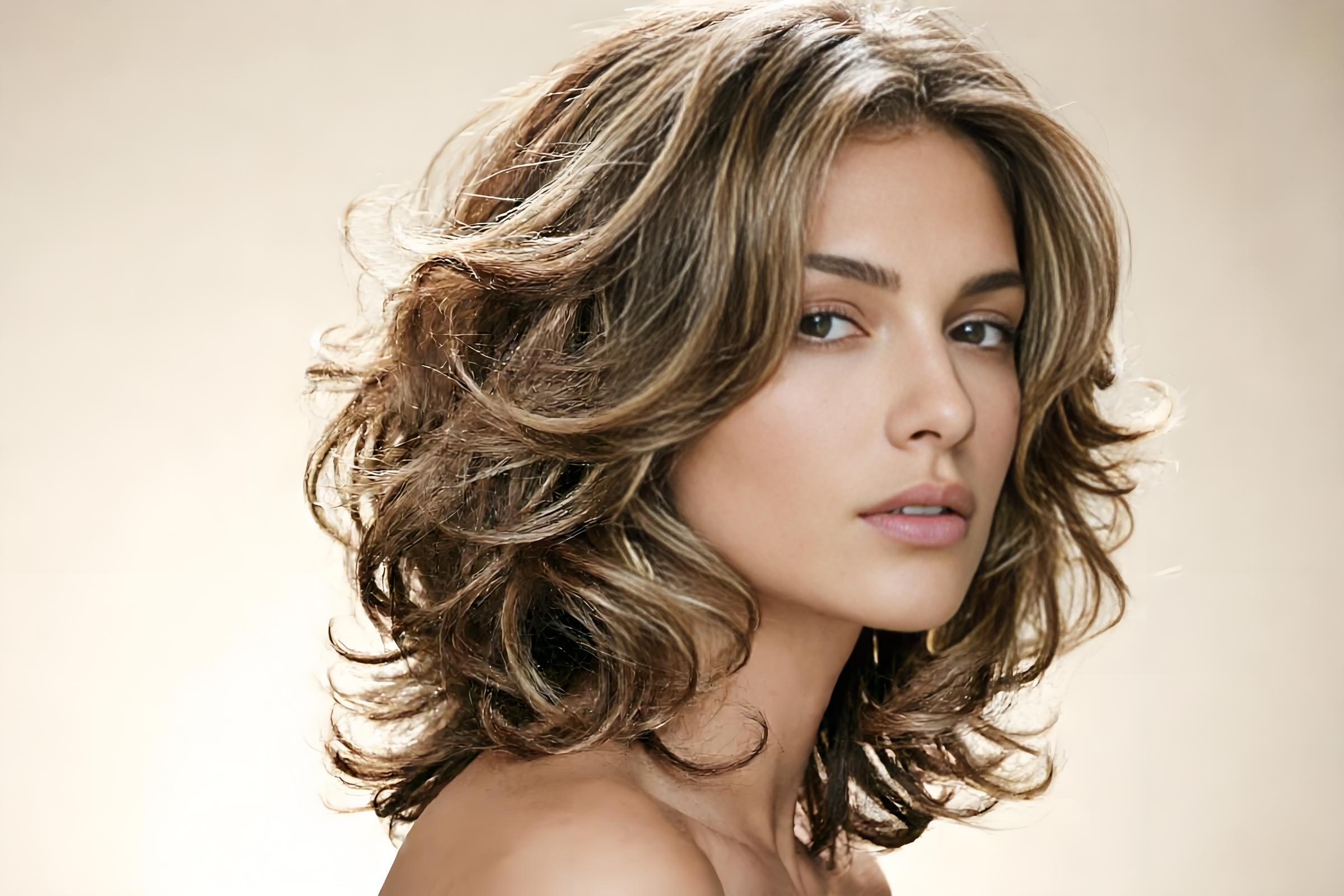
Long & Luscious: Mermaid Waves and Sleek Silks
Long hair has an undeniable allure. It's the stuff of fairy tales, romance novels, and countless hair commercials. For those with oval faces, long hair represents an opportunity to embrace pure glamour without the structural concerns that other face shapes must navigate. Let's explore how to maximize long hair's potential while keeping your features front and center.
The Mermaid Wave: Romantic and Ethereal
Mermaid waves — those loose, flowing curls that seem to capture the essence of oceanic movement — have become one of the most sought-after long hair looks. Unlike tight, structured curls, mermaid waves are intentionally undone, creating an effect that's simultaneously polished and effortless.
For oval faces, mermaid waves are particularly flattering because they add width and volume throughout the length of the hair without creating unbalanced proportions. Where a long face might risk appearing longer with dramatic length, the oval face's balanced width absorbs and showcases this styling beautifully.
The key to successful mermaid waves lies in the curling technique. Use a large-barrel curling iron or wand (1.5 to 2 inches), curling away from the face on both sides. Allow curls to cool completely before gently brushing through with a wide-tooth comb or your fingers. Finish with a light-hold spray that maintains movement.
Sleek and Straight: The Power Look
There's an undeniable power to long, pin-straight hair. It's the aesthetic that dominated the early 2000s (think Jennifer Aniston, Gwyneth Paltrow) and has seen a significant resurgence in recent years. This look says you mean business — but also that you know how to maintain serious hair health.
For oval faces, sleek long hair works beautifully because it doesn't drag the features down. The face's natural proportions remain visible and balanced, while the straight hair creates a continuous vertical line that elongates the neck and creates a statuesque silhouette.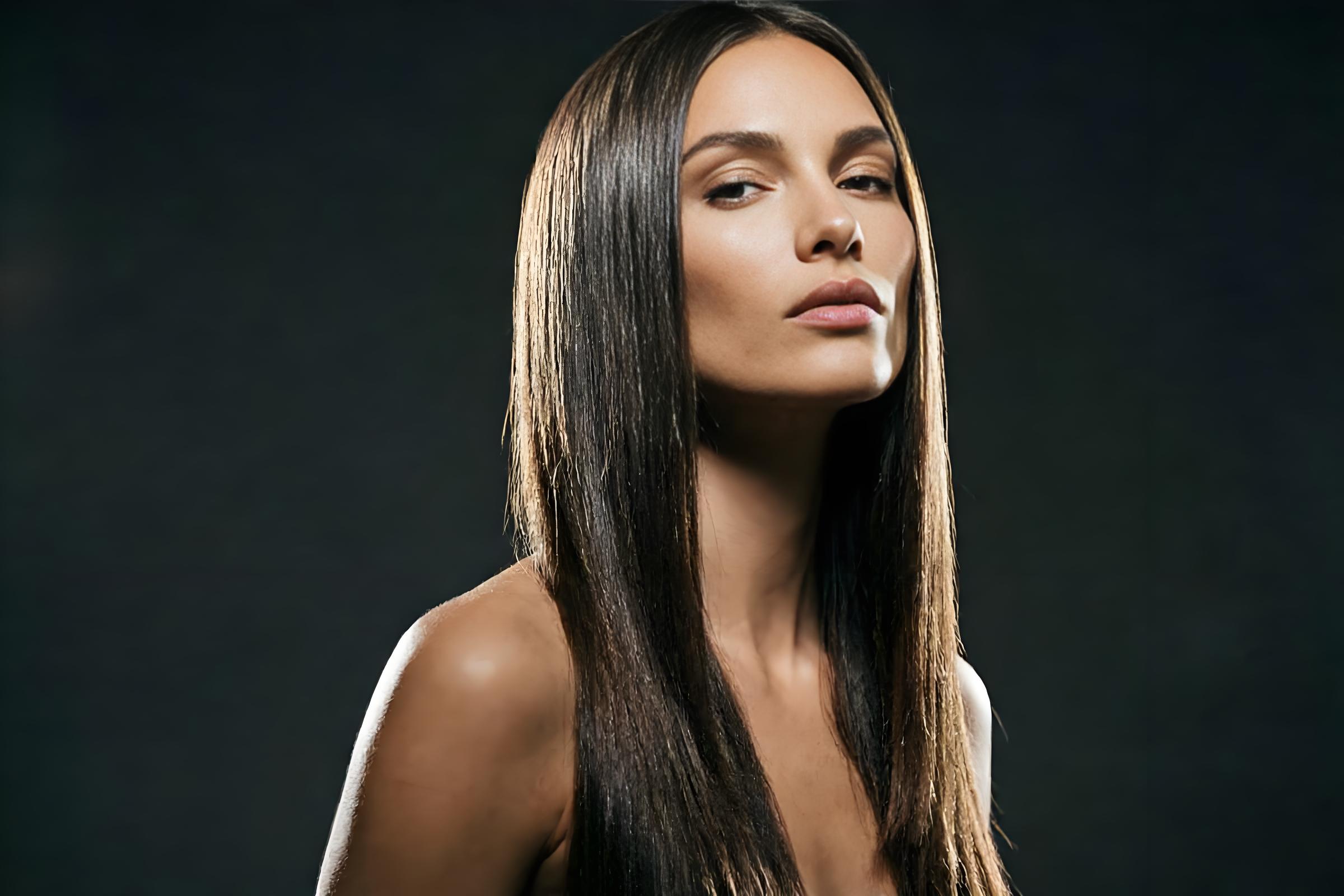
The Layered Long Cut: Movement Without Sacrifice
One concern with very long hair is that it can become heavy, pulling downward and potentially dragging features with it. The solution? Strategic layering. Long layers — starting below the chin or even at shoulder level — create movement and lightness while preserving the overall length.
For oval faces, long layers add another dimension of movement around the face. Face-framing layers that start around cheekbone level create a soft frame that highlights your best features, while longer layers throughout the body add bounce and reduce the "heavy blanket" effect that can occur with one-length long hair.
Consider your hair texture when choosing layering: fine hair benefits from subtle, long layers that don't remove too much bulk, while thick hair can handle more dramatic layering that reduces weight and increases manageability.
Bangs & Fringes: To Cut or Not to Cut?
The decision to get bangs is often treated as a dramatic, potentially regrettable choice — and for many face shapes, it is. But for oval faces, bangs represent yet another opportunity for experimentation rather than a potential misstep. Let's break down the bangs spectrum and explore which styles might suit your aesthetic goals.
Curtain Bangs: The Modern Favorite
Curtain bangs have become the gateway drug of the bangs world — approachable, versatile, and flattering on virtually everyone. These face-framing bangs part in the middle (like curtains, hence the name) and taper outward, typically hitting around the cheekbones at their longest point.
For oval faces, curtain bangs are particularly strategic because they highlight the cheekbones — the widest and often most flattering point of your face. The center part creates symmetry that complements the oval's natural balance, while the outward taper frames your features without hiding them.
Curtain Bangs Quick Facts
- Styling time: 5-10 minutes with round brush
- Grow-out grace period: 8-12 weeks before adjustment needed
- Works with: All hair textures and lengths
- Oval face advantage: Highlights cheekbones naturally
Side-Swept Bangs: Asymmetric Elegance
Side-swept bangs offer a different aesthetic — one that's more dramatic, more romantic, and more versatile in styling. These bangs sweep across the forehead from a deep side part, typically hitting somewhere between the eyebrow and cheekbone at their longest point.
For oval faces, side-swept bangs create a beautiful asymmetry that adds visual interest to your naturally balanced features. The diagonal line of the bangs draws the eye across the face, highlighting your bone structure in a way that center-parted styles can't achieve.
Micro-Bangs: Bold and Edgy
Micro-bangs (sometimes called "baby bangs") are the boldest choice in the bangs spectrum. These ultra-short bangs hit well above the eyebrow, sometimes at mid-forehead level, and make a serious style statement. They're not for everyone — but oval faces have the best chance of pulling them off successfully.
The reason micro-bangs can work on oval faces? They don't risk throwing off your proportions. Where a round face might appear rounder with a horizontal line across the forehead, and a long face might appear longer with exposed forehead, the oval face simply gains a bold new feature.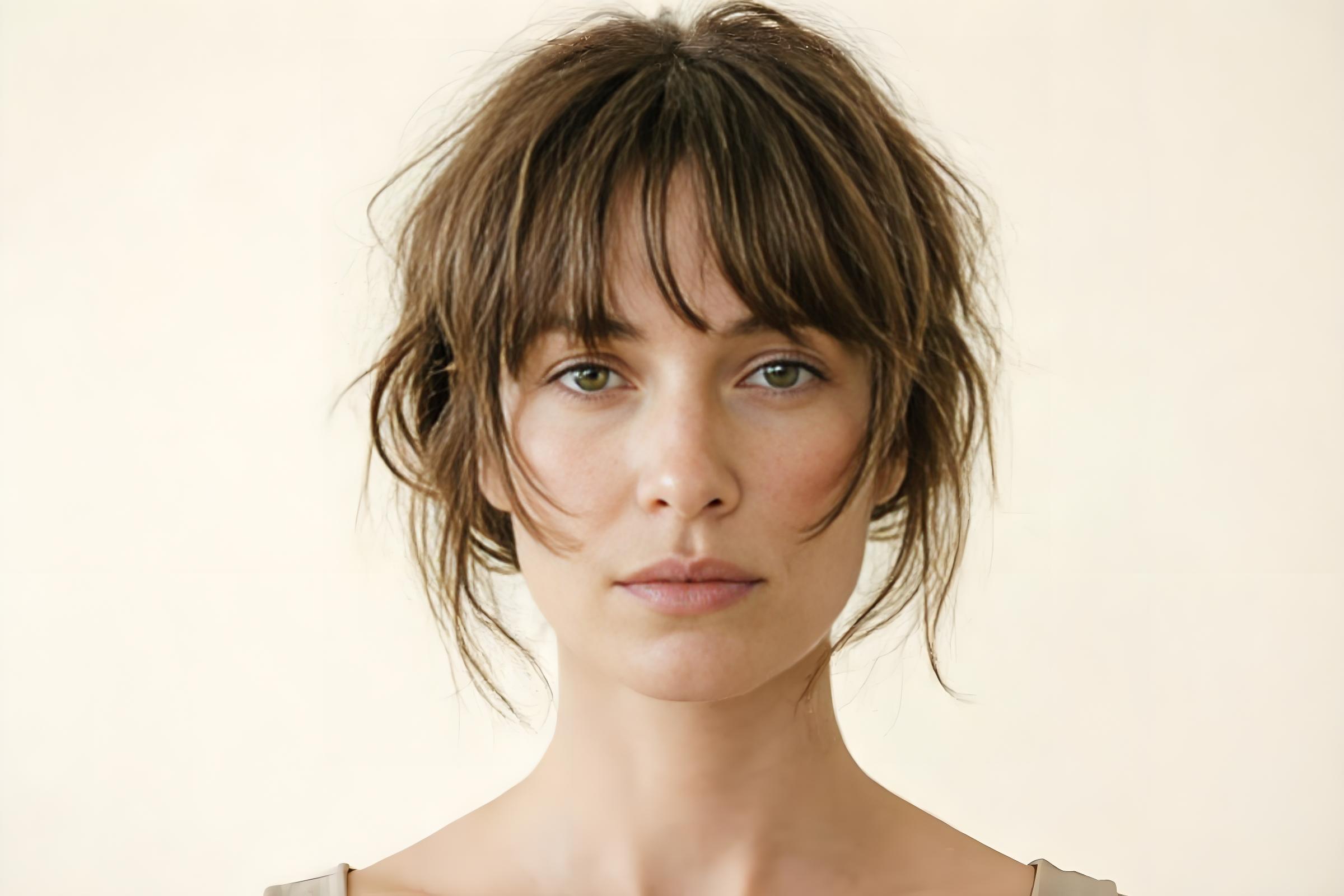
Men's Style Spotlight
While much of the conversation around face shapes and hairstyling focuses on women's styles, men with oval faces have an equally exciting range of options. The principles remain the same — balanced proportions mean creative freedom — but the specific cuts and styling techniques differ. Let's explore the masculine side of oval face styling.
The Classic Pompadour
The pompadour — that voluminous, swept-up style made famous by Elvis Presley and modernized by countless celebrities — is a natural fit for the oval face. The style's height and volume at the crown add drama without disrupting facial proportions, and the swept-back sides highlight your balanced features.
For oval-faced men, the pompadour can be worn in various heights and volumes. A dramatic, high-volume pomp creates a bold statement, while a more subtle, textured version offers everyday wearability. The key is keeping the sides relatively neat — either faded, tapered, or simply shorter than the top.
The Modern Fade: High, Mid, or Low
Fade haircuts have dominated men's grooming for the past decade, and for good reason. They're clean, versatile, and work with virtually any style on top. For oval faces, fades are particularly effective because they showcase your balanced facial structure without adding competing visual elements.
A high fade creates maximum contrast and draws attention upward to your eyes and cheekbones. A mid-fade offers a balanced look that works in both casual and professional settings. A low fade provides a more subtle transition that maintains length around the ears and neck.
Long Hair for Men: The Man Bun Era
Men's long hair has moved from counter-culture to mainstream, and oval-faced men are ideally positioned to embrace this trend. Whether worn loose, in a half-up style, or fully gathered in a man bun, long hair on an oval face creates a romantic, artistic aesthetic that many find appealing.
The key to successful long hair for men is maintenance and intentional styling. Regular trims prevent split ends, and using appropriate products (leave-in conditioners, styling creams) keeps the hair looking polished rather than neglected. When wearing hair up, position the bun at the occipital bone (the natural curve at the back of the head) for the most flattering silhouette.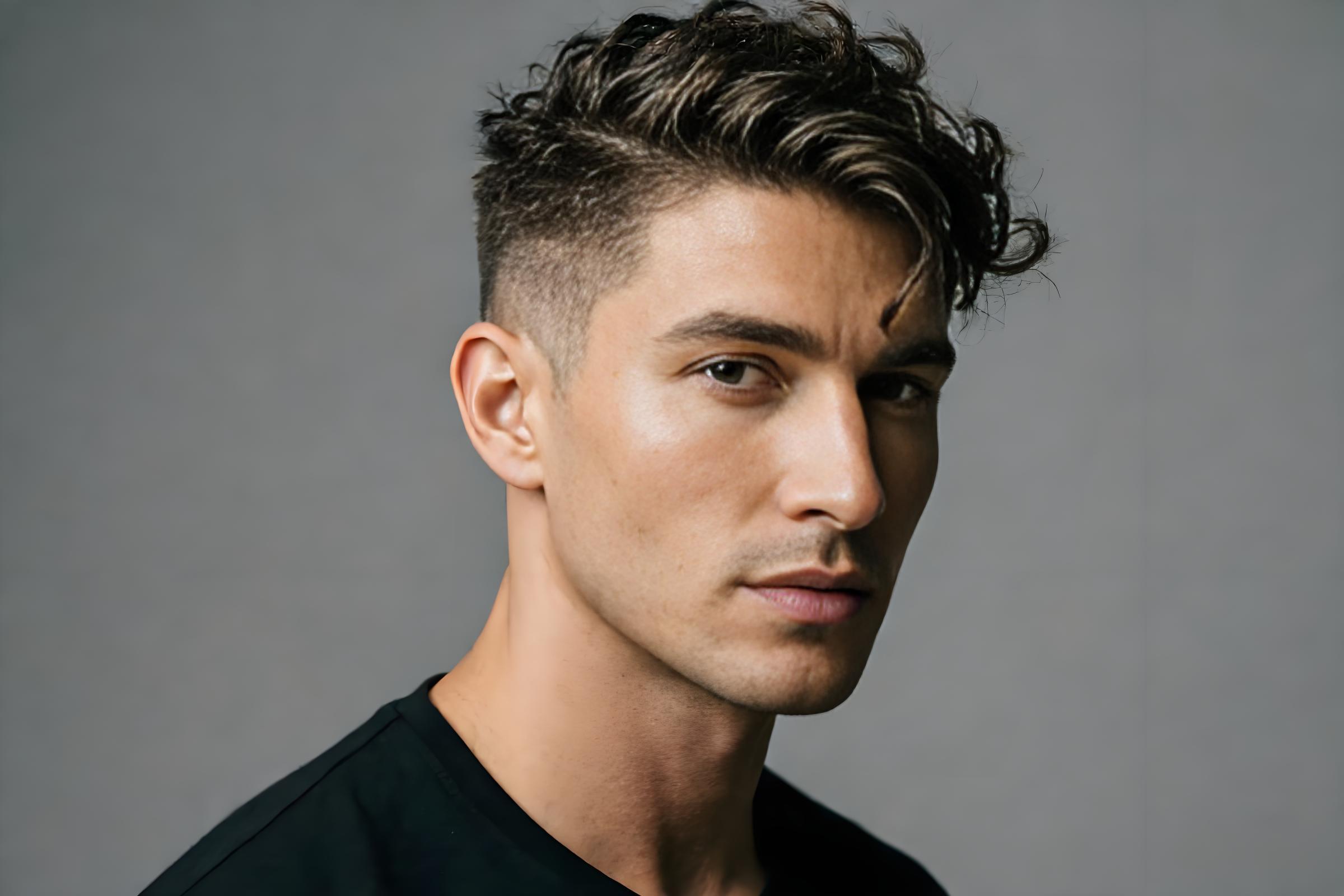
Avoid These Rare Mistakes
Yes, oval faces are versatile. Yes, almost anything works. But "almost" is the operative word. There are a few rare styling choices that can work against your natural harmony — and knowing what to avoid is just as valuable as knowing what to embrace.
Heavy, Straight-Across Bangs
While most bangs work beautifully, extremely heavy, blunt bangs that completely obscure the forehead can hide one of the oval face's best features: its balanced upper proportions. If you want straight bangs, opt for a slightly wispy or textured version that allows some forehead visibility.
Excessive Volume at the Sides
Adding substantial width at the cheekbone level can make an oval face appear rounder than it is. While some volume is flattering, avoid styles that dramatically widen at the widest point of your face.
One-Length Hair Without Movement
Extremely long, one-length hair with no layers can create a "curtain" effect that obscures your features. Even minimal layering or face-framing pieces can prevent this, allowing your balanced proportions to shine through.
Occasion Styling for Oval Faces
Your hairstyle doesn't exist in a vacuum. Different occasions call for different aesthetics, and your oval face's versatility shines brightest when you can adapt your look to match the moment. Let's explore three major occasion categories and the styles that work best for each.
Wedding Elegance: Updos and Romance
For wedding guests, bridesmaids, or brides themselves, the oval face is the perfect foundation for romantic updos. The balanced proportions mean you can wear your hair completely up without worrying about exposing unflattering angles. Consider a low chignon with soft face-framing pieces, a braided crown that highlights your symmetry, or a textured bun with loose tendrils for a garden ceremony.
The key to wedding hair is intentionality — every piece should feel deliberate. Work with your stylist to create a look that incorporates your hair's natural texture while achieving the formality the occasion demands. Oval faces can carry elaborate styles without looking overdone.
Professional Polish: Corporate Confidence
In professional settings, your hairstyle communicates competence and attention to detail. For oval faces, sleek low ponytails, smooth blowouts, and neat buns project confidence without competing with your features. The goal is polish that looks effortless.
Consider a center-parted low bun for important meetings — the symmetry complements your oval face while the low profile keeps attention on your expressions. For everyday office wear, a smooth lob with minimal styling achieves the same effect with less effort.
Festival and Casual: Embracing Texture
Casual occasions and festivals invite experimentation. This is where the oval face's versatility truly shines — messy buns, half-up styles, braided crowns, and beachy waves all work beautifully. The "undone" aesthetic that's popular for festivals is particularly forgiving for oval faces because there's no structural concern to navigate.
Try a textured low ponytail with face-framing pieces, a bubble braid for a playful look, or simply enhanced natural texture with a cute accessory. Your oval face provides the perfect backdrop for creative styling without limits.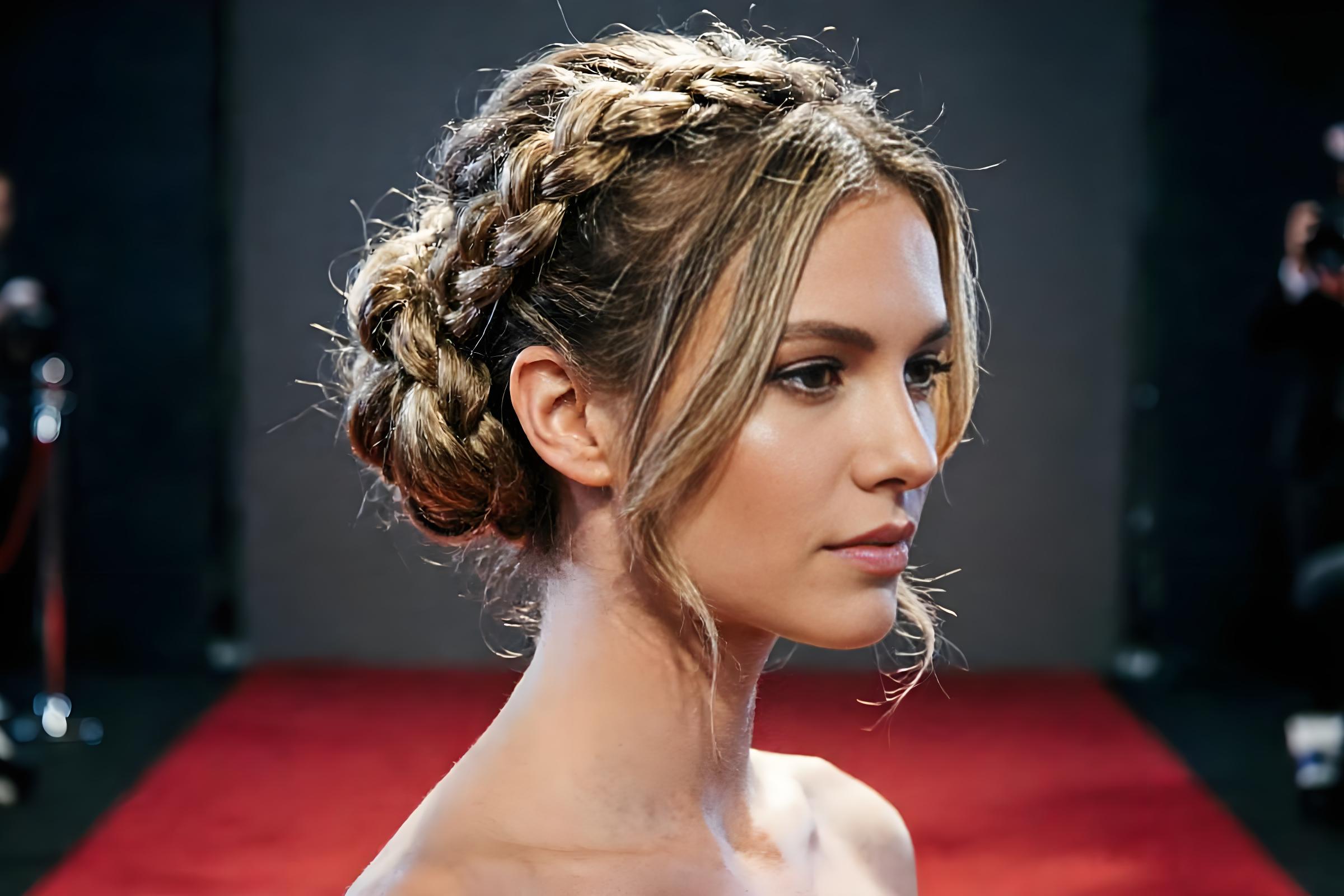
The AI Revolution: Virtual Try-On
For all the advice in this guide, there's one truth that can't be escaped: you won't truly know how a hairstyle looks on you until you see it on you. Magazine photos, celebrity inspirations, and even salon consultations can only go so far. This is where technology transforms the equation entirely.
Enter AI Hair Studio
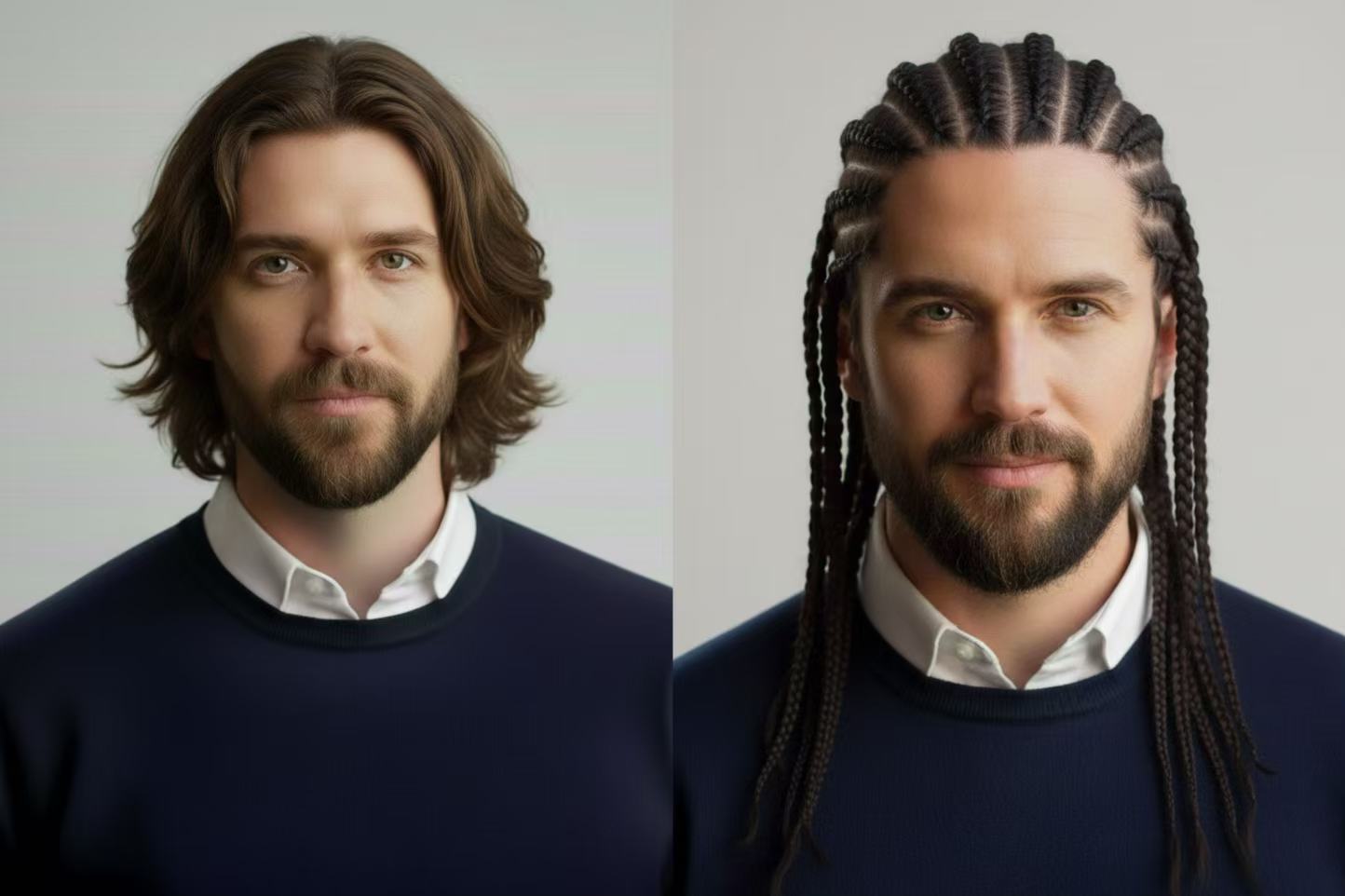
AI Hair Studio represents the cutting edge of hairstyle visualization technology. Using advanced neural networks trained on millions of images, the platform can render realistic hairstyles directly onto your photo — showing you exactly how a pixie, lob, bangs, or any other style will look with your specific features, skin tone, and face shape.
For oval-faced individuals, this technology is particularly valuable because it removes the remaining uncertainty from styling decisions. You know that virtually any style will work structurally — now you can see which styles you personally prefer on yourself.
How Neural Networks Transform Hair Visualization
Traditional virtual try-on tools used simple overlays that rarely looked realistic. AI Hair Studio takes a fundamentally different approach. The neural network analyzes your facial structure, lighting conditions, hair texture, and color in your uploaded photo, then generates a hairstyle that integrates naturally with these elements.
The result isn't a filter or a sticker — it's a photorealistic rendering that shows how you would actually look after a salon visit. You can compare dozens of styles in minutes, from the comfort of your home, without any commitment.
The AI Advantage
- Compare 50+ styles in under 10 minutes
- Photorealistic results, not cartoon overlays
- Share results with your stylist for clear communication
- Try before you commit — no salon regrets
Your Oval Face, Your Choice
The oval face gives you the gift of choice. Virtually every hairstyle in this guide is available to you. The question isn't "what will work?" but "what do you want?" AI Hair Studio helps you answer that question with confidence, showing you the future before it happens.
Upload your photo, browse the style library, and discover which looks make your heart sing. Then, take those results to your stylist with complete confidence. You have the perfect face shape — now you have the perfect tool to make the most of it.