For decades, the beauty industry has peddled a single narrative to those with round faces: hide it. We’ve been told to shy away from short cuts, to fear volume, and to treat our faces like problems to be solved rather than features to be celebrated. But the winds of change are blowing through 2026. The era of "hiding" is over; the era of "snatching" has begun. This is not a guide about covering up. It is a masterclass in architecture. Your face is not a circle; it is a canvas waiting for the right lines, shadows, and structures to reveal its full potential.
Welcome to the Round Face Revolution. Whether you identify with the youthful softness of Selena Gomez or the radiant glow of Mila Kunis, you possess a face shape that defies aging. But with great youthfulness comes great styling responsibility. To navigate the world of trends without adding unwanted width, you need strategy. We are about to dive deep into the science of "Facial Contouring through Hair"—a non-surgical lift that uses geometry to transform soft curves into sharp, high-fashion angles.
The Round Face Revolution
The round face has long been misunderstood. In a world obsessed with the "chiseled" jawline of the 90s and the "snatched" cheekbones of the Instagram era, the soft, equal-proportioned round face was often left in the "cute" category—adored for its youthfulness but rarely celebrated for its high-fashion potential. 2026 changes the conversation entirely. The industry has woken up to the fact that the round face is the ultimate palette for transformation.
Why? Because a round face lacks harsh lines. This is not a flaw; it is freedom. A square face is bound by its angles. A heart face is dictated by its forehead. A round face? It is a smooth sphere waiting for your sculptor’s hand. This is where the concept of "Facial Contouring through Hair" comes into play. Just as a makeup artist uses bronzer to create shadows and highlighter to bring forward features, a stylist uses layers, volume, and partings to rewrite the geometry of your face.
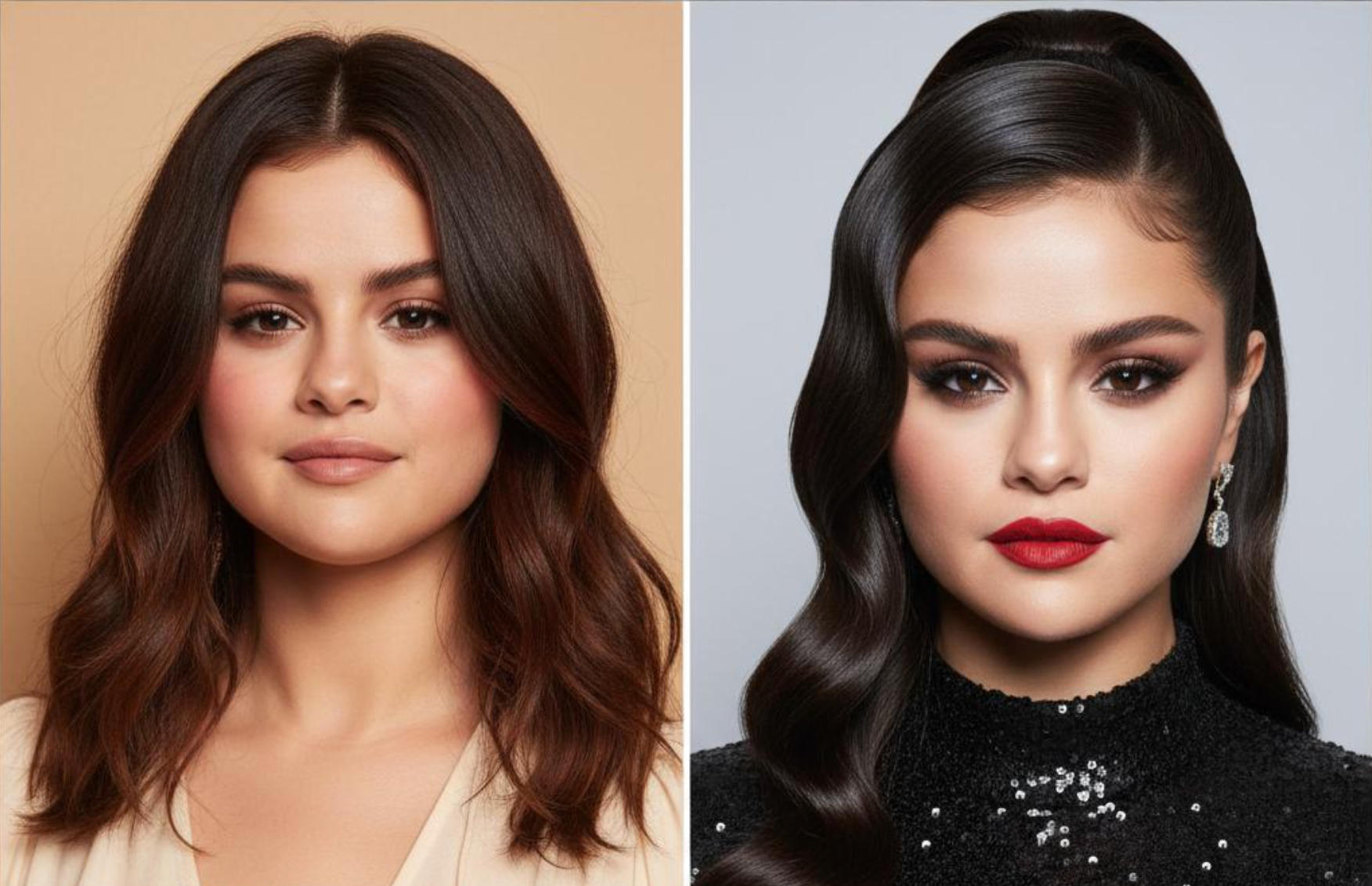
Think of Selena Gomez. When she wears her hair flat and wide, she looks beautiful but undeniably "cute." But watch what happens when she steps onto a red carpet with a sleek, high ponytail or deep side-parted waves—the narrative shifts instantly to "glamorous" and "sophisticated." The change isn't in her face; it's in the lines created around it. This guide will teach you to be your own architect. We are trading "cute" for "commanding" and "soft" for "sculpted." The secret lies in verticality. The goal of every style in this guide is to interrupt the circular flow of the face and introduce elongating lines that trick the eye into seeing an oval silhouette.
The Measurement Test
Before we begin sculpting, we must confirm the material we are working with. Many people mistake "full" faces for round faces, or confuse round with square. The distinction is crucial because the styling antidote differs. A square face needs softening; a round face needs lengthening.
To perform the Measurement Test, you need a flexible tape measure and a mirror.
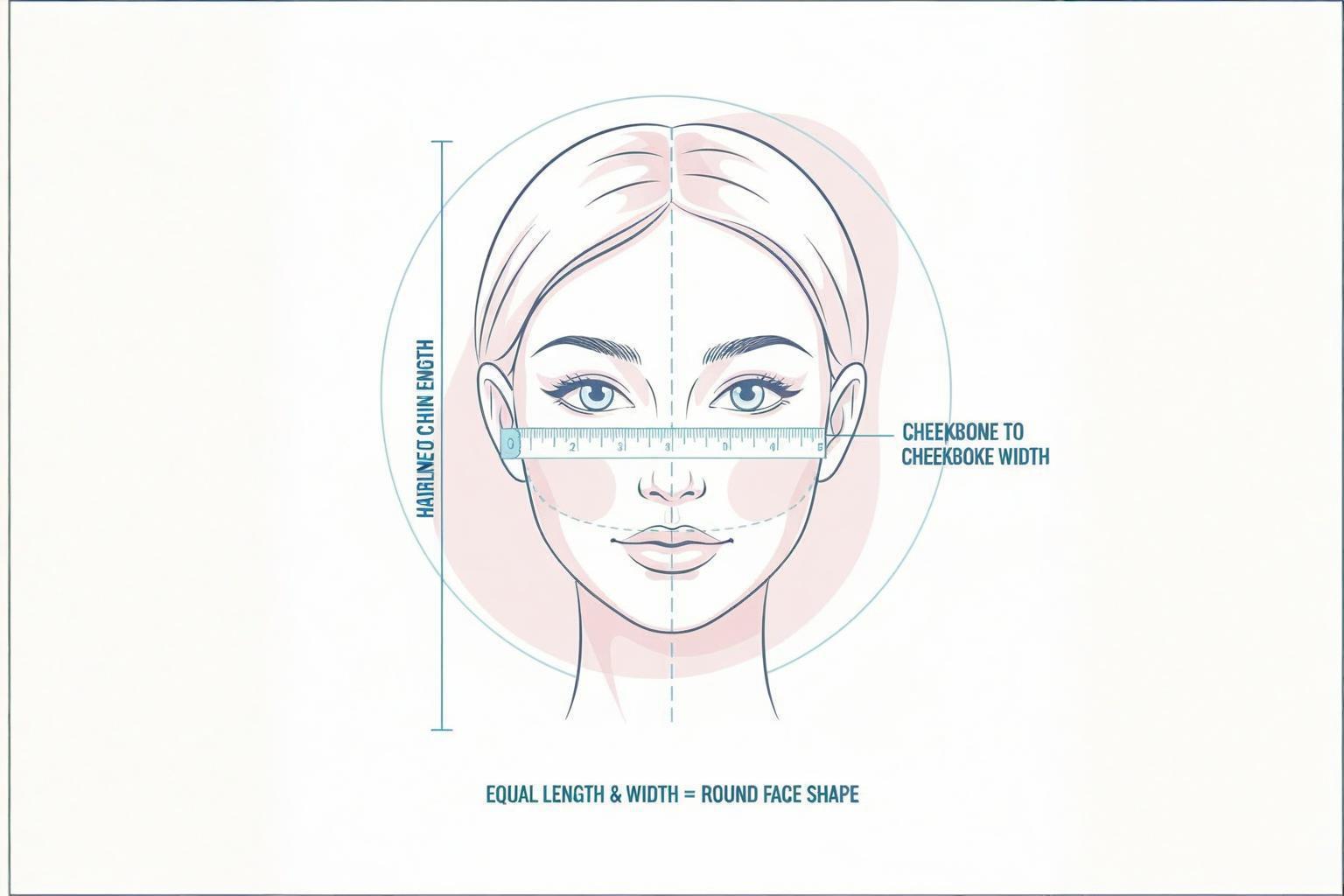
- Measure the Length: Place the tape at the center of your hairline and bring it down to the tip of your chin.
- Measure the Width: Measure across the widest part of your face, typically from cheekbone to cheekbone.
- The Ratio: In a round face, these two numbers will be almost identical, or the width will be nearly equal to the length. A square face also has equal width and length, but the jawline is sharp and angular. A round face features a soft, curved jawline with no sharp corners.
If you fit this description—equal width and length with a soft jawline—you have a round face. The primary geometric goal for you is Verticality. Your face shape naturally wants to expand horizontally. Every hairstyle you choose should act as a vertical counterforce, drawing the eye up and down rather than side to side. Whether through height at the crown, length at the ends, or diagonal partings, verticality is your guiding principle.
2026 Trend: The 'Long Italian Bob'
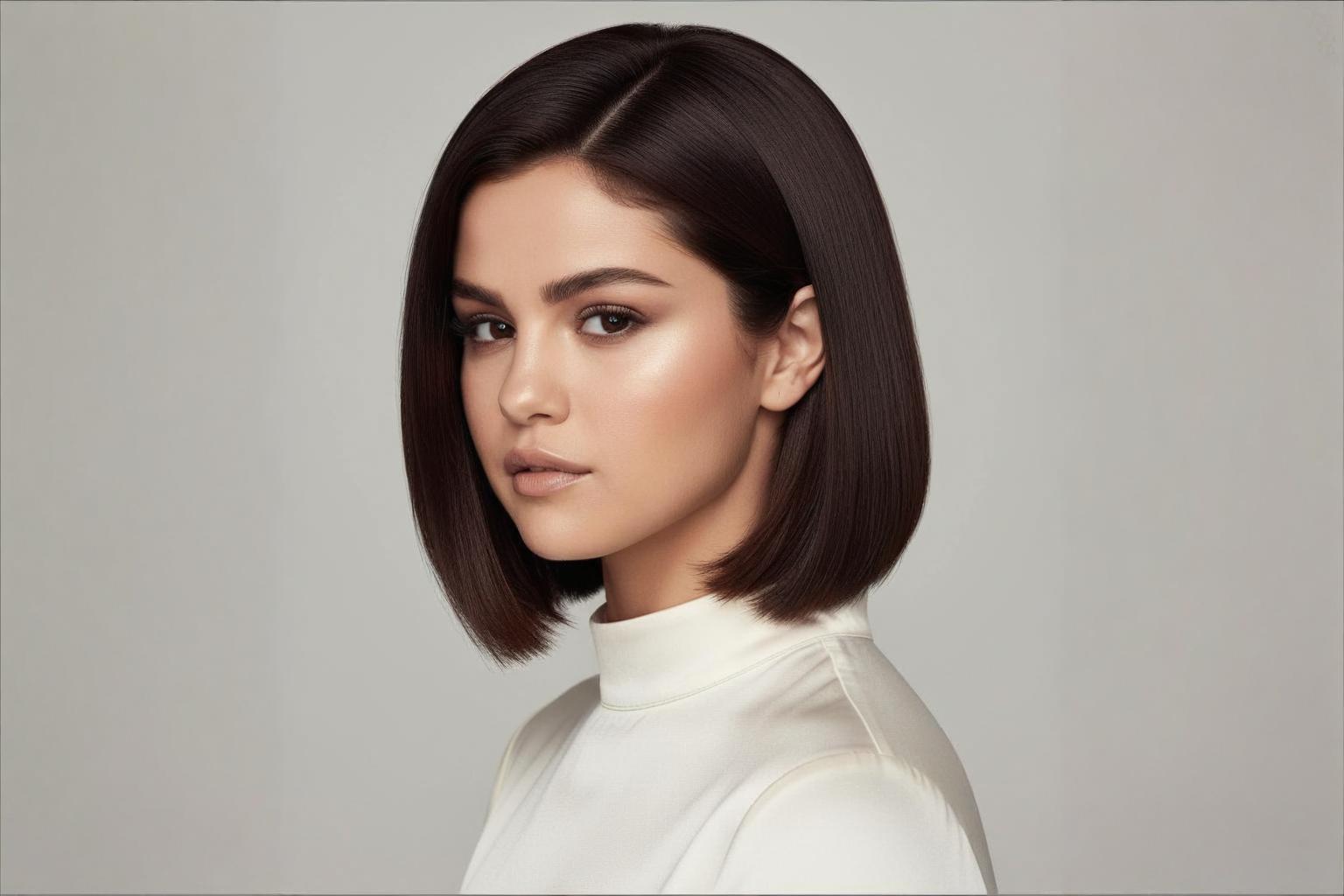
If you have been advised to "never wear a bob because it makes the face rounder," it’s time to unlearn that rule. The chin-length bob of the past was indeed a round face's enemy. It ended exactly where the face was widest, creating a horizontal line that cut off the neck and accentuated width. But 2026 brings the evolution: The Long Italian Bob, often called the "Collarbone Bob."
This cut is a game-changer. It grazes the collarbone, extending inches below the chin. By falling below the jawline, it creates a vertical column of hair that elongates the neck. The neck is the secret weapon of the round face; the more neck you show, the longer the face appears. The Long Italian Bob keeps the neck open while the length draws the eye downward.
The Mechanics of the Cut
The secret to this bob is in the subtle graduation. The back is slightly shorter, often hitting just below the jaw, while the front pieces are left longer to hit the collarbone. This creates a gentle diagonal line from the back to the front. Diagonal lines are essential for round faces—they "break" the circular shape of the face without the harshness of layers.
Styling should be sleek and tucking behind the ears is encouraged. When you tuck one side behind the ear, you reveal the jawline and neck on one side, creating asymmetry that destroys the "circle" effect. Add a deep side part, and you have introduced two vertical elements: the part itself and the falling length of hair.
Verticality Score: Long Italian Bob
High score due to collarbone length and sleek lines. Avoids the "chin-width" trap.
Avoid adding too much curl or wave at the ear level. Keep the texture smooth or add a very slight bend at the very ends. Volume at the ears is the danger zone; volume at the ends is the goal.
The 'Wolf Cut' Evolution 2026
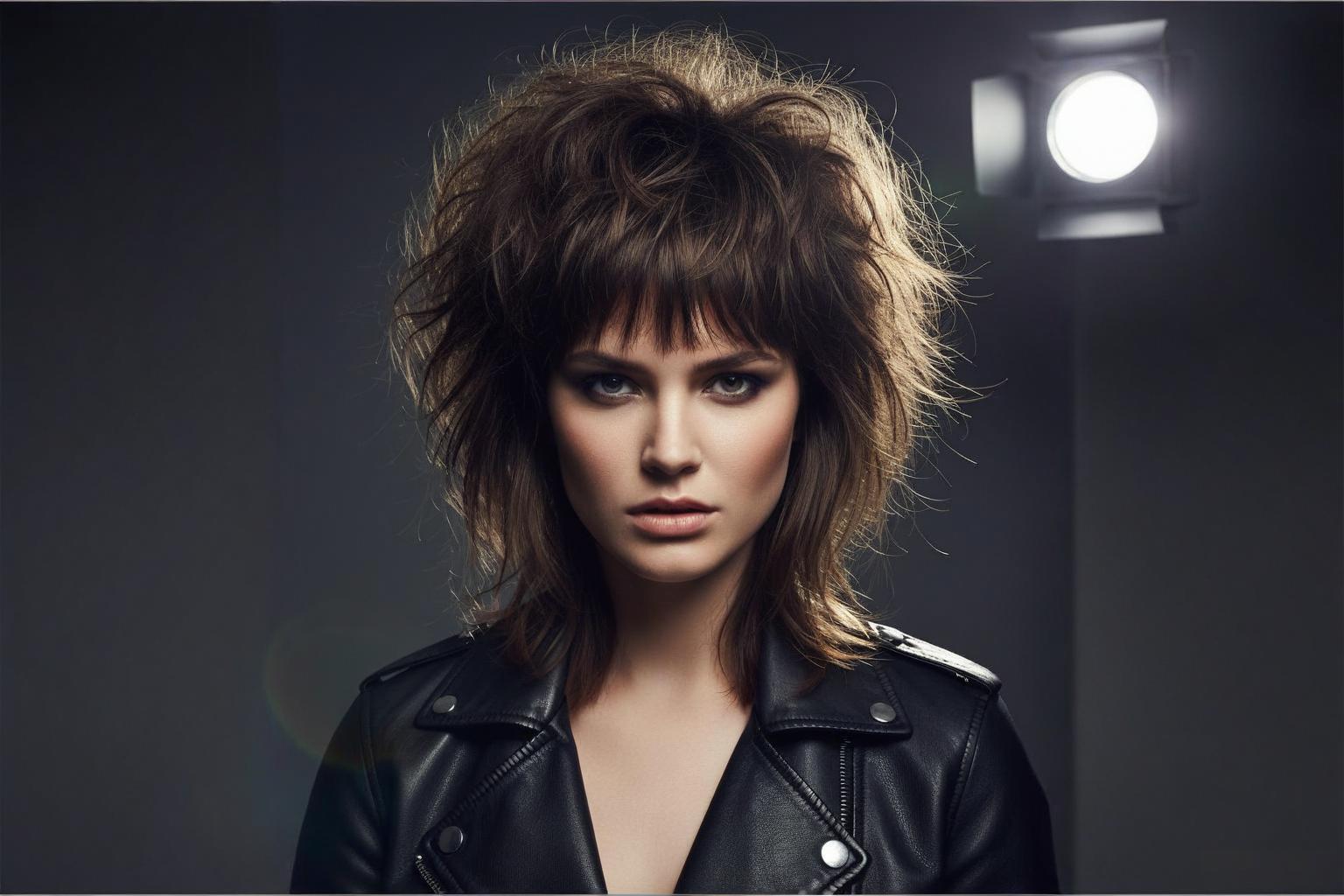
If the Long Italian Bob is the sleek, sophisticated sister, the Wolf Cut is the rock-n-roll cousin. This cut has evolved significantly for 2026, moving away from the purely "shaggy" aesthetic into a more refined, face-sculpting tool. For the round face, the Wolf Cut is nothing short of kryptonite for roundness. It attacks width with chaos and verticality.
The Wolf Cut is a hybrid of a shag and a mullet, featuring choppy layers that frame the face. Why does this work for round faces? It is all about Crown Volume. A round face often lacks height. Flat hair on top makes the face look wider. The Wolf Cut is specifically designed to have shorter, choppy layers at the crown that are encouraged to stand up and create volume. This height literally stretches the face upward, creating an oval illusion.
Choppy Vertical Layers
The layers of a Wolf Cut should not be blended smoothly. They should be distinct and "choppy." This texture creates visual noise that distracts the eye from the smooth curves of the jawline. The face-framing layers act like curtains that narrow the face. Unlike the heavy "curtains" of the 70s, these are wispy and textured.
When requesting this cut, ask your stylist to keep the perimeter (the bottom length) solid but to "release weight" through the mid-lengths and crown. You want the hair to explode upwards and outwards at the top, while the ends remain heavy enough to anchor the look.
Verticality Score: Wolf Cut
Maximum score. The crown volume and vertical layering are the ultimate counter-force to width.
Styling is low-effort but high-impact. Use a texturizing spray at the roots to lift the crown. Scrunch the mid-lengths to encourage the wave pattern. The messier, the better—neatness emphasizes shape, while messiness breaks it.
Bangs for Round Faces: 'Micro-Curtain' & 'Wispy' Bangs
Bangs are a minefield for the round face. The wrong choice can shorten the face and widen the cheeks. The cardinal sin? Blunt, straight-across bangs. They create a hard horizontal line right across the forehead, effectively "squashing" the face and hiding the forehead, which is a valuable source of vertical space.
However, the right bangs can be transformative. The goal is Diagonal Lines. You want bangs that move across the face rather than stopping it.
The 'Micro-Curtain' Bang
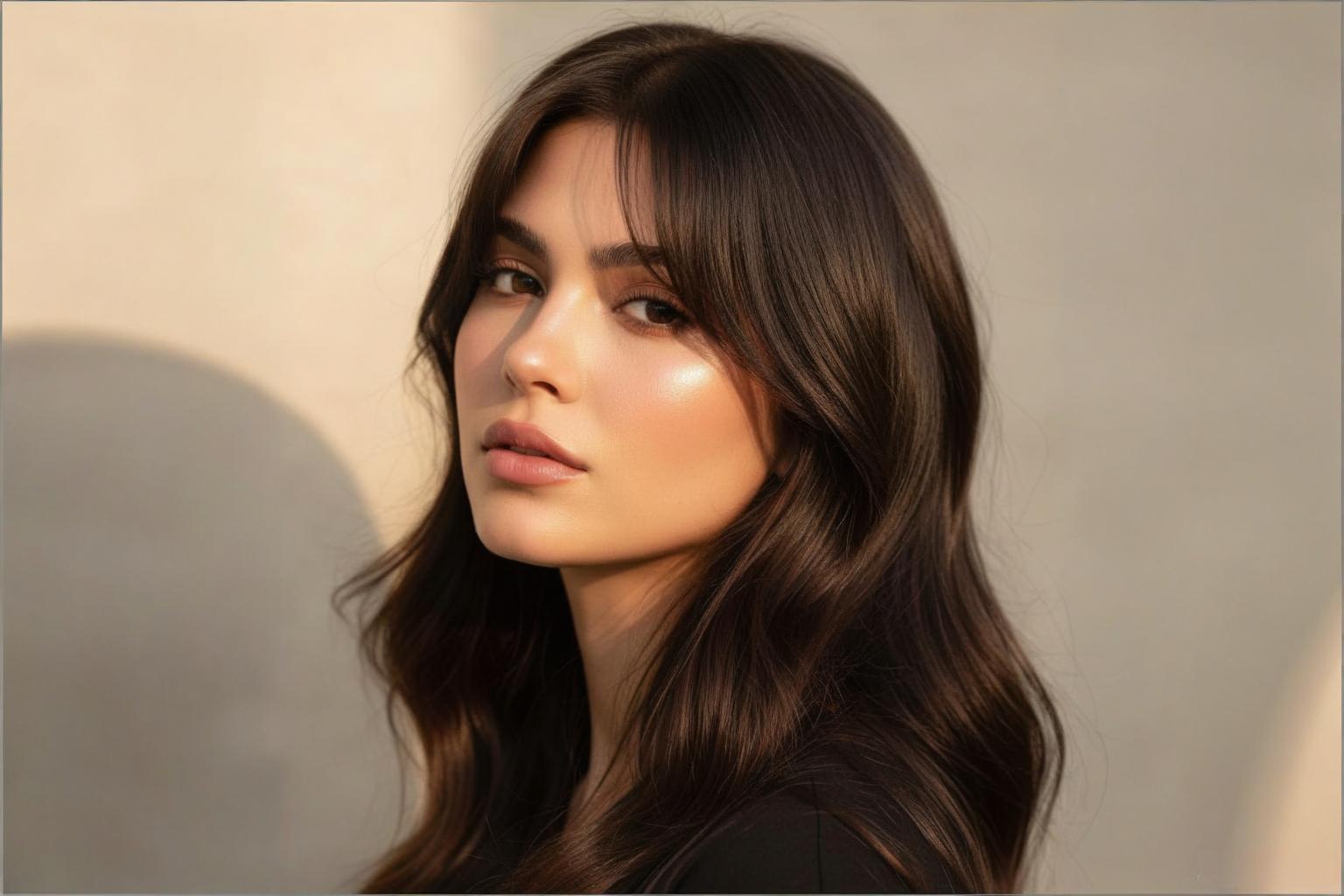
The Micro-Curtain is the 2026 update to the classic curtain bang. It is shorter and lighter. It parts in the middle (or slightly off-center) and sweeps diagonally down towards the cheekbones. This diagonal movement cuts across the circular shape of the face, creating angles where there are none. The "micro" aspect means it doesn't overwhelm the face with bulk. It should be wispy enough to see the forehead through, preserving some verticality.
The 'Wispy' Texture
If you prefer a fringe that covers the forehead, it must be wispy. A "see-through" fringe allows glimpses of the forehead behind the hair. This tricks the eye into perceiving the forehead as taller than it is. The ends of the bangs should be point-cut (not blunt cut) to blend into the rest of the hair, avoiding that "block" effect.
Verticality Score: Micro-Curtain Bangs
Good score. The diagonal lines break the circle, but bangs inherently reduce forehead visibility.
Long Hair & The 'V-Shape' Cut
Long hair is often seen as a "safe" option for round faces, simply because it is long. But long hair can be just as unflattering as a bad short cut if not cut correctly. The biggest mistake? One-length hair cut straight across. This creates a "triangle" effect where the hair widens at the bottom, dragging the face down and widening the silhouette.
The 'V-Shape' Solution
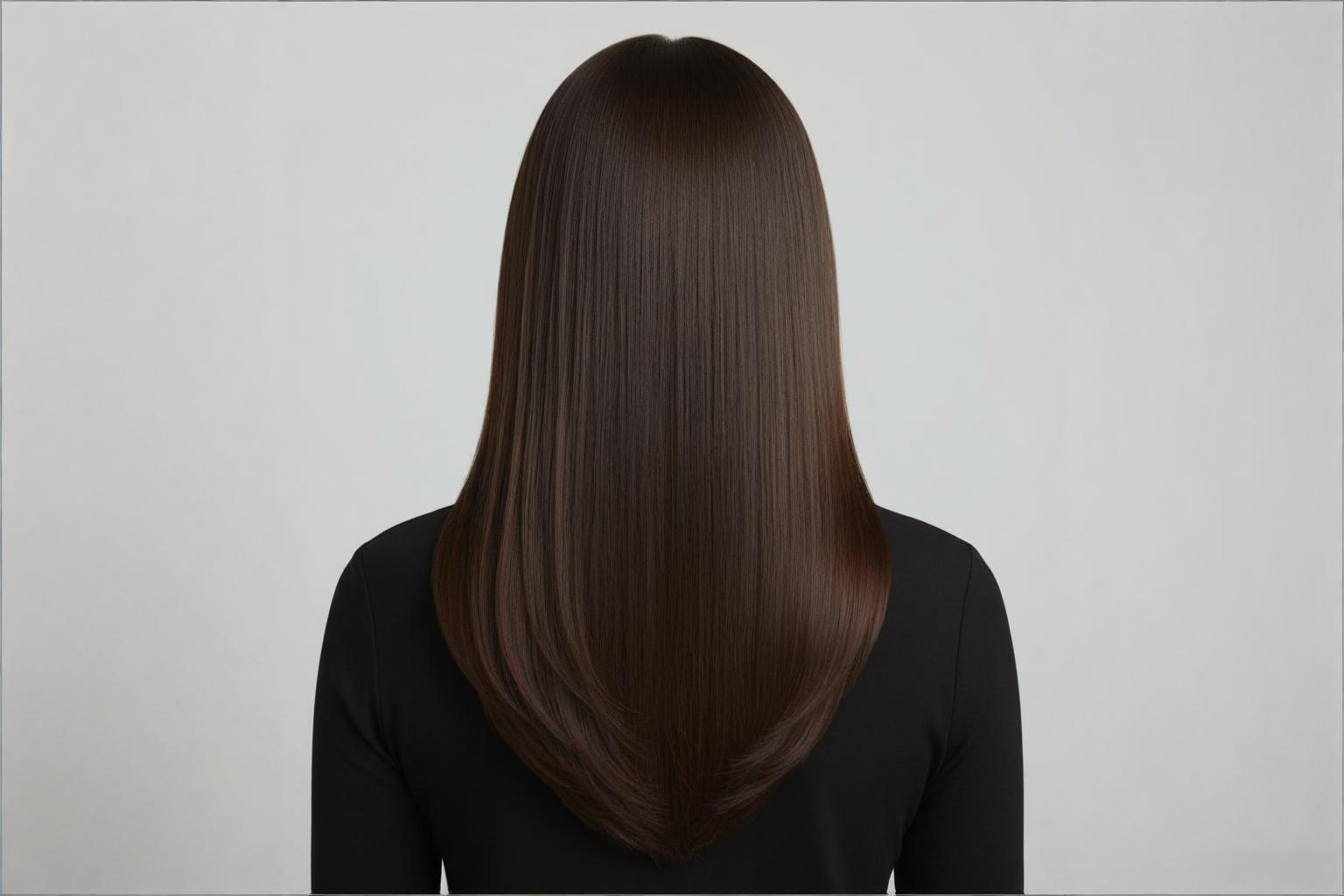
The V-Shape cut is where the hair is cut in layers that create a 'V' at the back. The sides are shorter and angle down to a longer point in the middle. This creates a narrowing effect at the bottom, which mirrors the desire to narrow the face. It draws the eye inward and downward.
The most critical rule for long hair on a round face is layer placement. Layers must start below the chin. If layers start at the cheek or ear level, they will flip out and add volume exactly where you don't want it. Layers that start below the chin maintain the width-slimming effect of the long lengths while adding movement at the ends.
Styling should focus on volume at the crown (lift those roots!) and sleekness through the cheek area. Waves should be vertical, not horizontal. Horizontal waves (like a crimper effect) add width. Vertical waves (created with a curling wand held vertically) drop down the face and slim it.
Verticality Score: V-Shape Long Layers
Solid score. Effective if layers start below chin. Risk of widening if layers are cut too high.
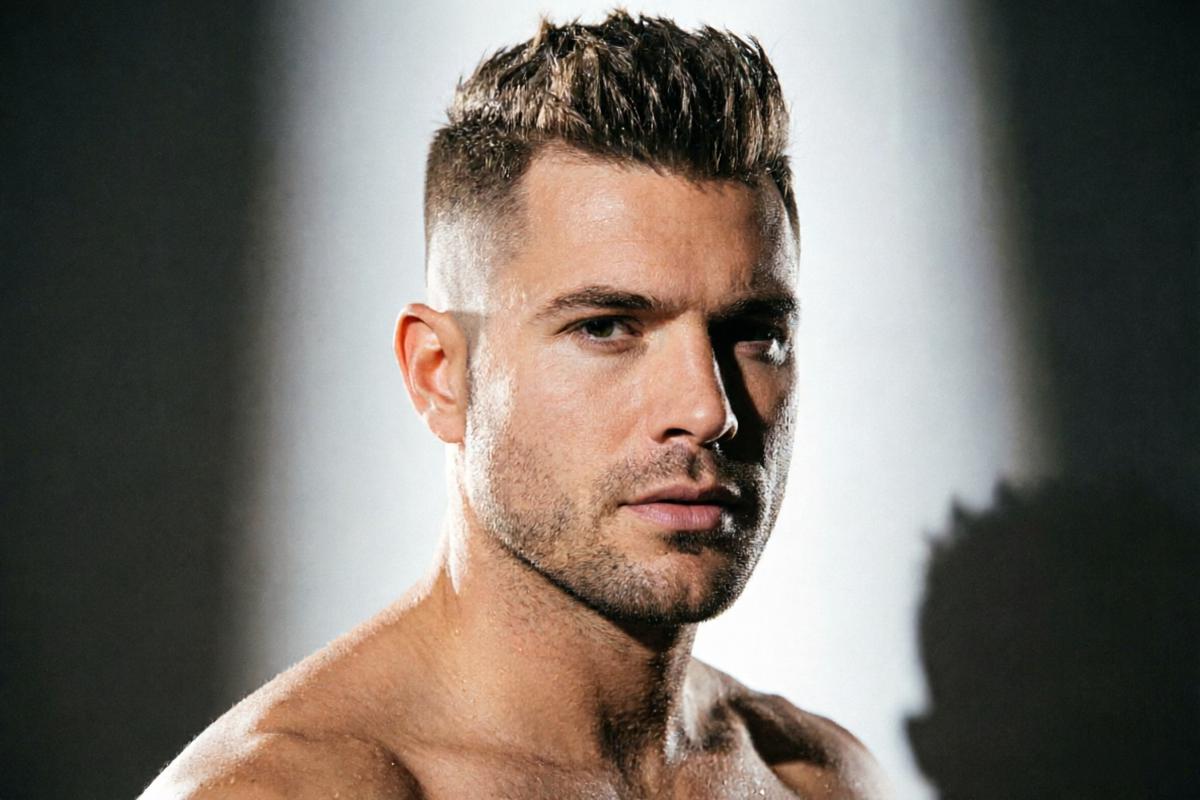
Men’s Section: High-Top Fades & Pompadours
For men with round faces, the battle against width is often fought with facial hair and hair height. While beard grooming is a topic of its own, the hairstyle plays a pivotal role in reshaping the silhouette. The goal, as always, is to create the oval illusion.
The High-Top Fade
This is the most effective style for elongating a round face. By fading the sides extremely short and leaving length on top, you remove width from the sides and stack it vertically. The "High" in High-Top refers to the fade line, which should be placed above the parietal ridge (the widest part of the head). This visually stretches the face. Styling the top upward—whether with a sponge curl, twists, or a textured crop—adds inches to your face length.
The Pompadour
The classic pompadour is another excellent tool. Sweeping the hair up and back from the forehead creates a large vertical structure. The volume at the front and crown counteracts the roundness. However, avoid "slicking" the sides down flat against the head if they are long; this can hug the cheeks. Faded or tapered sides are best.
What to Avoid: The "Bowl Cut" or any style where the hair falls onto the forehead and covers the ears. This creates a circular frame around the face, emphasizing the very shape you are trying to break.
Verticality Score: High-Top Fade
Excellent. Maximizes height and minimizes width effectively.
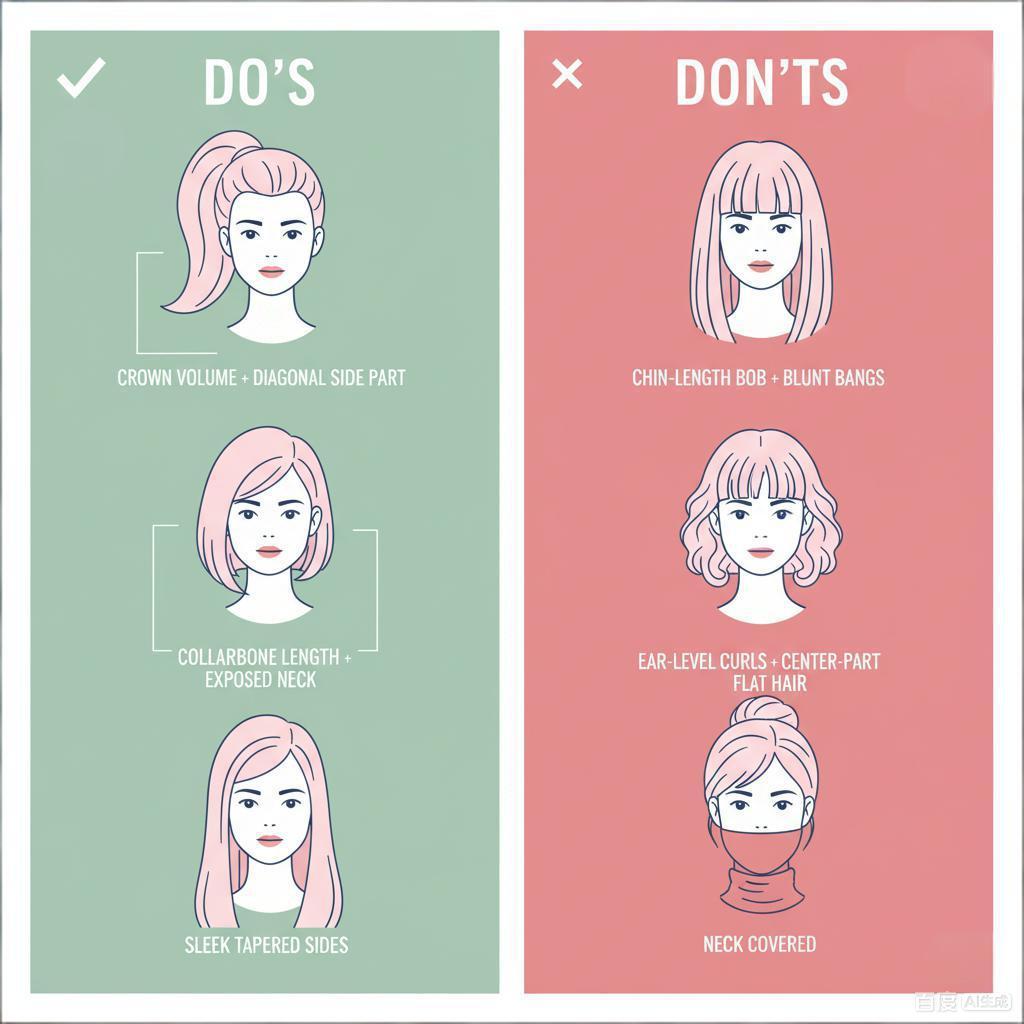
The 'Face-Slimming' Checklist
Before you head to the salon, run through this rapid-fire checklist. These are the non-negotiables for keeping your round face looking sharp and sculpted.
The DOs
- DO add height at the crown (volume is your friend up top).
- DO keep hair length below the jawline (collarbone or longer).
- DO use diagonal partings (side parts break the circle).
- DO keep sides sleek or tapered close to the head.
- DO show your neck (avoid hair that drapes over shoulders heavily).
The DON'Ts
- DON'T get chin-length bobs (the "widening" zone).
- DON'T get blunt, straight bangs (shortens the face).
- DON'T curl hair at ear-level (creates unwanted width).
- DON'T center-part long, flat hair (creates a circular frame).
- DON'T hide the neck with high collars or scarves.
Occasion Styling: The 'Snatched' High Pony
There is no greater ally to the round face than the "Snatched" High Ponytail. Popularized by Ariana Grande and Bella Hadid, this look is the ultimate in instant facial contouring. It lifts the face, exposes the neck, and creates dramatic verticality.
How to Execute
The key is the "Lift." The ponytail should be positioned high on the crown, not at the nape. A nape-level pony can drag the face down. The high crown placement pulls the skin of the face upward, mimicking a temporary facelift.
Use a small section of hair from the ponytail to wrap around the elastic, hiding the band and creating a seamless, polished look. This adds to the vertical line. For the front, leave out a few wisps or baby hairs, or opt for a deep side-swept front section. Avoid pulling the hair straight back tightly without styling the front, as this can expose too much of the forehead width. A small "bump" or volume at the very front hairline is acceptable and encouraged to add height.
If curls are added to the ponytail, ensure they are tight and vertical. Loose, wide curls can add width. The ponytail itself should act like an exclamation point extending from your head.
Verticality Score: Snatched High Pony
Maximum verticality. Physically lifts the face and exposes the neck.
AI Hair Studio: Your Virtual Sculptor
Navigating the nuances of "vertical layers" and "diagonal parts" can be overwhelming. How do you know if a Wolf Cut will actually work for your specific round face? How do you know where your layers will fall? This is where technology steps in to bridge the gap between imagination and reality.
Virtual Contouring
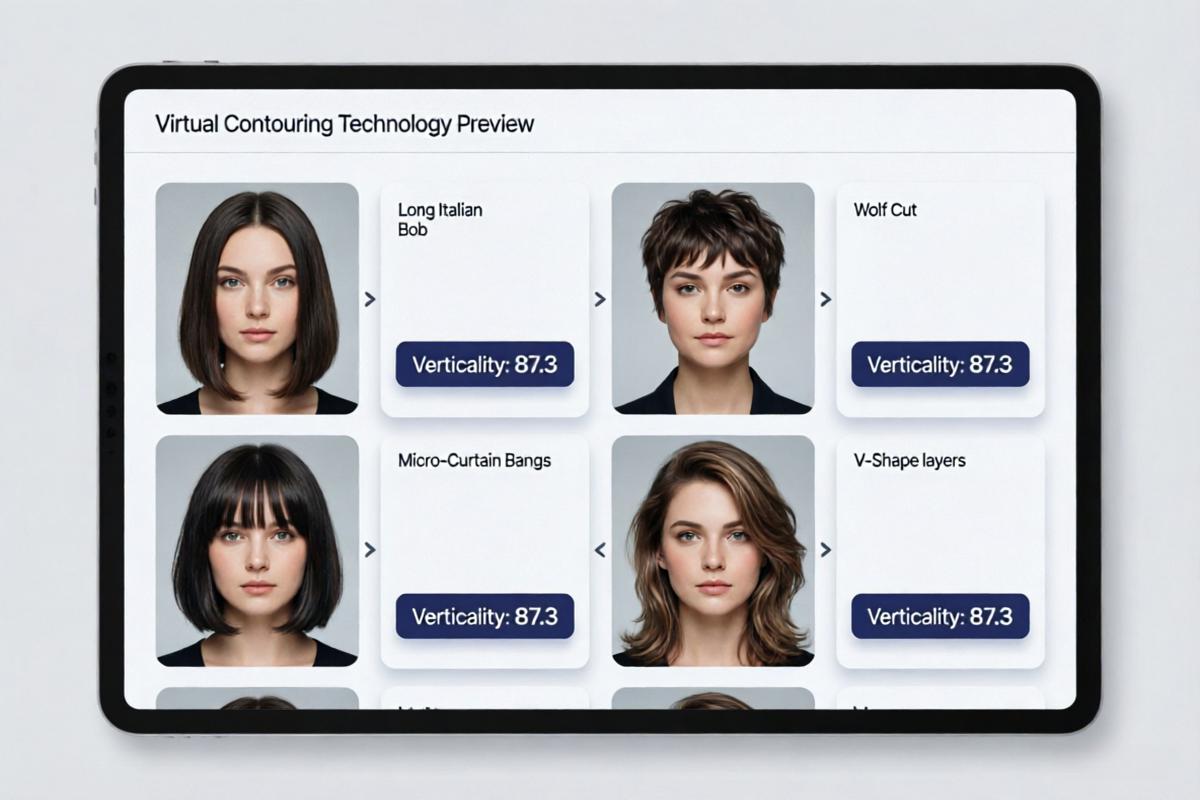
AI Hair Studio (https://www.aihair.studio) is not just a filter. It is a neural network trained on facial geometry and hairstyle physics. When you upload a photo, the AI analyzes your face shape—identifying the width-to-length ratio, the jawline curve, and the forehead height. It then maps hairstyles onto your face with photorealistic accuracy.
For round faces, the AI is programmed to suggest "contouring" styles. It can render the Long Italian Bob on your specific features, showing you exactly how the collarbone length will balance your cheeks. It can simulate the height of a Wolf Cut, demonstrating the vertical lift it provides.
The Confidence of Certainty
The fear of the unknown is what stops most people from trying bold new looks. AI Hair Studio removes that fear. You can try 50+ styles in minutes, comparing the "Verticality" of each one on your own face. It’s like having a celebrity stylist in your pocket, analyzing the geometry and offering the best angles. Don't leave your look to chance. Use the precision of AI to sculpt your best self.