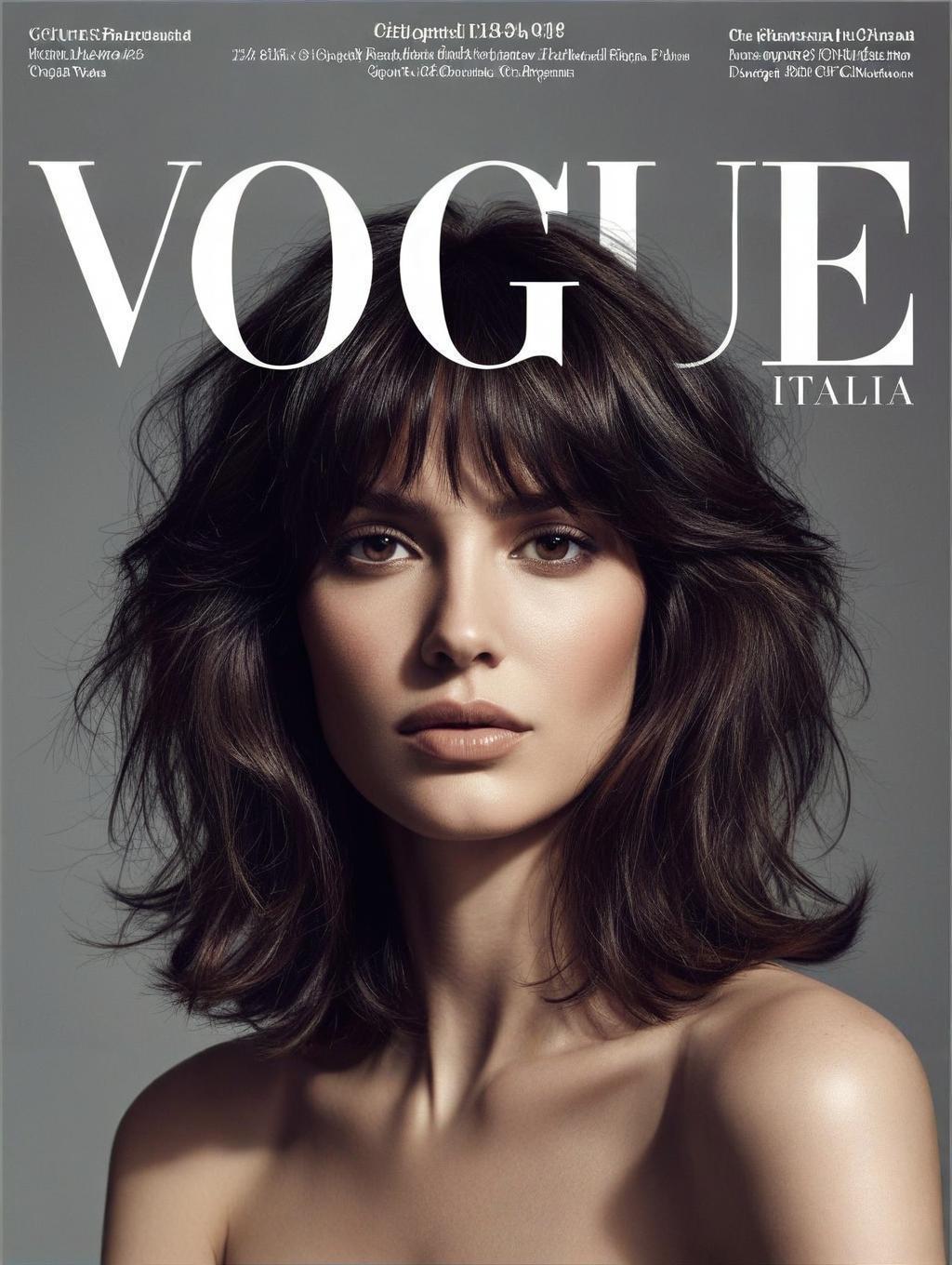
Embracing the Power Jawline
In the ever-evolving landscape of beauty standards, 2026 marks a revolutionary turning point for those blessed with triangle face shapes. Gone are the days when a strong, defined jawline was something to be minimized or hidden behind strategic draping of hair. Today, we stand at the precipice of a new aesthetic era—one that celebrates structural architecture in facial features rather than demanding conformity to oval-centric ideals. The triangle face, characterized by its narrower forehead widening to a powerful mandibular line, has finally claimed its rightful place in the pantheon of high-fashion beauty.
Consider the magnetic presence of celebrities like Minnie Driver and Kelly Osbourne, both proud owners of triangle face shapes who have transformed what some might consider a "challenging" feature into their most distinctive asset. These women do not shrink from their jawlines—they amplify them, frame them, and use them as the foundation for some of the most memorable red carpet moments in recent history. The shift from "hiding" to "balancing" represents more than just a styling evolution; it's a fundamental reimagining of how we perceive facial harmony and beauty itself.
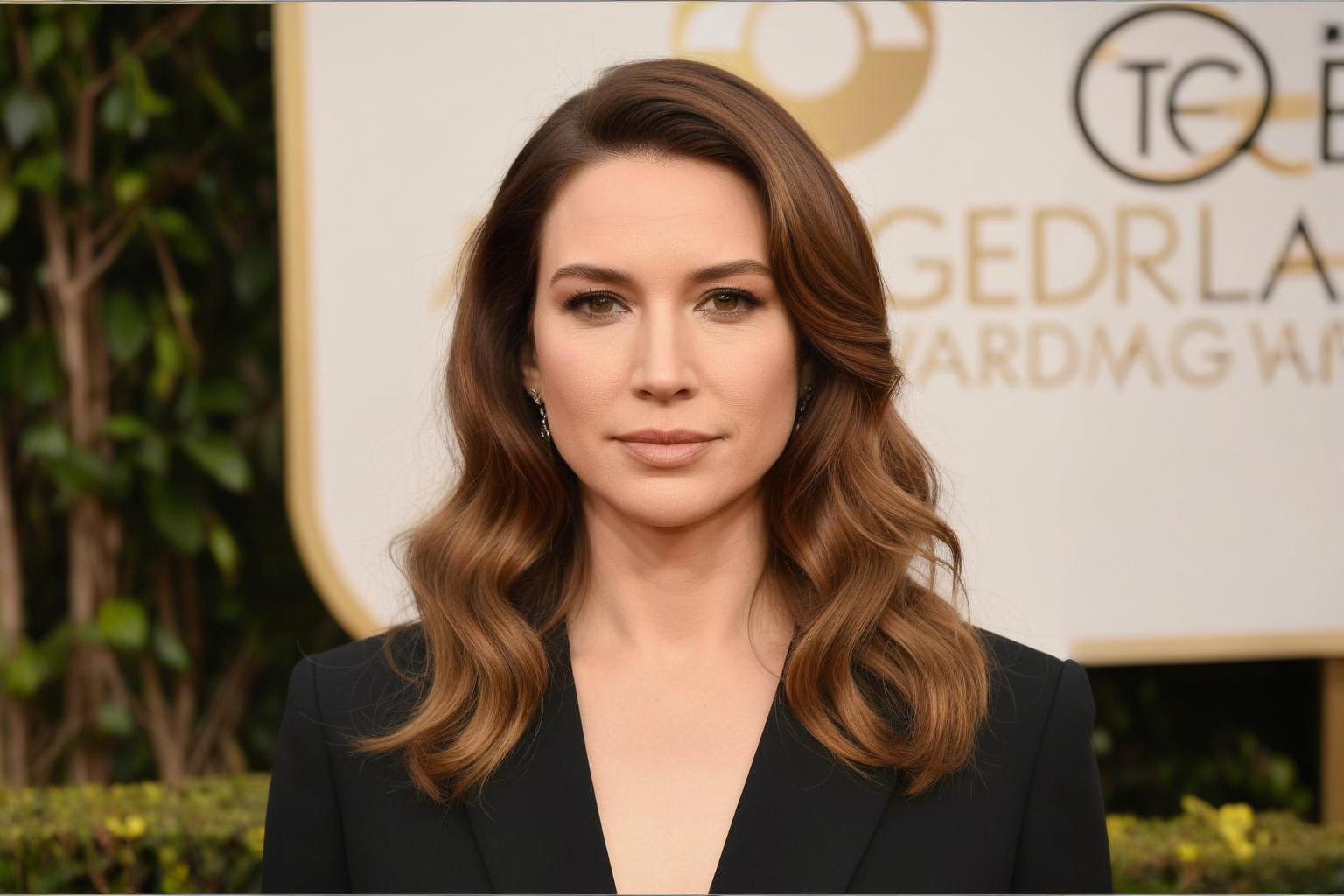
The psychology behind this transformation is fascinating. For decades, the beauty industry operated under the assumption that the oval face was the "ideal" shape, with all other configurations requiring correction. This created a generation of individuals who learned to view their natural features through a lens of inadequacy. The triangle face, with its distinctive inverted-triangle silhouette, was often subjected to particularly harsh scrutiny. Hairstylists would advise layers that cascaded forward to "narrow" the jaw, or cuts that added excessive width at the temples—well-intentioned advice that ultimately reinforced the message that this face shape was somehow "wrong."
But fashion, in its cyclical wisdom, has always had a way of subverting expectations. What was once considered a "flaw" becomes a signature. What was once hidden becomes celebrated. The strong jawline that characterizes triangle faces carries with it an inherent sense of strength, determination, and character—qualities that translate powerfully through the camera lens and resonate with audiences seeking authenticity over conventional perfection. In 2026, we don't style triangle faces to disguise them. We style them to create visual balance while preserving and honoring their inherent power.
"A strong jawline isn't a problem to solve—it's a canvas to celebrate. The right hairstyle doesn't hide your architecture; it frames it like the masterpiece it is."
— Guido Palau, Session Stylist
The concept of "balancing" rather than "fixing" is crucial to understanding the modern approach to triangle face styling. Balance implies that all elements of the face are valid and valuable; they simply need to be arranged in a way that creates visual harmony. This is fundamentally different from the corrective approach, which starts from the assumption that something is broken. When we balance a triangle face, we acknowledge that the jawline is a stunning feature that deserves attention—we simply want to ensure that attention is distributed across the face in a way that feels satisfying to the viewer.
This paradigm shift has opened up an entirely new vocabulary of styling options. Instead of being limited to styles that "slim" the jaw, individuals with triangle faces can now explore a rich tapestry of cuts, colors, and textures that work with their natural architecture. The Italian Shag with its cascading layers, the power bob with its strategic asymmetry, the Bardot bangs that add softness to the forehead—all of these options exist not to hide the triangle face, but to create a complete aesthetic picture where every element, including that magnificent jawline, plays its part in a harmonious whole.
As we delve deeper into this manifesto, you will discover that the triangle face is not a limitation—it's an opportunity. An opportunity to explore styles that few other face shapes can successfully carry. An opportunity to project strength and sophistication simultaneously. An opportunity to stand out in a world that increasingly values individuality over conformity. Your jawline is not something to be ashamed of; it's your secret weapon, waiting to be unleashed with the right styling strategy.
The Typical Traits of a Triangle Face
Understanding the unique architecture of your face is the first step toward mastering its styling potential. The triangle face shape—sometimes referred to as a "pear-shaped" face—possesses a distinctive set of visual characteristics that set it apart from other facial configurations. Unlike the oval, round, square, or heart-shaped faces that dominate most styling conversations, the triangle face operates under its own set of geometric principles, creating both challenges and opportunities for those who wear it proudly.
The most immediately recognizable trait of a triangle face is the relationship between the forehead and the jawline. When viewed head-on, the forehead appears noticeably narrower than the jaw, creating a silhouette that widens as it descends. This inverted-triangle shape is the defining feature that gives this face shape its name and its unique styling requirements. It's important to note that this isn't about the forehead being "small"—rather, it's about the proportional relationship between the upper and lower thirds of the face. A triangle face might have a perfectly average-sized forehead, but the jawline's prominence creates a visual contrast that defines the overall shape.
Narrow Forehead
The upper third of the face appears visually narrower, creating an inverted base for the facial structure.
Strong Mandibular Angle
A defined, angular jawline that creates the widest point of the face at the lower third.
Low Hairline
Often accompanied by a narrower hairline that contributes to the upper-face narrowness effect.
The second defining characteristic is the strong and defined mandibular angle. This is where the triangle face truly distinguishes itself from other shapes with prominent jaws, such as square faces. While a square face features a jawline that runs parallel to the forehead (creating equal width at top and bottom), the triangle face's jawline expands outward from the temples, creating a dramatic angular sweep that defines the lower face. This mandibular angle is often sharp and well-defined, giving the face its characteristic strength and presence.
The third key trait involves the hairline. Triangle faces frequently feature a low and narrow hairline that contributes to the overall narrowing effect at the top of the face. This isn't universally true—some triangle faces have higher hairlines but still maintain the characteristic jaw prominence—but when present, this trait reinforces the inverted-triangle silhouette. The hairline's position and shape can significantly influence styling choices, as it determines how much forehead is visible and how hair can be styled to create volume at the temples.
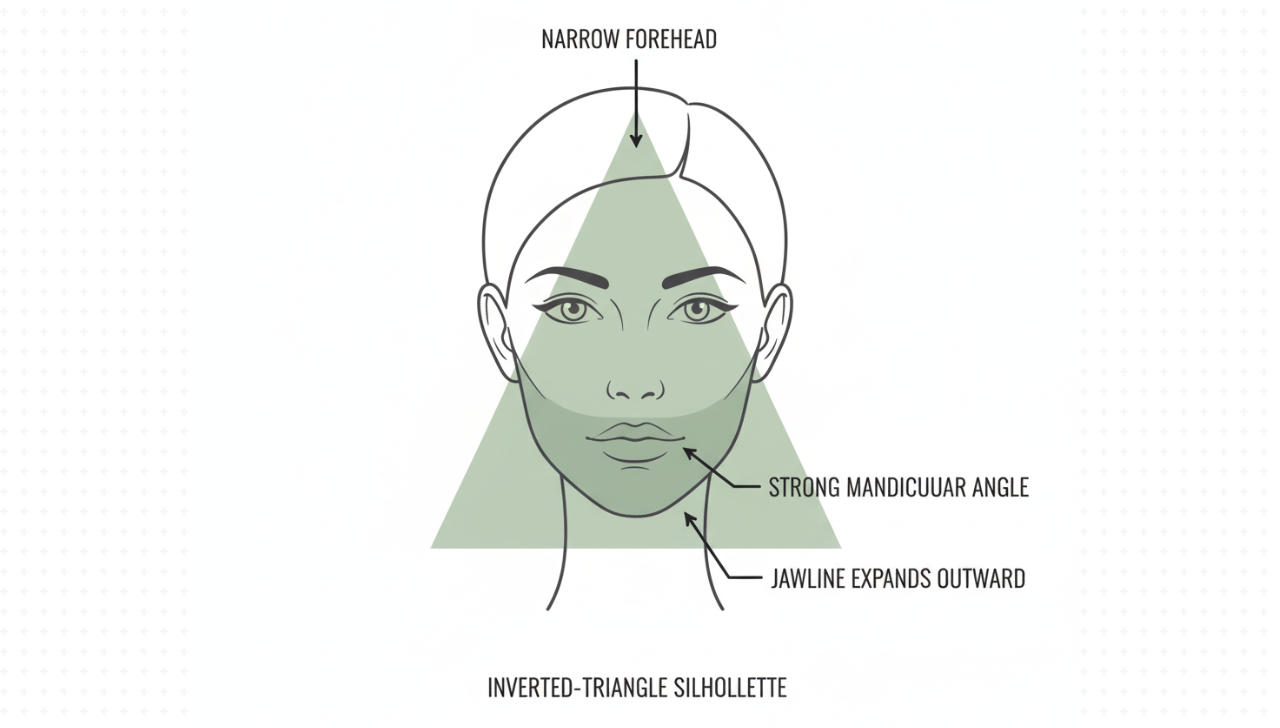
Beyond these primary characteristics, triangle faces often share several secondary traits that influence styling decisions. The cheekbones, while present, typically don't extend as far laterally as the jawline, meaning the face's widest point remains at the mandibular region rather than at the mid-face. The chin itself may be somewhat pointed or squared, depending on individual variation, but it maintains its position as part of the broader jawline structure rather than projecting independently.
Understanding these traits isn't about cataloging flaws—it's about mapping the unique terrain of your face so you can navigate it with confidence and creativity. Each of these characteristics contributes to the overall aesthetic that makes triangle faces so distinctive and, when styled correctly, so strikingly beautiful. The narrow forehead provides a natural frame for volumizing styles; the strong jawline offers a dramatic anchor point for asymmetric cuts; the defined mandibular angle creates the perfect canvas for styles that celebrate angularity rather than fighting against it.
As we move forward into the science of optical balance, keep these traits in mind. They are not problems to be solved but rather puzzle pieces that, when arranged correctly, create a complete and compelling picture. The goal is not to transform your triangle face into an oval—it's to style your triangle face in a way that feels balanced, harmonious, and authentically you.
The Science of Optical Balance
The human brain is a remarkable pattern-recognition machine, constantly processing visual information and making split-second judgments about harmony, proportion, and beauty. When we look at a face, our brains don't simply catalog individual features—they perform complex calculations about relationships between those features, seeking patterns that align with our innate sense of visual equilibrium. Understanding this process is the key to mastering the art of optical balance for triangle faces.
At the heart of this science lies what we call the "A-Shape vs. V-Shape" theory. This conceptual framework describes how the brain processes facial silhouettes and determines whether a face feels "balanced" or "unbalanced" based on its perceived geometric shape. The V-shape—where the face narrows from temples to chin—has historically been associated with the "ideal" feminine face in many cultures. This preference is deeply rooted in biological and evolutionary psychology, as a defined V-shape has been linked to perceptions of youth and femininity.
However, the triangle face presents an A-shape silhouette—the opposite configuration, where the face widens from temples to jaw. When the brain encounters an A-shape face without any visual intervention, it may flag this as "unusual" or "unbalanced" simply because it deviates from the more commonly preferred V-shape. This doesn't mean the A-shape is inherently less beautiful—far from it. It simply means that the brain needs additional visual cues to process the face in a way that feels harmonious.
A-Shape (Triangle)
Natural triangle face silhouette. Wider at the jaw, narrower at the temples.
V-Shape (Balanced Goal)
Target silhouette. Creating visual width at temples balances the jawline naturally.
This is where the magic of strategic volume placement comes into play. By adding visual weight—through hair volume, texture, or styling—at the upper third of the face, we create an optical illusion that transforms the perceived silhouette from A-shape to something closer to a balanced oval. The brain, processing this new visual information, now sees a face that maintains its distinctive jawline while appearing more proportionally balanced. The key insight here is that we're not trying to hide or shrink the jawline; we're simply providing visual counterweight at the temples.
The science behind this illusion is rooted in the Gestalt principles of perception, particularly the principle of figure-ground organization and the principle of closure. When we add volume at the temples, the brain's pattern-recognition systems adjust their calculations about where the face's "edges" are. The expanded silhouette at the top of the head becomes part of the perceived facial boundary, creating a new shape that reads as more balanced to the unconscious visual processing centers.
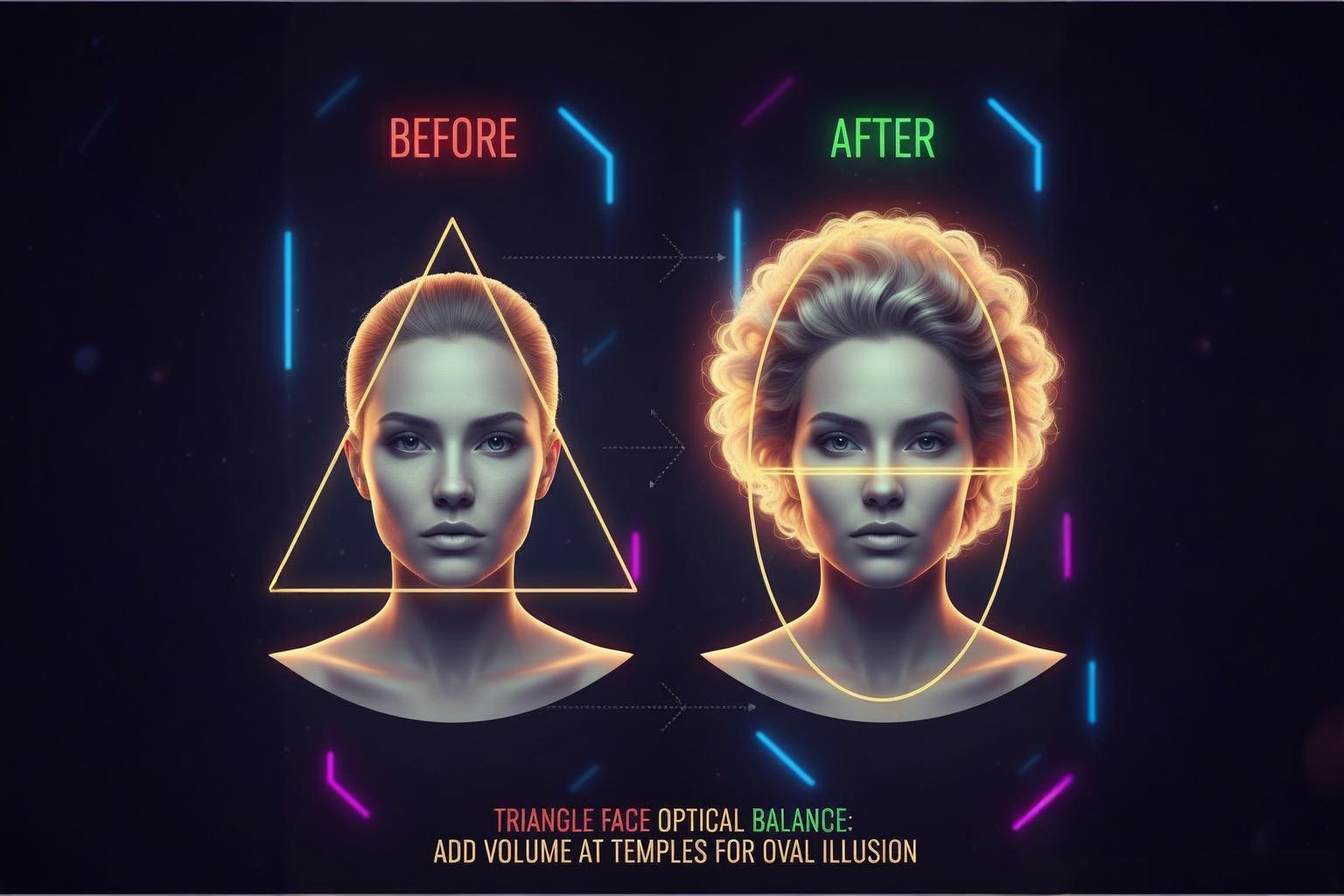
What's particularly fascinating is that this optical illusion works even when the viewer consciously knows about the styling trick. The brain's pattern-recognition systems operate largely below the level of conscious awareness, making judgments about proportion and balance before our conscious mind has a chance to intervene. This is why someone can look at a well-styled triangle face and perceive it as "perfectly balanced" even if they're consciously aware that the person has a strong jawline.
The practical application of this science involves understanding three key zones of the face: the upper third (temples and forehead), the middle third (cheekbones and mid-face), and the lower third (jawline and chin). For triangle faces, the natural visual "weight" distribution is skewed toward the lower third. Our styling goal is to redistribute this perceived weight by adding volume, texture, or visual interest to the upper third, creating a more balanced tripartite composition.
"Hair is architecture. When you understand the geometry of a face, you can use hair as a structural element to create balance, harmony, and visual poetry."
— Vidal Sassoon
The degree of volume needed varies based on the individual face. A triangle face with a moderately wider jaw might only need subtle temple volume to achieve balance, while a more dramatically triangular face might benefit from more pronounced volume creation. This is where the artistry of styling meets the science of perception—the best stylists intuitively understand these principles and apply them with the precision of a sculptor working with clay.
As we explore specific styling techniques in the following sections, keep this framework in mind. Every cut, every wave, every strategic placement of volume is an intentional intervention in the brain's perception process. You're not just styling hair—you're engineering an optical illusion that transforms how the world sees your face, and more importantly, how you see yourself.
The Italian Shag with Bardot Bangs
If 2026 had a defining hairstyle for triangle faces, it would unequivocally be the Italian Shag with Bardot Bangs. This stunning combination has emerged as the year's most requested cut in salons from Milan to Manhattan, and for good reason: it addresses every optical balancing need of the triangle face while delivering an effortlessly chic aesthetic that feels both contemporary and timelessly glamorous. The Italian Shag represents the perfect marriage of form and function—a cut that creates strategic volume exactly where triangle faces need it most.
The Italian Shag differs from its predecessors—the 70s shag, the 90s layered cuts, the 2010s "mob" hairstyles—in its refined approach to texture and volume. While traditional shags relied on heavy, sometimes choppy layering throughout the length, the Italian interpretation is more surgical in its execution. The layering is concentrated at the crown and upper sections of the hair, creating that coveted "top-weight" that optical balance theory demands for triangle faces. The lower lengths remain fuller and more solid, providing a soft frame that doesn't compete with or emphasize the jawline.
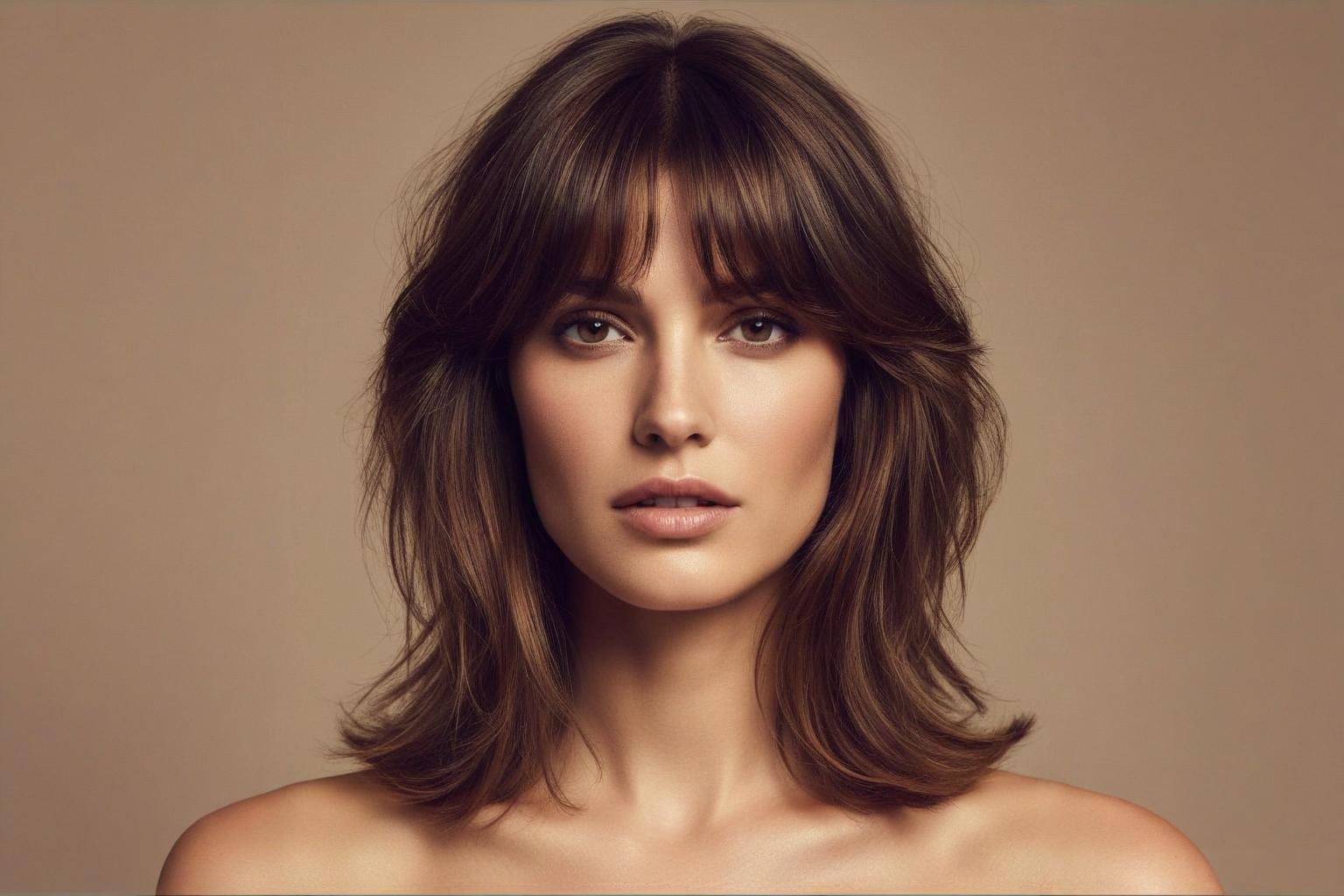
The crown volume of the Italian Shag is achieved through what stylists call "interior graduation"—a technique where layers are cut shorter within the interior of the hair mass, pushing the longer exterior hair upward and outward. This creates natural, movement-based volume at the top of the head without requiring extensive heat styling or products. For triangle-faced individuals, this built-in volume at the crown creates the optical illusion of a broader upper face, balancing the wider jawline below.
The Bardot Bangs component of this style deserves its own analysis. Named after the iconic French actress Brigitte Bardot, these bangs are characterized by their curtain-like quality—they're cut to part slightly off-center, with the longest pieces framing the temples and shorter pieces creating a wispy effect across the forehead. For triangle faces, this bang style is nothing short of revolutionary. By adding visual weight and texture at the temple area, Bardot Bangs directly address the narrow-forehead characteristic of triangle faces. The result is an immediate perception of width at the upper face, creating balance before the eye even travels to the jawline.
Style Breakdown
Crown Volume
Interior graduation creates natural lift at the top third of the head, adding upper-face visual weight.
Temple-Frame Bangs
Wispy pieces that hit at the temples create the illusion of a wider forehead and soften the transition to the jawline.
Soft Layering
Graduated layers throughout maintain movement without creating bulk at the jaw level.
Fuller Ends
The bottom third remains substantial, providing a soft frame that doesn't compete with the natural jawline.
What makes the Italian Shag with Bardot Bangs particularly suited to 2026's aesthetic landscape is its versatility. This style works beautifully with a range of hair textures, from fine and straight to thick and wavy. For those with naturally straight hair, the style can be enhanced with texture sprays and minimal heat styling to create the signature lived-in look. For those with wavy or curly hair, the cut is designed to work with natural texture rather than against it, with the layering pattern accommodating and enhancing natural movement patterns.
The styling routine for this cut is refreshingly low-maintenance, aligning with 2026's broader trend toward "effortless" beauty. After washing, apply a volumizing mousse at the roots and a texturizing spray through the mid-lengths. Blow-dry using a round brush at the crown to enhance volume, then let the ends air-dry or diffuse for natural texture. The Bardot Bangs can be styled with a quick pass of a flat iron, curving them slightly away from the face to create that signature curtain effect.
Salon maintenance for the Italian Shag is relatively forgiving. The cut grows out gracefully, with the layered structure maintaining its shape even as it lengthens. Most stylists recommend a trim every 8-10 weeks to maintain the bangs' framing effect and prevent the layers from becoming too heavy. The Bardot Bangs specifically may need more frequent attention—every 4-6 weeks—to keep them at the optimal length for temple framing.
The Italian Shag with Bardot Bangs represents more than just a trendy cut—it's a comprehensive styling solution for triangle faces that addresses optical balance needs while delivering high-fashion appeal. Whether you're heading to the office, a gallery opening, or a weekend brunch, this style transitions seamlessly across contexts while maintaining that strategic volume that makes triangle faces sing. It's no wonder this combination has become the go-to recommendation from stylists specializing in face-shape-appropriate cuts.
The Side-Swept Power Bob
For those who prefer a shorter, more structured aesthetic, the Side-Swept Power Bob emerges as the definitive triangle-face solution in the short-hair category. This isn't your grandmother's bob—nor is it the angular, chin-length bob that dominated the early 2000s. The Power Bob of 2026 is a sophisticated architectural cut that uses asymmetry as its primary tool for optical face balancing, creating a dynamic interplay between hair and facial structure that celebrates the triangle face rather than working against it.
The fundamental principle behind the Side-Swept Power Bob is elegantly simple: asymmetry breaks symmetry. A triangle face presents a symmetrical A-shape silhouette that, while beautiful, can feel visually heavy at the jawline. By introducing a strong asymmetric element—the deep side part and swept styling—the eye is guided diagonally across the face rather than settling on the horizontal width of the jaw. This diagonal visual line creates movement and interest while subtly redistributing perceived facial proportions.
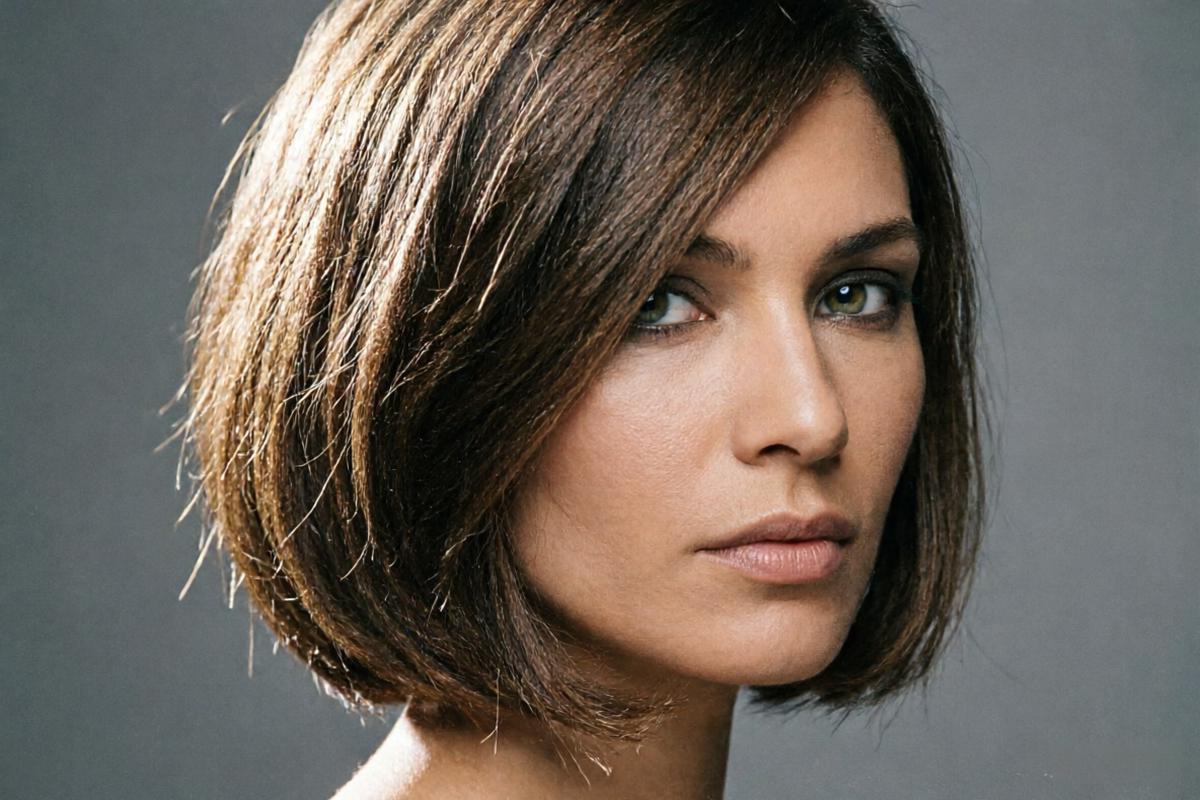
The length of a Power Bob for triangle faces must be chosen with careful consideration. The cardinal rule—never cut the hair to end exactly at the jawline—cannot be overstated. When hair ends precisely at the jaw, it creates a horizontal line that visually extends the jaw's width, exactly the opposite effect we want to achieve. Instead, the Power Bob should either fall above the jawline (creating a lifted, modern look) or below it (softening and elongating the face). For triangle faces specifically, the below-jaw length is particularly effective, as it creates a vertical line that counterbalances the horizontal emphasis of the jaw.
The deep side part is the engine that drives this style's effectiveness. By positioning the part significantly off-center—typically aligning with the arch of the eyebrow on one side—we create natural volume at the side with more hair. This asymmetric volume distribution serves dual purposes: it adds visual weight to one side of the upper face, and it creates a diagonal sweep that guides the eye. For triangle faces, the part should be positioned on the side where you want to create the most volume and visual interest, typically the side with the stronger mandibular angle if there's any natural asymmetry.
Length Guide for Triangle Faces
Above Jawline (Chin Level)
Modern, edgy look. Works well with strong texture and volume at roots.
At Jawline (Avoid)
Creates horizontal line that emphasizes jaw width. Not recommended.
Below Jawline (Collarbone)
Most flattering for triangle faces. Creates vertical line that elongates and balances.
The styling of a Power Bob should incorporate what we call "directional volume"—volume that's intentionally pushed to one side rather than distributed evenly. After washing, apply a root-lifting spray at the crown and on the heavier side of the part. Blow-dry using a vent brush, directing hair across the forehead and toward the heavier side. A large round brush can be used on the ends to create a subtle under-curl that adds polish without creating a dated look. Finish with a light-hold hairspray and a shine serum on the mid-lengths and ends.
Color can enhance the Power Bob's face-balancing effects. Lighter tones or highlights placed strategically at the top and on the heavier side of the part will add visual weight exactly where triangle faces need it. Conversely, keeping the ends slightly darker or more solid in color prevents the lower portion of the hair from visually expanding, which could otherwise emphasize the jaw. This approach to color—what we call "gradient weighting"—creates a subtle visual gradient that supports the optical balancing already achieved through the cut.
The Side-Swept Power Bob is ideal for the modern professional who wants a polished, sophisticated look without the maintenance demands of longer styles. It transitions seamlessly from boardroom to evening events, can be styled in under ten minutes, and grows out gracefully between appointments. For triangle-faced individuals seeking a shorter alternative to the Italian Shag, the Power Bob offers all the optical balancing benefits with a cleaner, more structured aesthetic.
Texture and Waves: The Temple-Volume Technique
While the right haircut provides the foundation for triangle-face styling, it's the texturing and waving techniques that elevate a good cut to a great one. The Temple-Volume Technique represents the culmination of years of styling innovation specifically designed for triangular face shapes—a methodical approach to creating and maintaining volume exactly where optical balance theory demands it. Mastering this technique transforms your daily styling routine from a frustrating battle against gravity into a confident execution of proven principles.
The Temple-Volume Technique begins with understanding that not all volume is created equal. For triangle faces, volume at the crown is good, but volume at the temples is transformative. The temple area—roughly from the outer corner of the eye to the top of the ear—is the critical zone where adding visual width creates the most dramatic optical balancing effect. This is where the brain's pattern-recognition systems are most sensitive to width cues, and where strategic volume placement yields the greatest return on styling investment.
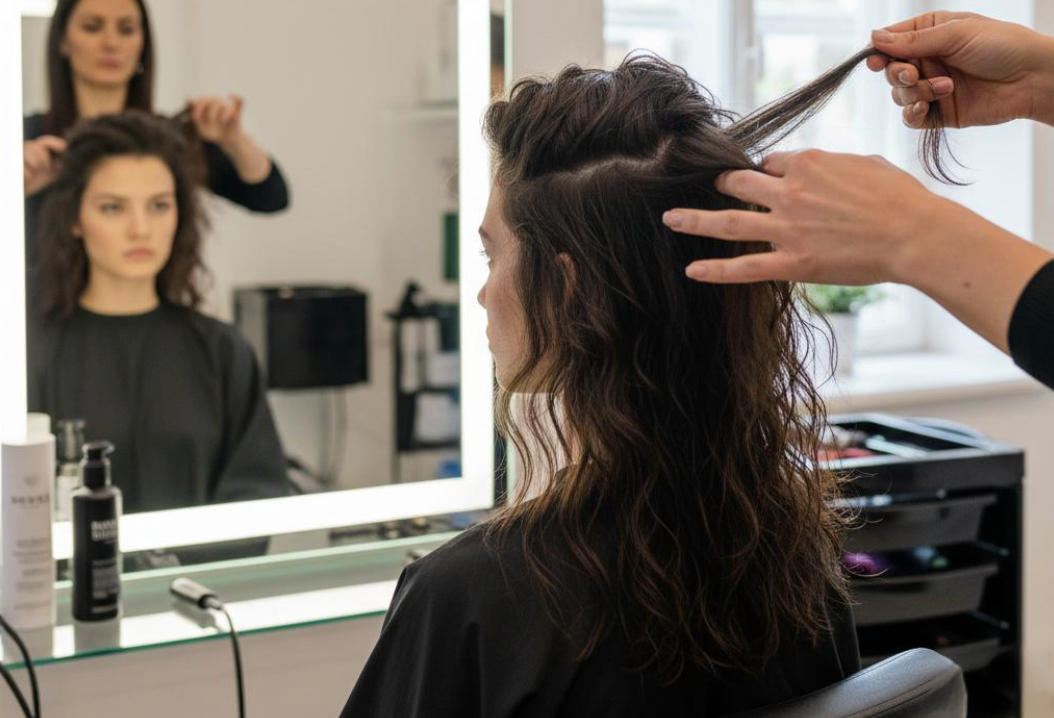
The foundation of temple volume creation lies in product selection and application. In 2026, texture sprays have evolved to become sophisticated styling tools rather than just finishing products. Look for sprays containing sea salt derivatives and volumizing polymers that provide hold without the crispy texture of earlier formulations. The ideal texture spray for temple volume should offer what we call "flexible structure"—the ability to create volume that moves naturally rather than freezing hair in place.
2026 Essential Products for Temple Volume
Root Lifting Spray
Apply at damp roots before blow-drying. Creates foundational lift at the temple area.
Sea Salt Texture Spray
Mist through mid-lengths. Provides grit and separation for lasting texture.
Volumizing Mousse
Apply to damp hair before styling. Builds body and movement throughout.
Dry Texturizing Spray
Apply to dry hair at temples. Instantly boosts volume and creates lasting texture.
The step-by-step execution of the Temple-Volume Technique is as follows: Begin with freshly washed, towel-dried hair. Apply a golf-ball-sized amount of volumizing mousse evenly from roots to mid-lengths, using a wide-tooth comb to distribute. Next, apply root-lifting spray directly at the temple area—lift sections of hair and spray at the roots, focusing on the sides rather than the top of the head. This targeted application ensures volume where it's needed most, rather than creating a "bubble" at the crown.
Blow-drying technique is crucial for temple volume creation. Flip your head upside down and dry the root area until about 70% dry. Then, flip upright and use a round brush specifically at the temple sections. Rather than rolling the brush under (which creates curl), lift the hair upward and outward from the scalp, directing heat at the roots. This technique creates what we call "lifted volume"—hair that stands slightly away from the head at the temples, creating the visual width needed for optical balance.
Once hair is dry, sea salt texture spray can be applied to enhance and set the texture. Mist lightly throughout, then use your fingers to scrunch and lift the hair at the temples. Avoid brushing, which can flatten the volume you've created. For additional texture, consider using a large-barrel curling iron to create loose waves at the temple area—wrap sections away from the face to create outward movement, then break up the waves with your fingers for a natural, lived-in finish.
For those with naturally wavy or curly hair, the Temple-Volume Technique can be adapted to enhance natural texture. After applying products, use a diffuser attachment on your blow-dryer to encourage curl formation without disrupting the volume at the roots. Gently lift the hair at the temples while diffusing to encourage upward growth patterns. Once dry, avoid touching or disturbing the curl pattern—over-manipulation is the enemy of volume for textured hair.
The beauty of the Temple-Volume Technique lies in its versatility. Whether you're working with a shag, a bob, or longer layers, the principles remain the same: targeted product application, strategic heat direction, and gentle manipulation to create width at the temples. With practice, this technique becomes second nature, transforming your morning routine into a confident execution of optical balancing principles that will keep your triangle face looking its best throughout the day.
The Disconnected Undercut with Fringe
Triangle face shapes are not exclusive to women—many men possess this distinctive facial architecture, and the principles of optical balance apply equally regardless of gender. For men with triangle faces, the Disconnected Undercut with Fringe has emerged as the definitive style of 2026, offering a contemporary, masculine aesthetic that strategically addresses the narrow-forehead/wide-jaw dynamic without sacrificing the strong, confident look that many men prefer to project.
The Disconnected Undercut is characterized by its dramatic contrast between the short sides and longer top. For triangle faces, this contrast works brilliantly—the close-cropped sides prevent any additional bulk at the jaw area, while the longer top provides the canvas for volume creation at the temples and forehead. The "disconnection" refers to the visible separation between the short sides and the longer top, creating a clean, architectural line that adds visual interest without interfering with the face-balancing goals.
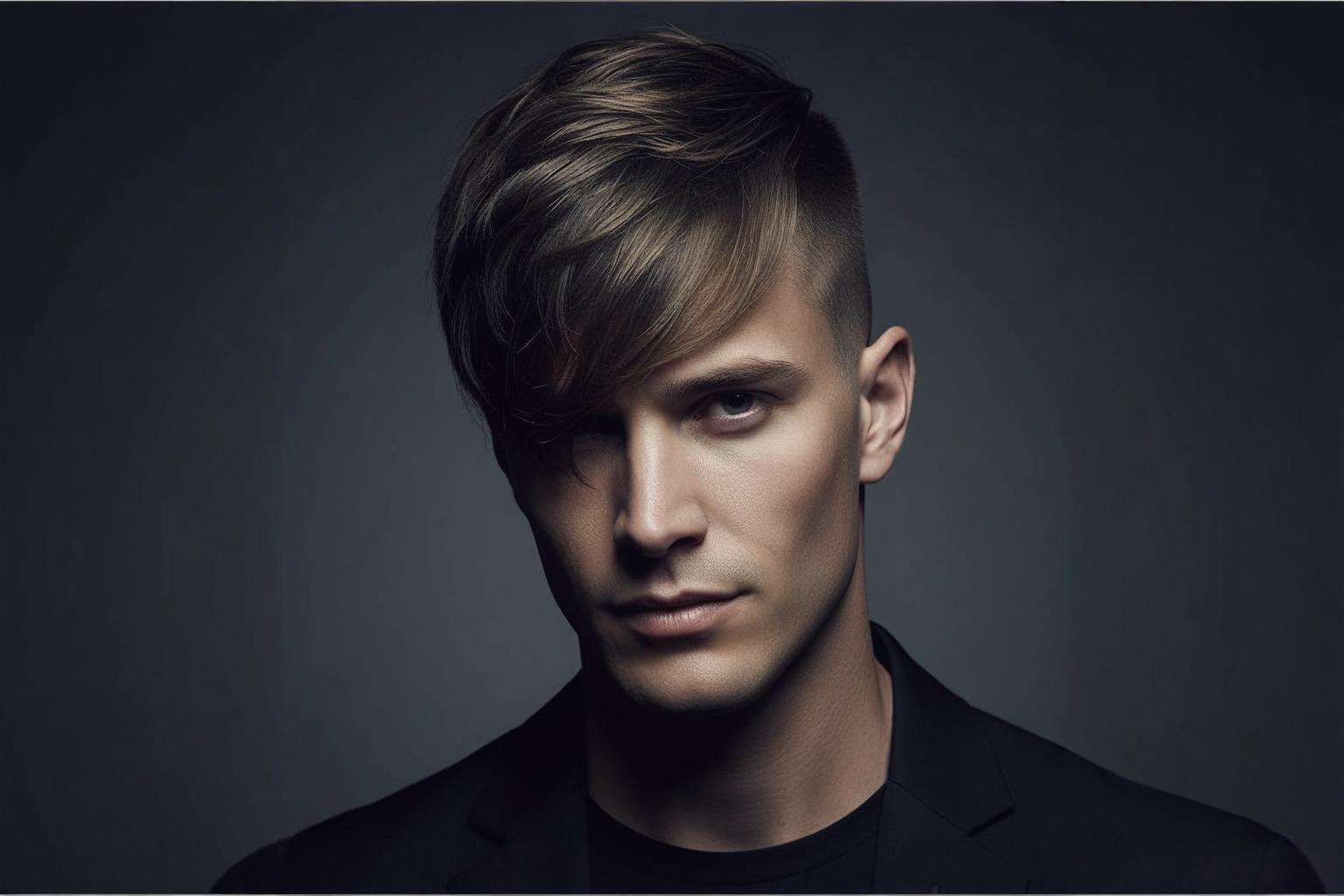
The fringe component is what transforms this from a stylish cut to a triangle-face solution. By wearing the longer top hair forward as a fringe—or with a slight wave or texture that creates a forehead-grazing effect—visual weight is added to the upper third of the face. This fringe doesn't need to be heavy or curtain-like; even a textured, swept-across fringe creates the illusion of a broader forehead, achieving optical balance without appearing deliberately styled for face-shape purposes.
Styling the Disconnected Undercut with Fringe requires minimal product but precise technique. After washing, apply a dime-sized amount of styling paste or matte clay to damp hair, focusing on the longer top section. Blow-dry the top hair forward and slightly upward, using your fingers to create texture and lift at the roots. Once dry, apply a small amount of styling product to the fringe area, arranging it to fall across the forehead in a natural, textured manner. The sides, being short, require minimal attention—simply ensure they're neat and blended into any facial hair if present.
The length of the top section should be sufficient to create meaningful fringe—typically 3-4 inches at minimum. Shorter than this, and the hair won't have enough length to fall forward convincingly; longer than 6 inches, and the style transitions into a different aesthetic category. The ideal length allows for flexibility—the fringe can be worn forward for casual settings or swept back for more formal occasions, adapting to different contexts while maintaining the underlying face-balancing structure.
For men hesitant about the fringe element, consider that the 2026 aesthetic strongly favors textured, natural-looking hair over rigid, product-heavy styles. A fringe that moves and has natural texture doesn't read as "styled"—it reads as effortless. The Disconnected Undercut with Fringe allows men with triangle faces to embrace their facial architecture while creating visual balance through a cut that feels contemporary, masculine, and authentic.
Avoid the Bottom-Heavy Pitfall
Understanding what works for triangle faces is essential, but equally important is recognizing what doesn't work. The "Bottom-Heavy Pitfall" refers to styling choices that inadvertently emphasize the wider lower face, creating the opposite of optical balance. These are the red-flag styles and techniques that, while potentially beautiful on other face shapes, can undermine the confident, balanced aesthetic we're working to achieve.
The most common pitfall is chin-length curls or waves that concentrate volume at the jawline level. While curls and waves are generally positive additions—adding movement and texture to hair—when they're positioned at or below the chin, they create a visual expansion at exactly the wrong place. The eye is drawn to the widest part of the face, and the curls add visual width to an already prominent area. This doesn't mean triangle faces can't have curls; it means curls should be concentrated at the mid-lengths and ends rather than at the jaw level.
Center-Parted Flat Hair
Creates a vertical line that visually divides the face, drawing attention to width disparity between forehead and jaw.
Chin-Length Bobs
Ends hair right at the widest point of the face, creating a horizontal line that emphasizes jaw width.
Severe Ponytails
Pull hair tightly away from the face, exposing the full triangle shape without any balancing volume at the temples.
Heavy Bottom Layers
Layering concentrated at the lower lengths adds bulk where triangle faces need it least.
Center-parted, flat hair is another major pitfall for triangle faces. A center part creates a vertical line down the middle of the face, which visually bisects the head. For triangle faces, this draws attention to the width disparity between the narrow top and wide bottom—the eye naturally follows the center line down and then expands outward at the jaw. This doesn't mean center parts are entirely off-limits, but they should be paired with volume at the temples and some forward movement to prevent the flat, elongated effect.
Finally, severe, slicked-back styles or tight ponytails expose the triangle shape in its unmodified form. Without any hair framing the face or creating volume at the temples, the full triangular silhouette is visible. These styles can work for formal occasions, but consider adding a few loose pieces at the temples or a slight pompadour element to maintain some balancing volume at the upper face.
The Celebrity Jawline Hall of Fame
Nothing illustrates the power of strategic styling quite like observing how A-list celebrities with triangle faces navigate the red carpet. These women have access to the world's most talented stylists, and their choices provide a masterclass in triangle-face styling done right. From Minnie Driver's romantic waves to Kelly Osbourne's bold transformations, the Celebrity Jawline Hall of Fame showcases the full spectrum of possibilities for those blessed with this distinctive face shape.
Minnie Driver stands as perhaps the quintessential triangle-face icon. Throughout her career, she has consistently chosen styles that add volume at the crown and temples while allowing her strong jawline to remain a celebrated feature rather than something to be hidden. Her signature look—loose, romantic waves that start at eye level and cascade past her shoulders—creates a beautiful balance between the structured lower face and the soft, voluminous hair above. Driver's red carpet appearances consistently demonstrate that she understands her face shape and works with it, not against it.
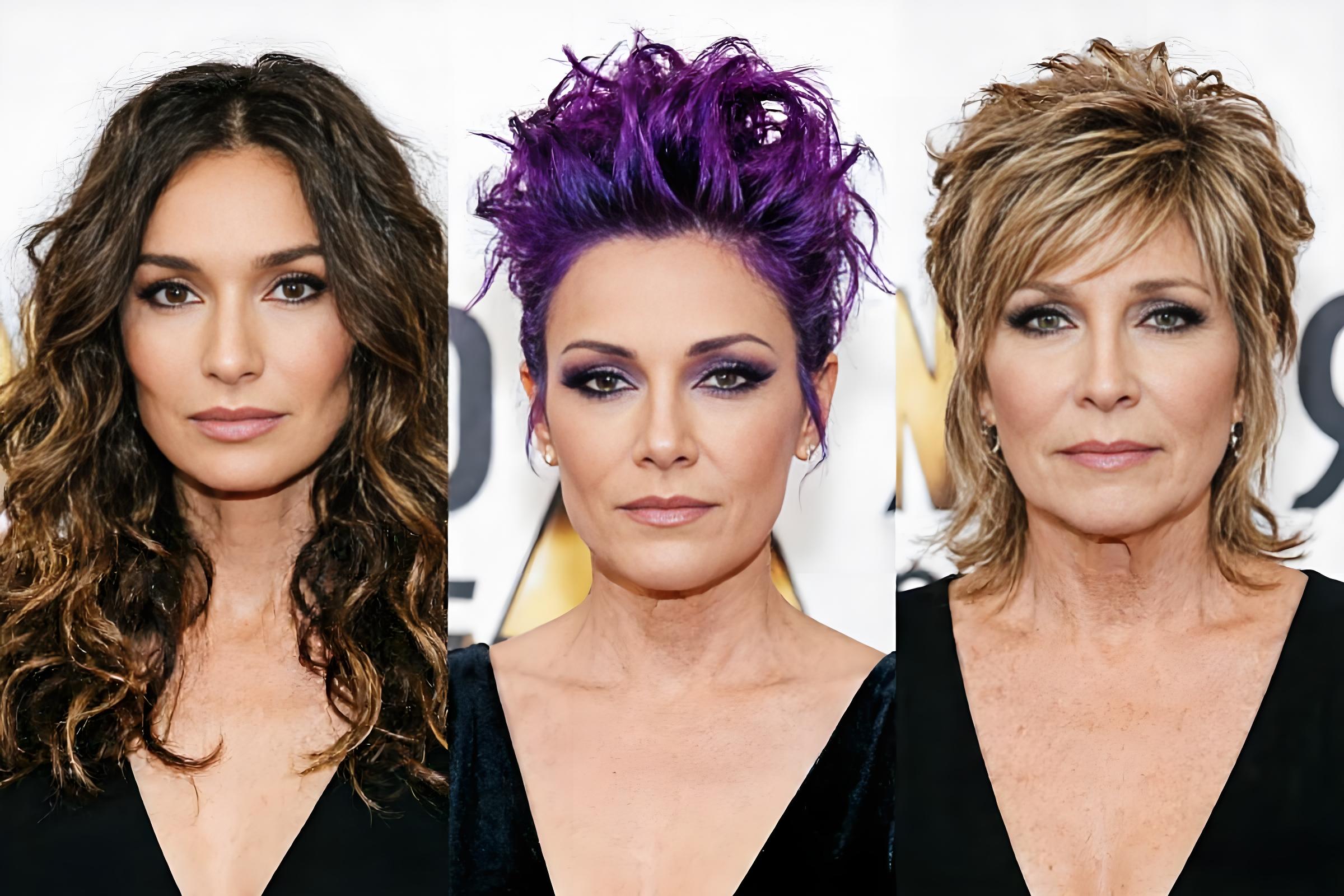
Kelly Osbourne's journey with her triangle face provides a fascinating case study in transformation. In her earlier public appearances, she often struggled with styles that emphasized rather than balanced her jawline. However, as she evolved her personal style, she discovered the power of volume at the crown and strategic asymmetry. Her purple-hair era featured textured, voluminous styles that added significant top-weight, creating the optical balance that transformed her look. Osbourne's journey proves that finding the right style is often a process of experimentation and self-discovery.
The late Carrie Fisher, while often associated with her iconic Princess Leia buns, actually sported a variety of triangle-face-friendly styles throughout her career. Her natural hair texture—thick and slightly wavy—lent itself beautifully to styles that created volume at the upper face. Fisher's off-duty looks often featured loose, shoulder-length cuts with subtle layering that added movement without creating bulk at the jaw. Her style evolution offers valuable lessons for those with similar hair texture and face shape.
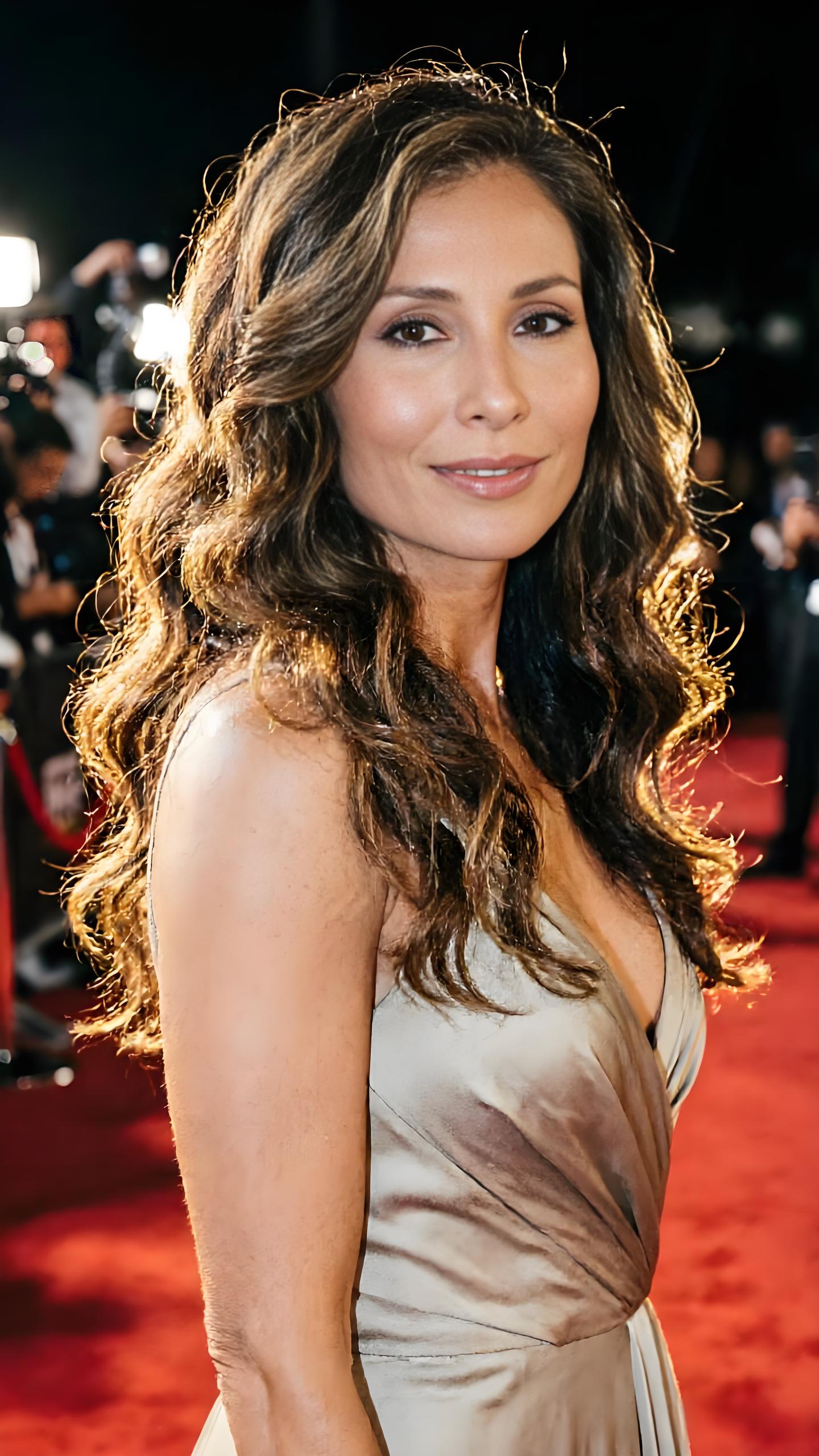
Minnie Driver
Romantic waves with temple volume
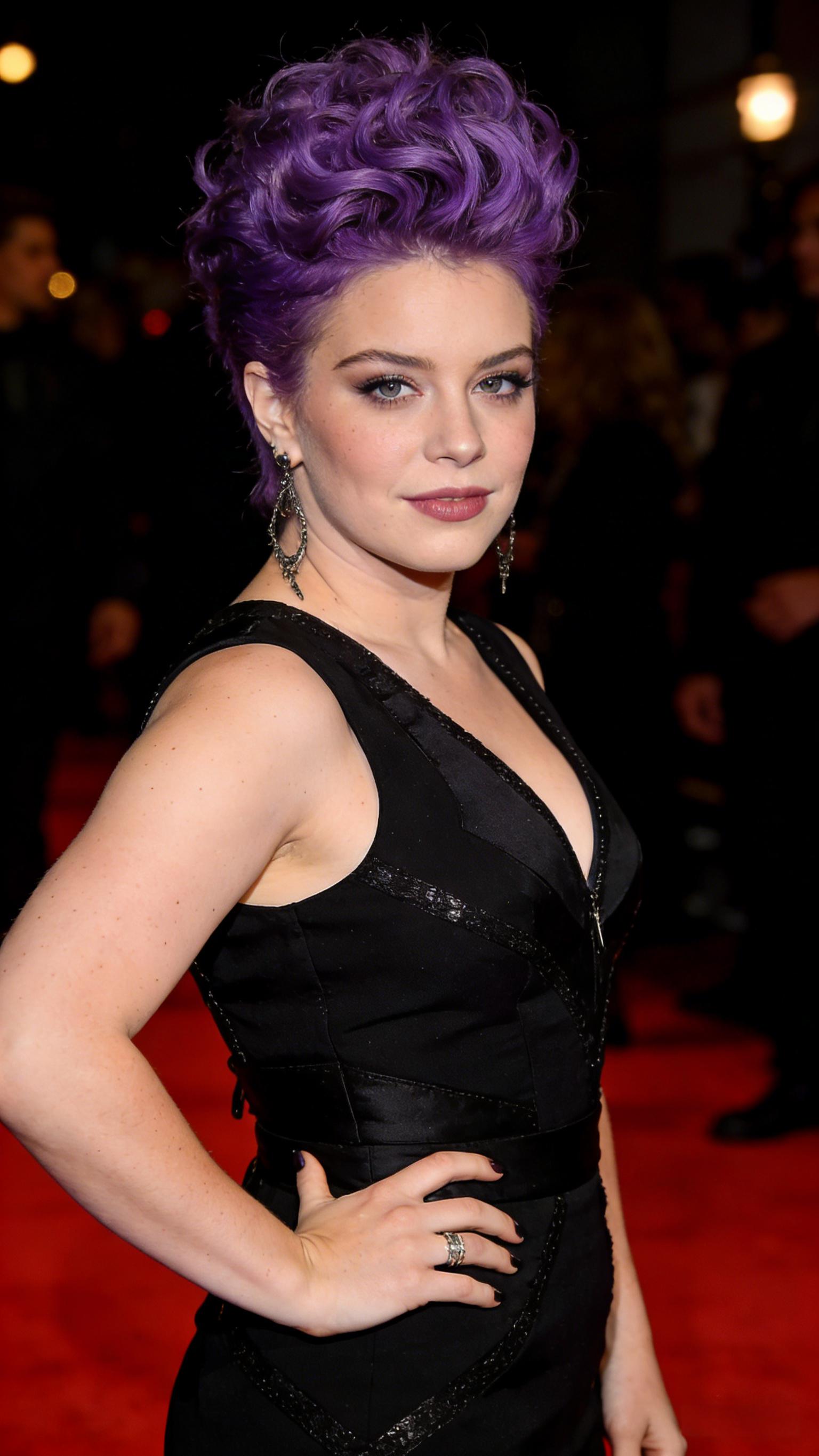
Kelly Osbourne
Bold color with textured crown volume
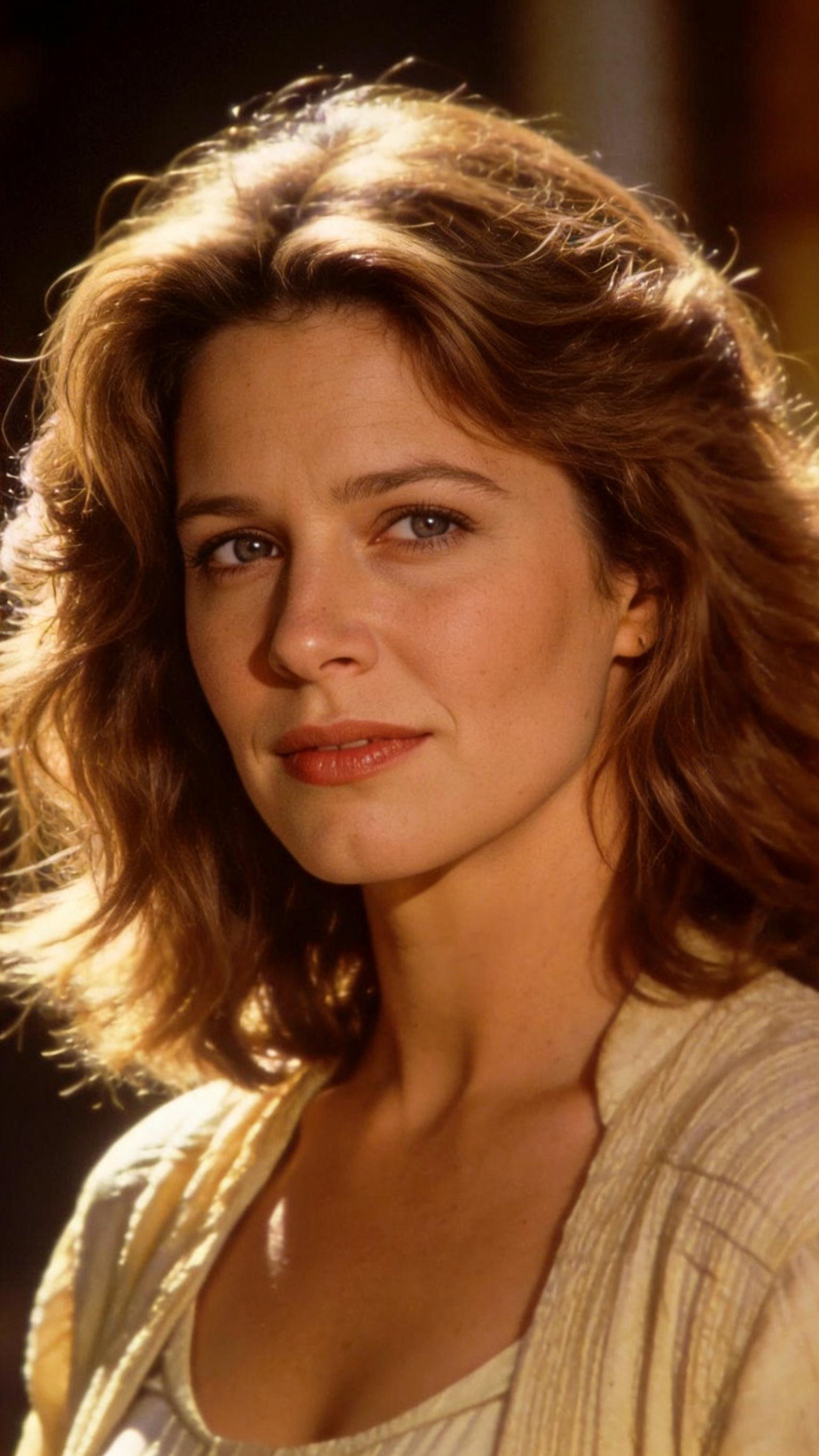
Carrie Fisher
Natural texture with soft layers
What unites all these celebrity examples is an apparent understanding of their face shape and a willingness to embrace rather than fight their natural architecture. These women don't hide their jawlines—they style around them, creating visual compositions that allow every feature to play its part in a harmonious whole. Their red carpet appearances serve as living proof that a triangle face, when styled with intention and understanding, can be every bit as striking and memorable as any other face shape.
The key takeaway from celebrity triangle-face styling is consistency. These icons don't just stumble upon flattering looks occasionally—they consistently choose styles that work with their face shape because they've taken the time to understand what flatters them. This understanding, combined with the guidance of skilled stylists, results in a track record of successful looks that we can all learn from and be inspired by.
Volume Placement Map
Your definitive guide to where volume should be concentrated for optimal triangle-face styling.
Temples
Primary focus area
Maximum volume creation here creates the optical illusion of a wider upper face, balancing the jawline naturally.
Crown
Secondary focus area
Moderate volume at the crown adds height and elegance without overpowering the temple focus.
Jawline
Minimal intervention
Keep volume minimal here. Let hair fall naturally or slightly inward to avoid emphasizing jaw width.
AI Hair Studio: Your Geometry Optimizer
At AI Hair Studio, we've harnessed advanced spatial mapping technology to revolutionize how you discover your perfect hairstyle. Our proprietary algorithm analyzes your facial geometry with precision, detecting your jawline width, temple proportions, and unique architectural features to automatically suggest hairstyles that add "Top-Weight" for optimal visual balance.
Spatial Mapping
Precise facial geometry analysis in seconds
Balance Detection
Identifies optimal volume placement zones
Style Matching
Personalized recommendations based on your unique face shape
Trusted by over 50,000 users worldwide. No download required.