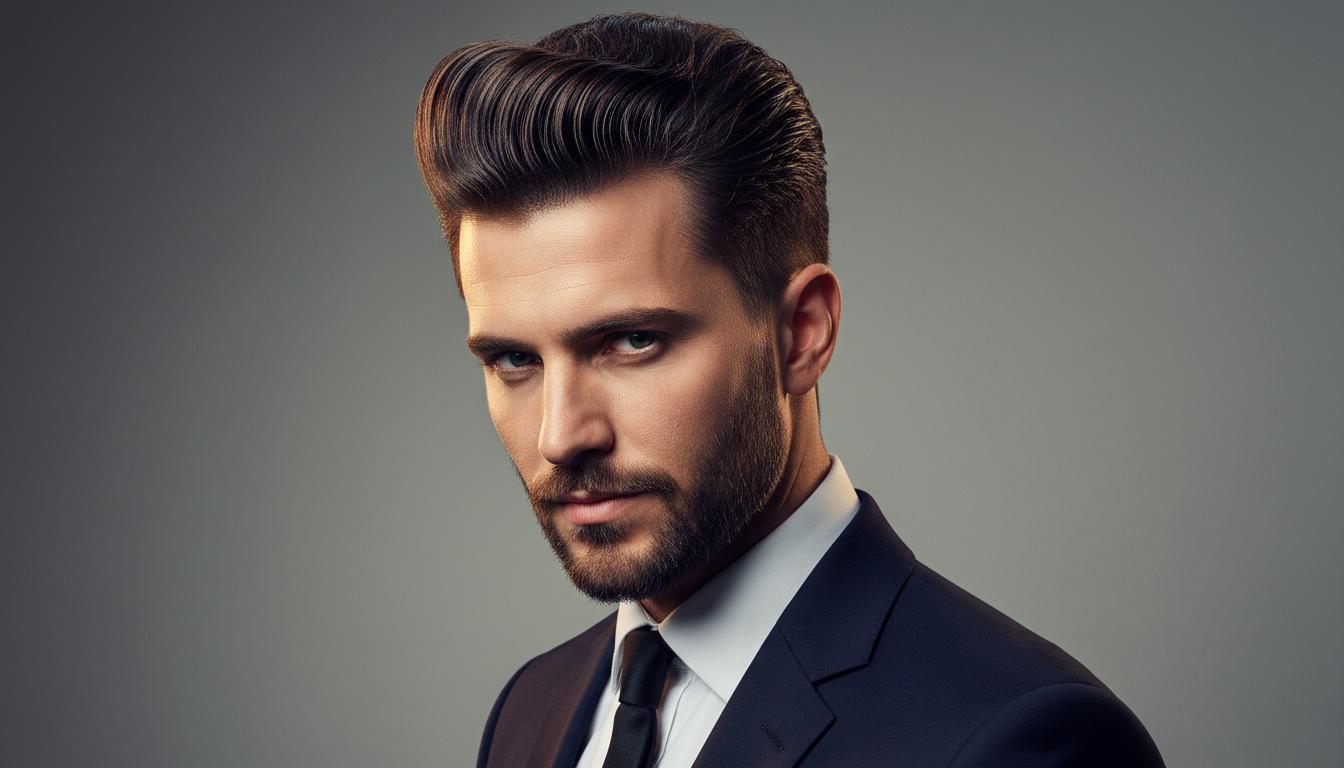
Introduction: The Timeless Appeal of the Pompadour
There are hairstyles that come and go with the seasons, fleeting trends that disappear as quickly as they arrive. And then there are hairstyles that transcend time—cuts so iconic, so versatile, and so universally flattering that they remain relevant across centuries. The Pompadour belongs to this rare, elite category. From the powdered wigs of 18th-century French aristocracy to the rock-and-roll rebellion of the 1950s, from the polished boardrooms of modern executives to the creative studios of contemporary artists, the Pompadour has proven itself to be the ultimate chameleon of men's grooming.
What makes the Pompadour so enduring? The answer lies in its unique combination of elegance and edge, sophistication and rebellion. At its core, the Pompadour is about volume—hair swept upward and backward from the forehead, creating a dramatic silhouette that elongates the face and draws attention to the eyes. This architectural approach to hair styling offers endless possibilities for personalization, from the sleek, sculpted looks of the 1950s to the textured, modern interpretations favored by today's style icons.
The Pompadour's journey through history is a fascinating reflection of changing social attitudes toward masculinity and self-expression. In the 1950s, it represented youthful rebellion—a deliberate rejection of the conservative, short-back-and-sides cuts that dominated the post-war era. Elvis Presley's legendary Pompadour wasn't just a hairstyle; it was a statement of generational change, a visual manifesto for a new kind of masculinity that embraced sensuality and showmanship.
Today, the Pompadour has evolved into something even more versatile. Modern barbers and stylists have reimagined the classic cut with contemporary techniques, creating variations that suit every hair type, face shape, and personal style. Whether you prefer the vintage elegance of a classic Pompadour, the edgy contrast of a fade combination, or the natural texture of a curly adaptation, there's a Pompadour variation that's perfect for you. In this comprehensive guide, we'll explore everything you need to know about this iconic hairstyle—from its fascinating history to the cutting-edge AI technology that's revolutionizing how we choose the perfect cut.
Curious How a Pompadour Would Look on You?
Our AI-powered tool shows you exactly how this iconic style would appear on your unique features—instantly.
The Evolution & History: From French Courts to Rock 'n' Roll
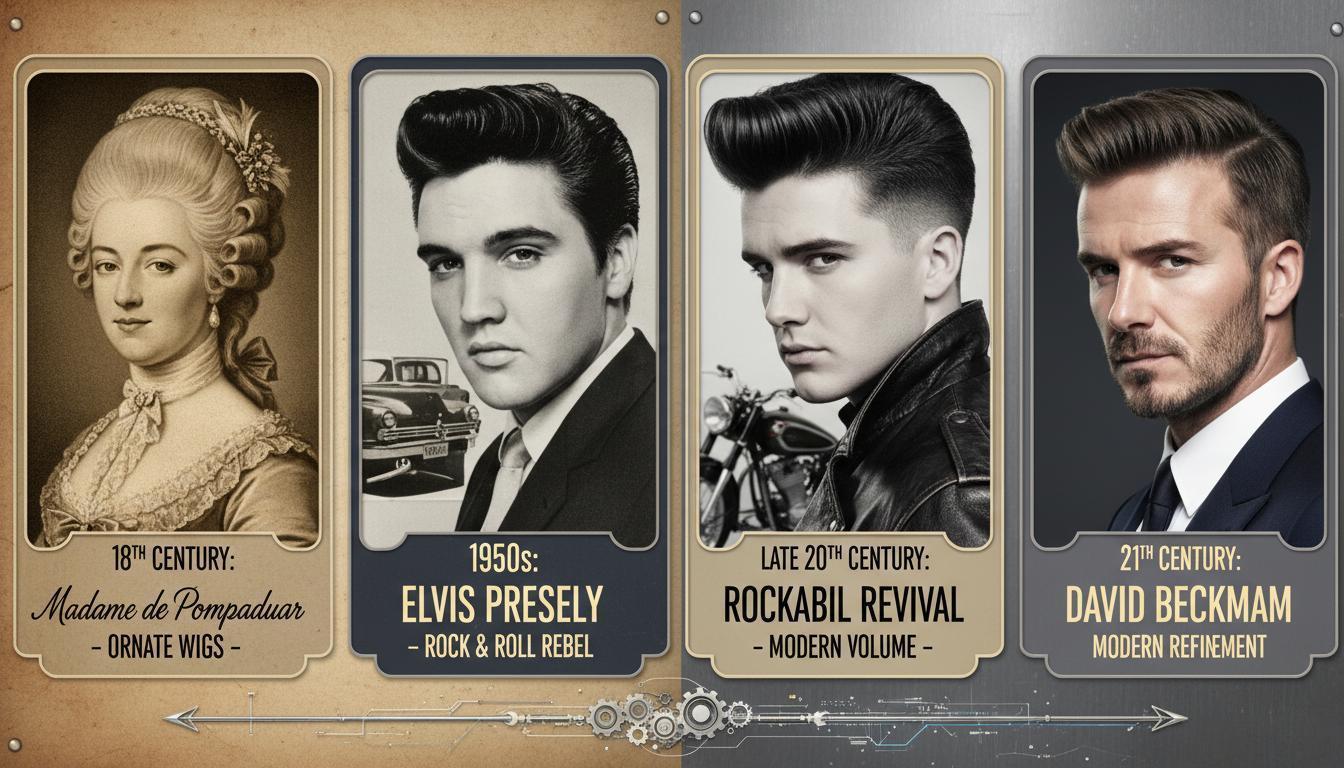
Three centuries of Pompadour evolution—from aristocratic courts to rock stages
The 18th Century Origins: Madame de Pompadour
The Pompadour takes its name from Jeanne Antoinette Poisson, better known as Madame de Pompadour, the official chief mistress of King Louis XV of France from 1745 to 1751. While the hairstyle that bears her name today differs significantly from the elaborate powdered wigs of the French court, the essential principle—volume swept upward and backward from the forehead—remains the same. Madame de Pompadour's influence on fashion was immense; her personal style set trends that rippled through European aristocracy, and her name became synonymous with elegance and sophistication.
The original Pompadour hairstyle of the 18th century was an elaborate construction involving padded frames, powdered hair, and decorative accessories like feathers and jewels. Creating such a style required hours of work from skilled hairdressers and was accessible only to the wealthy elite. The look was designed to make a statement of status and power—the higher and more elaborate the hair, the more important the wearer. This association between the Pompadour and social prestige would persist through the centuries, evolving but never entirely disappearing.
The 1950s Revolution: Elvis Presley and the Birth of Modern Pompadour
The modern Pompadour as we know it today was born in the 1950s, and no name is more closely associated with this era than Elvis Presley. The King of Rock 'n' Roll's legendary hairstyle—high, voluminous, and impossibly sleek—became the defining look of a generation. But Elvis didn't create the Pompadour in a vacuum; he was influenced by the African-American rhythm and blues artists who pioneered the style in the 1940s and early 1950s. Artists like Little Richard and Chuck Berry wore similar styles, drawing on a tradition of Black hair culture that celebrated volume and sculptural form.
Elvis's interpretation of the Pompadour was distinctly his own, combining the volume of the Black artists who inspired him with a polished, almost sculptural finish that photographed beautifully and looked incredible on stage. His hair became as iconic as his music, and millions of young men around the world attempted to replicate his look. The 1950s Pompadour required serious commitment: regular visits to the barber, daily styling with generous amounts of pomade, and careful maintenance to keep the signature height and shape.
The Pompadour in the 1950s wasn't just a hairstyle—it was a declaration of independence, a rejection of the conservative norms that had dominated the post-war era.
— Dr. Michael Cohen, Fashion HistorianThe 1980s and 1990s: The Pompadour's Quiet Period
The Pompadour's popularity waned in the 1960s and 1970s as longer hair became fashionable, and by the 1980s, it had largely retreated into subcultures. The rockabilly revival scene kept the style alive, with bands like Stray Cats and dedicated fans maintaining the tradition of 1950s grooming. Meanwhile, in the mainstream, the Pompadour was largely replaced by the big hair of glam rock, the mullets of the 1980s, and the grunge-inspired looks of the early 1990s. But the style never completely disappeared—it was simply waiting for the right moment to return.
The 2000s Revival: David Beckham and the Modern Pompadour
The Pompadour's return to mainstream fashion can be traced directly to David Beckham. The soccer superstar and style icon began sporting a modernized version of the cut in the early 2000s, combining the classic volume with contemporary techniques like fades and undercuts. Beckham's Pompadour was less about rebellion and more about polished sophistication—it was a hairstyle that worked as well in the boardroom as it did on the red carpet. This versatility proved to be the key to the Pompadour's resurgence.
Today, the Pompadour is more popular than ever, with countless variations suited to every taste and lifestyle. From the classic, vintage-inspired looks favored by rockabilly enthusiasts to the sharp, modern interpretations worn by celebrities and professionals, the Pompadour has proven its remarkable adaptability. The style's enduring appeal lies in its unique combination of history and modernity—it's a cut that connects us to the past while remaining thoroughly contemporary.
Anatomy of a Pompadour: Understanding Volume, Texture & The Quiff
To truly master the Pompadour, you must first understand its fundamental anatomy. At its core, every Pompadour consists of three essential elements: the foundation, the volume, and the finish. The foundation refers to the sides and back of the haircut—these areas are typically cut shorter to create contrast with the longer hair on top. This contrast is what gives the Pompadour its distinctive silhouette and makes the voluminous top section truly stand out.
The volume is the heart of the Pompadour—the longer hair on top that's swept upward and backward to create the style's signature height. The amount of volume can vary dramatically depending on personal preference and hair type. Some prefer a subtle, refined lift that adds just a touch of elegance, while others go for maximum height, creating a dramatic, eye-catching statement. The key is finding the right balance for your face shape, hair type, and lifestyle.
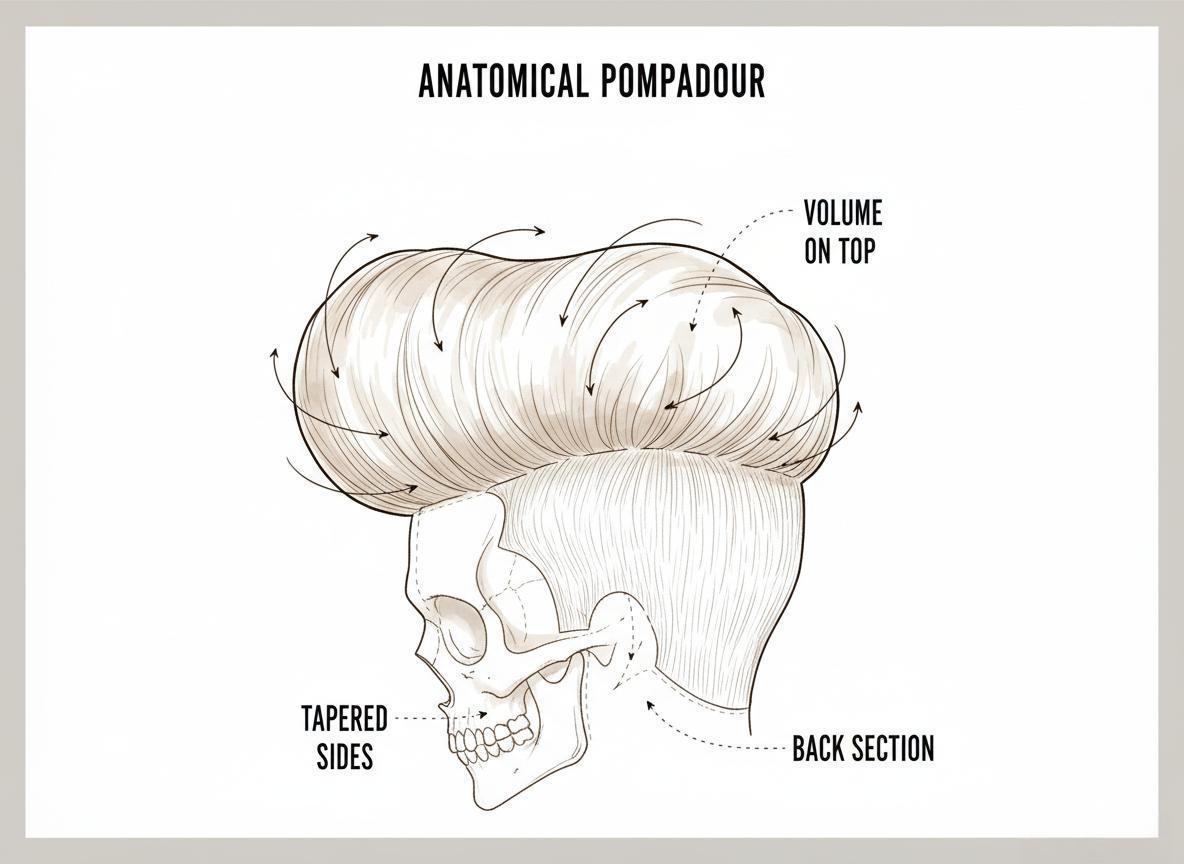
The three essential elements: foundation, volume, and finish
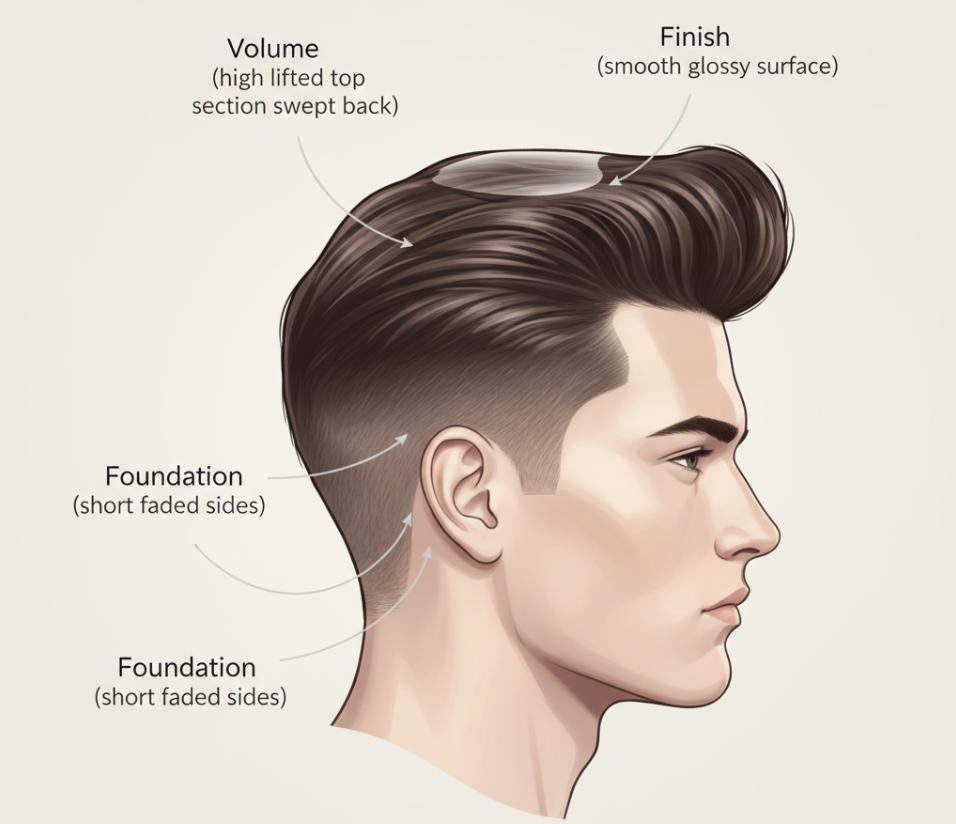
Pompadour vs. Quiff: Understanding the Difference
One of the most common questions in men's grooming is the difference between a Pompadour and a Quiff. While these styles are closely related and often confused, they have distinct characteristics that set them apart. The Pompadour is characterized by its smooth, sculpted appearance—hair is swept upward and backward in a continuous, flowing motion, creating a rounded, voluminous shape. The sides are typically shorter and more integrated with the top, creating a cohesive silhouette.
The Quiff, on the other hand, is generally more textured and less structured. While it also features volume at the front, the Quiff often has a more casual, tousled appearance with less polish and more natural movement. The transition between the sides and top can be more gradual, and the overall effect is often more relaxed and contemporary. Think of the Pompadour as the formal, dressed-up cousin of the more casual Quiff—both share DNA, but they serve different purposes and convey different attitudes.
Pompadour Characteristics
- • Smooth, sculpted finish
- • Continuous sweep backward
- • Rounded, voluminous shape
- • Shorter, integrated sides
- • More formal appearance
Quiff Characteristics
- • Textured, tousled finish
- • More vertical lift at front
- • Less structured shape
- • Gradual side transition
- • More casual appearance
Understanding Hair Texture and Pompadour Success
Your natural hair texture plays a crucial role in determining which Pompadour variation will work best for you. Straight hair tends to create the most classic, sleek Pompadour looks, with smooth lines and predictable styling. However, straight hair can also be the most challenging to maintain volume in, often requiring significant product and heat styling to achieve the desired height and hold.
Wavy hair offers an excellent middle ground—it provides natural volume and texture while still being manageable for styling. Many stylists consider wavy hair to be ideal for Pompadours because it holds shape well without requiring excessive product or heat. The natural wave pattern adds dimension and movement that can make the style look more dynamic and interesting.
Curly and coily hair can absolutely work for Pompadours, though they require different techniques and expectations. Rather than fighting against the natural texture, modern approaches embrace it—creating voluminous, textured Pompadours that celebrate rather than suppress curl patterns. These styles often have more height and visual interest than their straight-haired counterparts, making them truly distinctive and eye-catching.
10+ Modern Pompadour Variations: A Complete Style Guide
The beauty of the Pompadour lies in its incredible versatility. Over the decades, barbers and stylists have developed countless variations, each offering a unique take on the classic formula. Whether you prefer vintage elegance, modern edge, or something in between, there's a Pompadour variation that's perfect for your personal style. Here are the most popular modern interpretations:
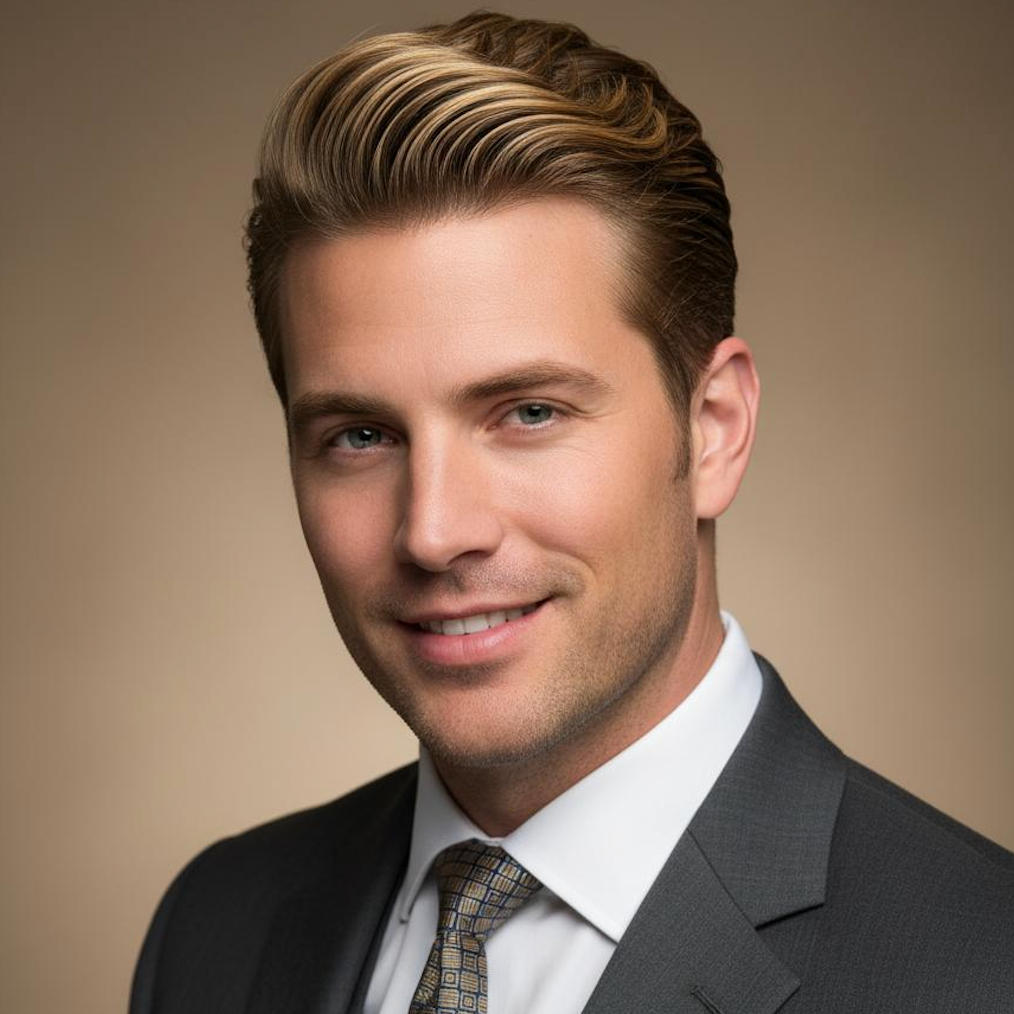
1. The Classic Pompadour
The timeless original—sleek, sculpted, and effortlessly elegant. The Classic Pompadour features longer hair on top (3-5 inches) that's swept upward and backward with smooth precision. The sides are tapered but not dramatically short, creating a refined silhouette that works in any setting.
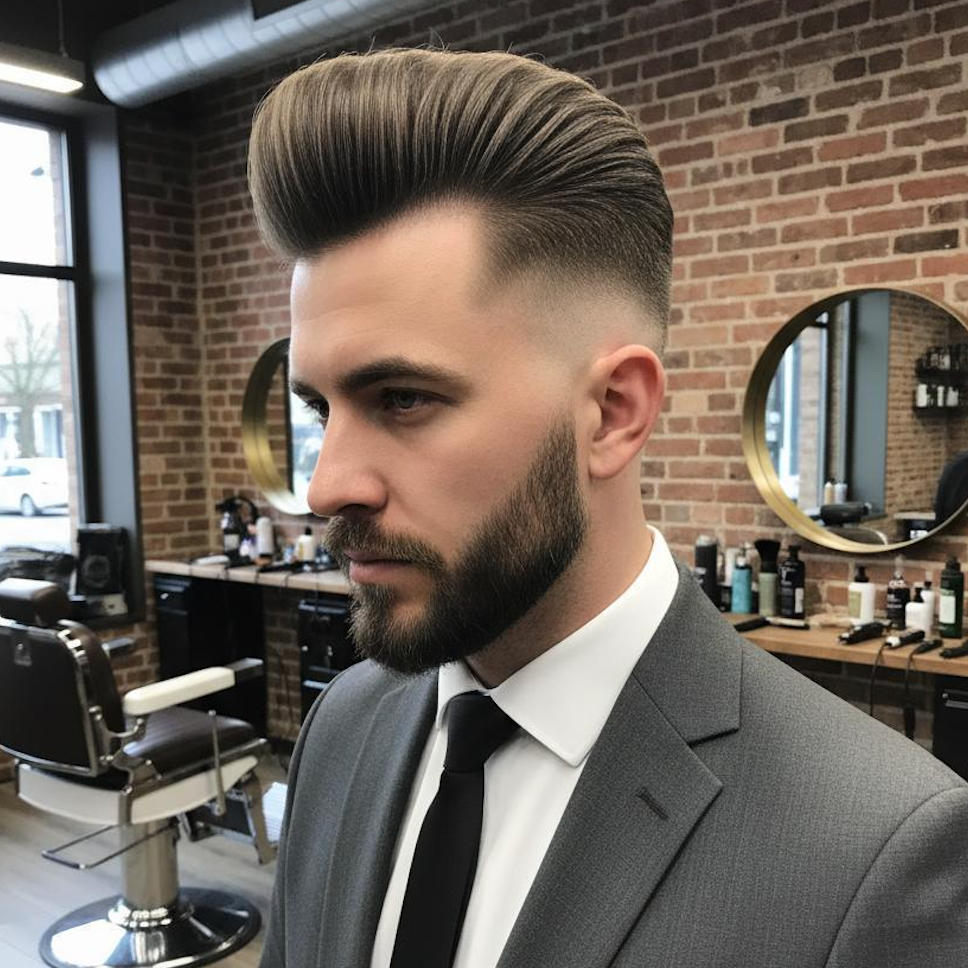
2. The Pompadour Fade
The most popular modern variation, combining classic Pompadour volume with contemporary fade techniques. The sides feature a gradual fade from skin to longer hair, creating dramatic contrast that makes the voluminous top pop. Available in low, mid, and high fade options.
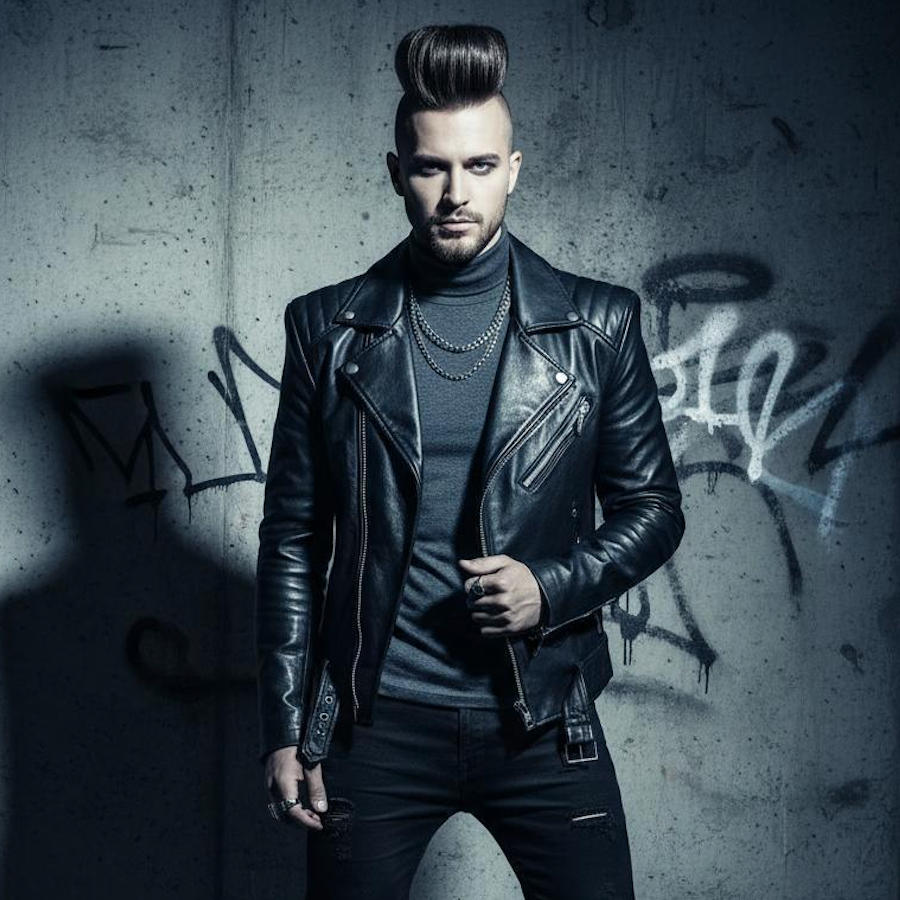
3. The Pompadour Undercut
Maximum contrast for maximum impact. The undercut features dramatically short sides (often buzzed to the skin) with a sharp disconnect from the longer top section. This creates a bold, statement-making look that's become a favorite among fashion-forward men.
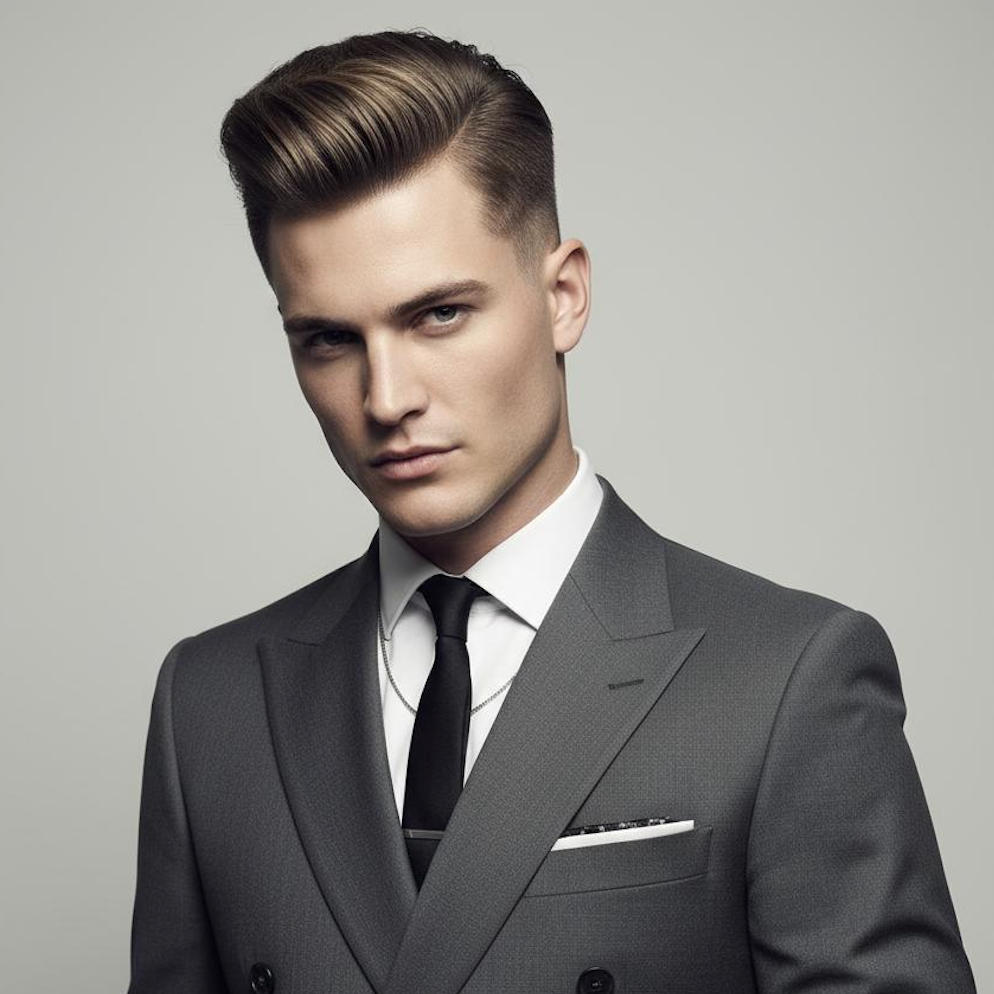
4. The Side Part Pompadour
Adding a defined side part brings extra sophistication to the classic Pompadour. The part creates structure and can help manage the direction of the volume. This variation is particularly flattering for those with asymmetrical features and works beautifully in professional environments.
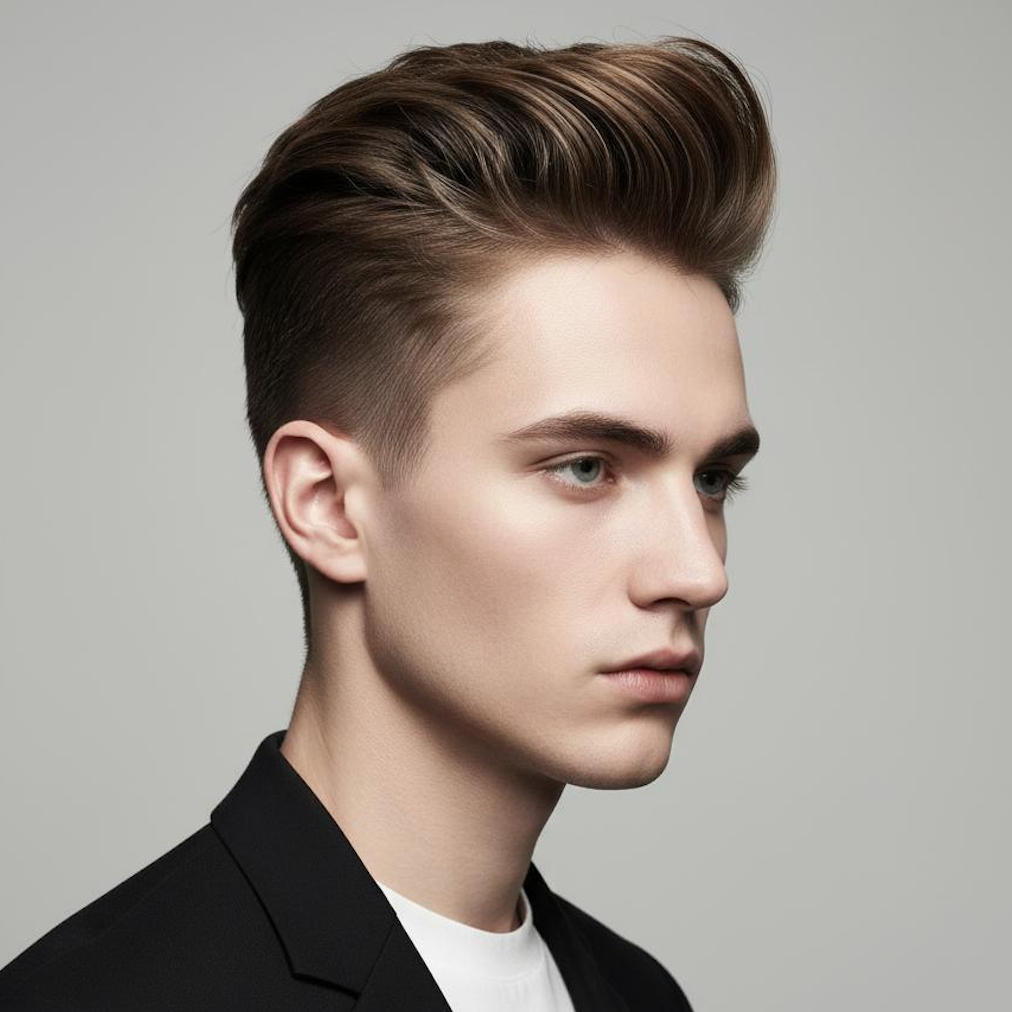
5. The Disconnected Pompadour
The most dramatic variation, featuring a sharp, visible line where the long top section meets the short sides. There's no gradual transition—just a bold, architectural statement. This avant-garde style requires confidence and regular maintenance to keep the disconnect crisp.
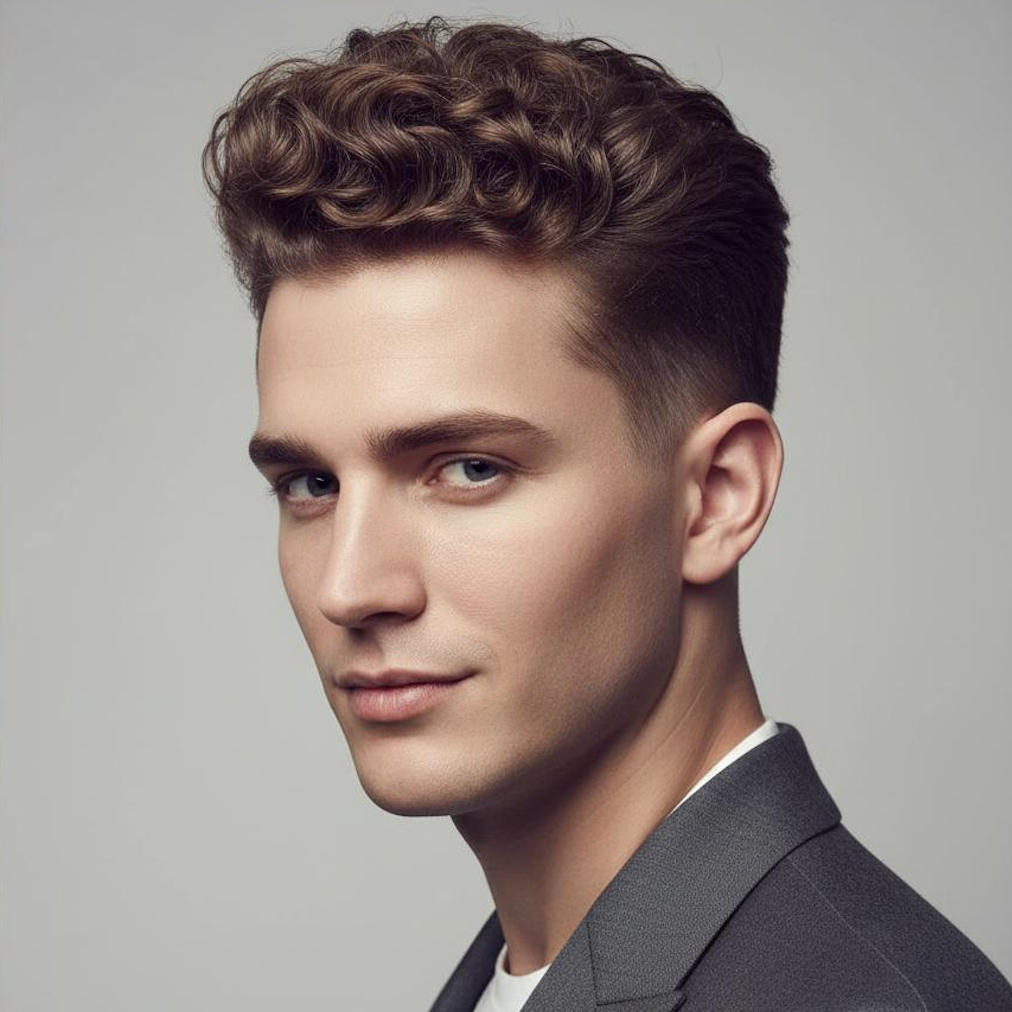
6. The Curly Pompadour
Who says Pompadours are only for straight hair? The Curly Pompadour embraces natural texture, creating voluminous, dynamic styles that straight-haired men can only dream of. The key is working with your curls rather than against them—enhancing definition while maintaining the upward and backward sweep that defines the style.
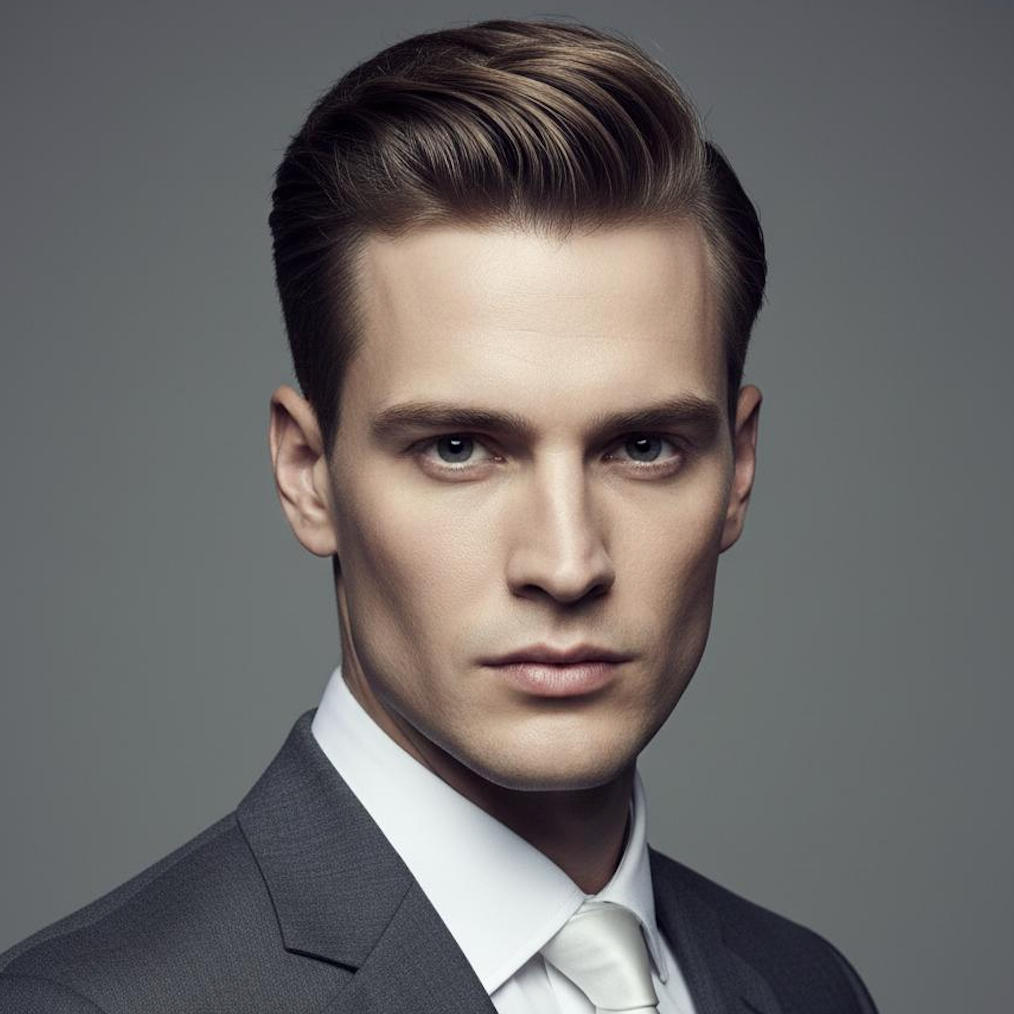
7. The Short Pompadour
For those who love the Pompadour aesthetic but need something more understated, the Short Pompadour offers the perfect compromise. With less dramatic height (2-3 inches on top) and subtler styling, this variation maintains the essence of the Pompadour while being appropriate for even the most conservative environments.
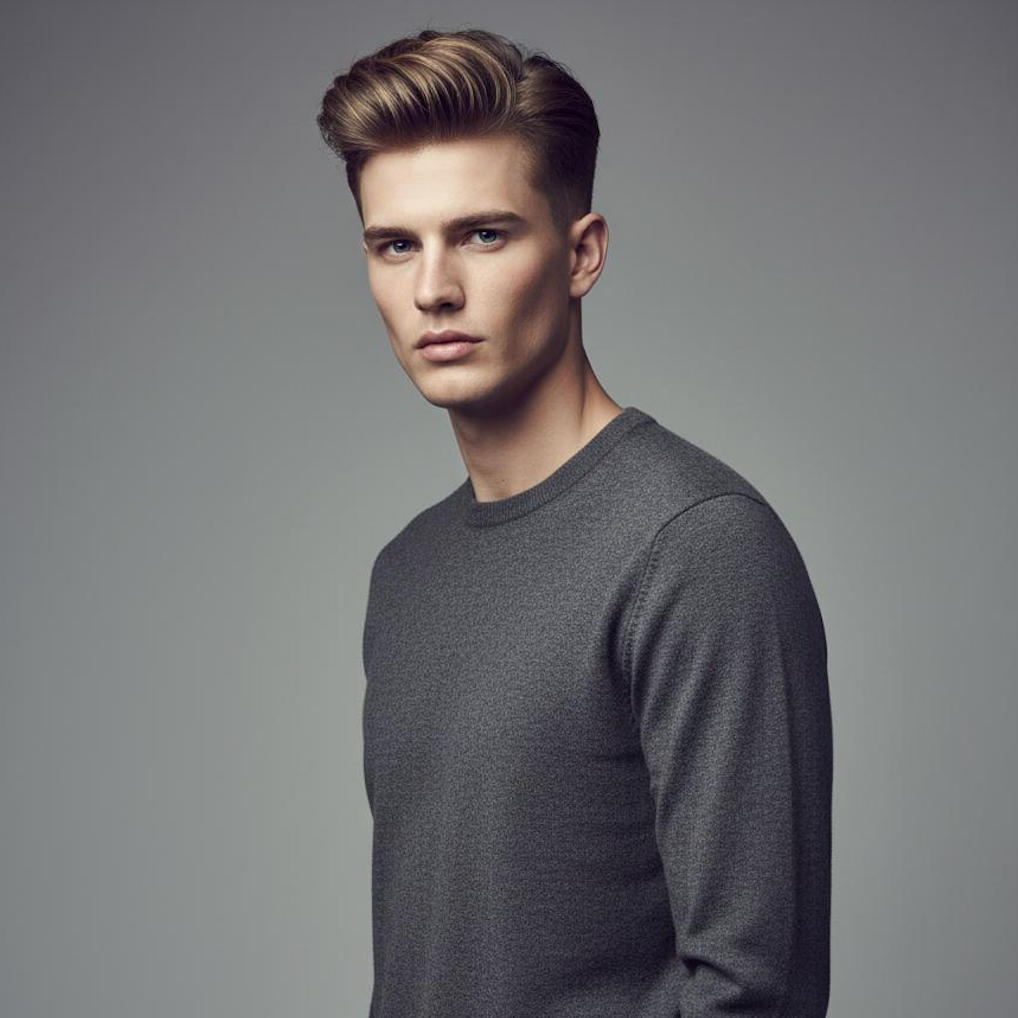
8. The Textured Pompadour
Moving away from the ultra-sleek finish of traditional Pompadours, the Textured variation embraces natural movement and a matte finish. This contemporary interpretation uses texturizing products and techniques to create a more relaxed, lived-in appearance that's perfect for casual settings.
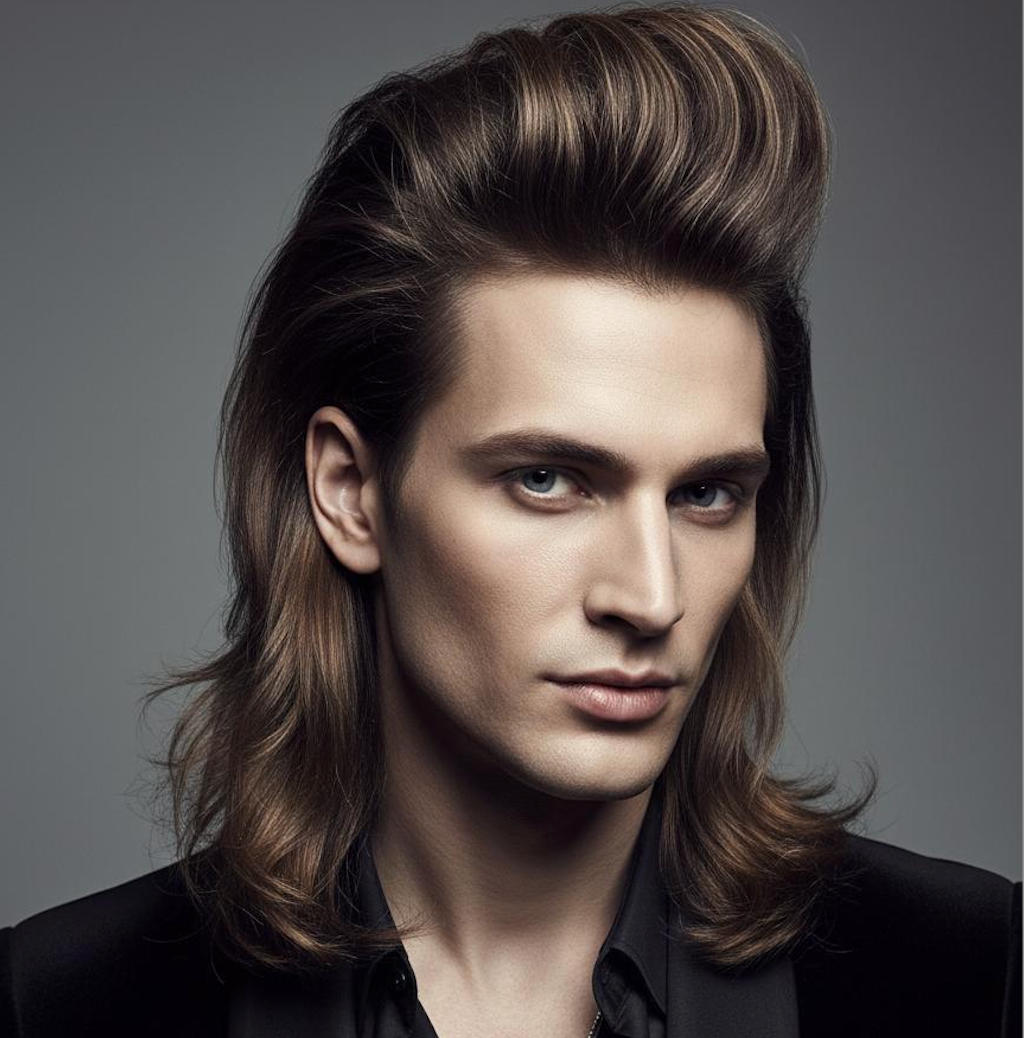
9. The Long Pompadour
For those who want to make a statement, the Long Pompadour features 5+ inches of hair on top, creating dramatic height and presence. This variation requires significant styling time and product but delivers unmatched visual impact. It's the choice of rock stars, actors, and anyone who wants their hair to be a conversation starter.
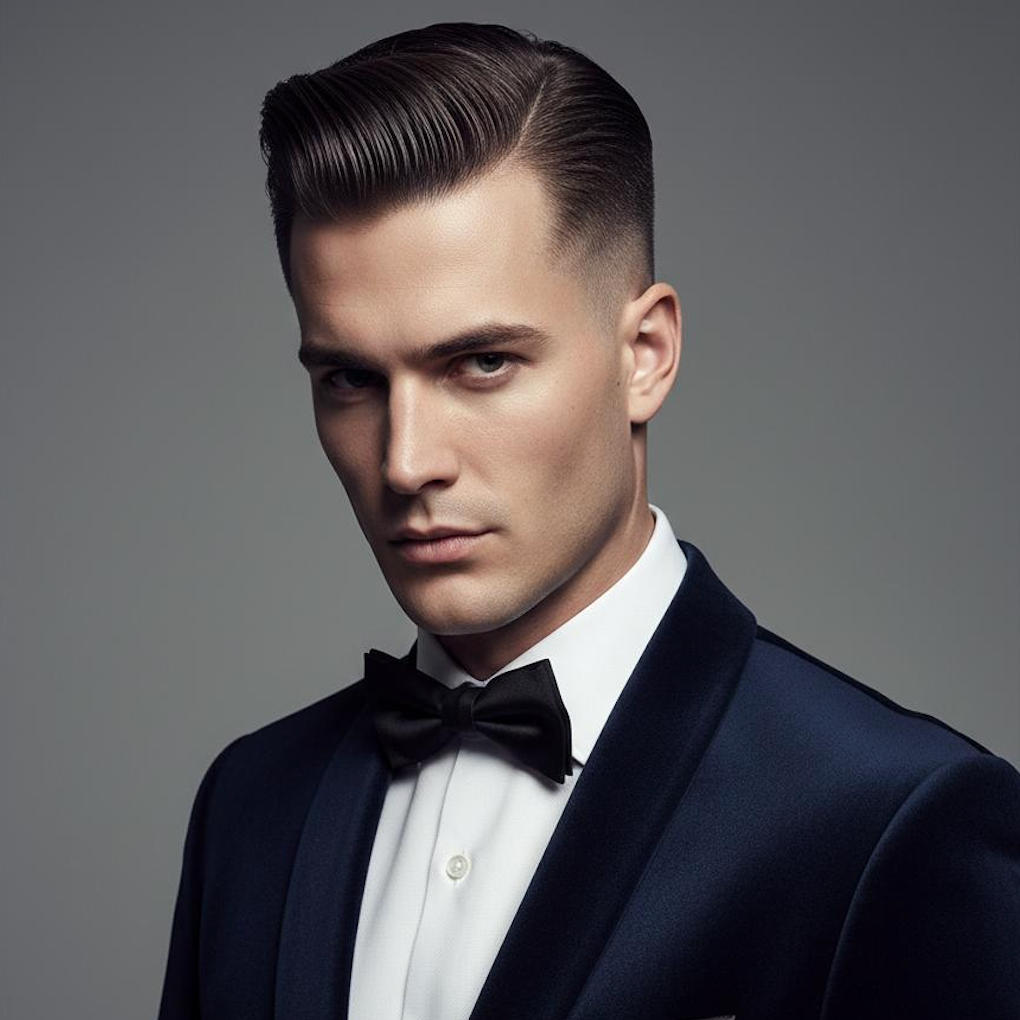
10. The Slicked-Back Pompadour
The most formal variation, featuring a high-shine, wet-look finish that evokes vintage Hollywood glamour. This style requires generous amounts of high-hold pomade and careful combing to achieve that glass-smooth appearance. It's the perfect choice for black-tie events, weddings, and any occasion where you want to channel old-school sophistication.
Can't Decide Which Pompadour is Right for You?
Our AI analyzes your face shape and shows you exactly how each Pompadour variation would look on you—before you commit to the cut.
Face Shape Science: Finding Your Perfect Pompadour Match
Here's the truth that most style guides won't tell you: the difference between a good Pompadour and a great Pompadour isn't the cut itself—it's how well that cut complements your unique facial structure. A Pompadour that looks incredible on your favorite celebrity might fall flat on you, not because of any deficiency in the style, but because your face shapes are fundamentally different.
Understanding your face shape is the key to unlocking the full potential of the Pompadour. The right variation can balance your features, create visual harmony, and enhance your natural strengths. The wrong variation can emphasize features you'd rather downplay and create an overall look that feels "off" even if you can't quite put your finger on why.
🎯 Scan Your Face Shape in Seconds
Our advanced AI analyzes 68 facial landmarks to determine your exact face shape and recommend the perfect Pompadour variation for your unique features.
- Instant face shape analysis
- Personalized Pompadour recommendations
- See results before you cut
Free • Takes 10 seconds
The Four Main Face Shapes & Your Perfect Pompadour
Round Face Shape
Characteristics: Face width and length are nearly equal, with soft, curved jawlines and full cheeks. The goal is to create the illusion of length and add angular definition.
Best Pompadour: The High Pompadour with Volume is your best friend. The vertical lift creates the illusion of a longer face, while the structured sides add much-needed angles. Avoid styles that are too flat or wide, as they'll emphasize roundness.
Pro Tip: Request a higher fade or undercut to create strong vertical lines. The contrast between short sides and tall top will elongate your face beautifully.
Square Face Shape
Characteristics: Strong, angular jawline with forehead and jaw roughly equal in width. Your face has a chiseled, masculine structure that many men envy.
Best Pompadour: The Textured Pompadour with Soft Volume works beautifully. Your strong jawline can handle significant height, but adding texture softens the overall look and prevents appearing too severe. A side part can also add asymmetry that flatters your features.
Pro Tip: Avoid overly sharp, sculpted Pompadours that can make your face look boxy. Embrace texture and natural movement for the most flattering result.
Oval Face Shape
Characteristics: Forehead is slightly wider than the chin, with a gently rounded jawline. Considered the "ideal" face shape because of its balanced proportions.
Best Pompadour: Congratulations—you can wear virtually any Pompadour variation! Your balanced proportions mean you have the freedom to experiment. Classic, fade, undercut, textured—try them all and discover what expresses your personal style best.
Pro Tip: While you have options, avoid styles that add too much height, as they can make your face appear longer than it is. Medium-height Pompadours are your sweet spot.
Heart Face Shape
Characteristics: Wider forehead that tapers to a narrower chin, often with a pointed or defined chin area. Your face has natural drama and character.
Best Pompadour: The Medium-Height Pompadour with Width helps balance your proportions. You want enough volume to add width to the lower face without overwhelming your narrower chin. A textured finish can also add visual weight where you need it.
Pro Tip: Avoid extremely high Pompadours that draw attention upward and emphasize your forehead. Aim for volume that's distributed more evenly across the top.
Diamond Face Shape
Characteristics: Narrow forehead and chin with prominent cheekbones as the widest point. A rare and striking face shape with natural bone structure.
Best Pompadour: The Classic Pompadour with Soft Edges complements your dramatic bone structure without competing with it. Avoid styles that are too severe or angular, as they can make your face appear harsh.
Pro Tip: Consider a side-swept Pompadour that adds width at the forehead, helping to balance your prominent cheekbones.
Not Sure Which Face Shape You Have?
Our AI-powered face shape analyzer uses advanced computer vision to identify your exact face shape in seconds—and instantly shows you which Pompadour variations will look best on you.
Find My Perfect Pompadour →Step-by-Step Styling Guide: Mastering the Perfect Pompadour
A great Pompadour is 30% the cut and 70% the styling. Even the most perfectly executed haircut will fall flat without proper styling technique. This comprehensive guide will walk you through everything you need to know to achieve salon-quality results at home.
Step 1: Pre-Styling Preparation
The foundation of a great Pompadour starts in the shower. Begin with clean, towel-dried hair—product buildup is the enemy of volume. Use a volumizing shampoo and conditioner to give your hair the best possible starting point. If you have fine or thin hair, consider using a thickening shampoo to add body.
After washing, gently towel-dry your hair until it's damp but not soaking wet. Apply a pre-styling product: sea salt spray for texture, volumizing mousse for lift, or a heat protectant if you'll be using hot tools. Work the product evenly through your hair, focusing on the roots where you need the most lift.
Step 2: The Blow-Dry Technique
The blow-dry is where the magic happens. This step creates the foundation of volume that will define your Pompadour all day.
- 1 Section your hair: Use clips to divide your hair into top and sides. This allows you to focus on building volume in the right areas.
- 2 Use a round brush: A medium-sized round brush (2-3 inches in diameter) is essential. The brush creates tension that smooths the hair while the heat sets the shape.
- 3 Dry against the grain: Start at the roots and dry upward and backward, pulling the hair in the direction of your final style. This creates lift at the base.
- 4 Cool shot to set: Finish each section with a blast of cool air to lock in the shape and add shine.
Step 3: Product Selection & Application
Choosing the right product is crucial for achieving your desired finish. Here's the breakdown:
Pomade
Best for: Classic, high-shine looks
Water-based pomades offer strong hold with a glossy finish and wash out easily. Oil-based pomades provide the ultimate vintage shine but require more effort to remove.
Wax
Best for: Textured, matte finishes
Hair wax provides medium to strong hold with a natural, matte finish. Perfect for modern, textured Pompadours that need movement and separation.
Clay
Best for: Volume and thickness
Hair clay adds incredible volume and thickness, making it ideal for fine or thin hair. Provides a matte finish with reworkable hold.
Cream
Best for: Natural, light hold
Styling cream offers the lightest hold with a natural finish. Great for shorter Pompadours or for those who prefer a more relaxed look.
Step 4: The Styling Process
With your hair prepped and product selected, it's time to create the final look:
- 1 Start small: Scoop a dime-sized amount of product and warm it between your palms until it's evenly distributed.
- 2 Apply from back to front: Work the product through your hair starting at the crown and moving forward. This ensures even distribution.
- 3 Comb into place: Use a fine-tooth comb to sweep your hair upward and backward, creating the signature Pompadour shape.
- 4 Refine and perfect: Use your fingers to add texture, adjust height, and create any final details. A second, smaller application of product can help tame flyaways.
See Your Perfect Pompadour Before You Style
Upload your photo and our AI will show you exactly how a perfectly styled Pompadour would look on you—no blow-dryer required.
Maintenance & Barbershop Talk: Keeping Your Pompadour Perfect
A great Pompadour isn't a one-and-done deal—it requires ongoing maintenance to stay sharp. Understanding how to communicate with your barber and knowing when to schedule trims will keep your style looking its best between visits.
How to Talk to Your Barber
Communication is everything. Here's exactly what to tell your barber to get the Pompadour you want:
The Magic Words
"I want a Pompadour with [fade/undercut/taper] on the sides."
"Leave [3-5 inches] on top, swept up and back."
"I want [high/mid/low] contrast between the top and sides."
"Can you texturize the top to make styling easier?"
Trim Schedule: How Often Should You Visit?
Fade/Undercut
2-3 weeks
The sharp contrast requires frequent maintenance to stay crisp.
Classic/Taper
3-4 weeks
More forgiving, but regular trims keep the shape defined.
Textured/Long
4-6 weeks
Longer styles can go longer between visits.
Daily Maintenance Tips
- Sleep on a silk pillowcase to reduce friction and maintain your style overnight.
- Use dry shampoo between washes to absorb oil and add texture.
- Carry a travel-size product for midday touch-ups, especially on humid days.
- Keep a comb handy for quick restyles throughout the day.
Celebrity Influence: Modern Icons Sporting the Pompadour
The Pompadour's enduring popularity owes much to the celebrities who have made it their signature look. From musicians to actors to athletes, these modern icons have kept the style relevant and aspirational for new generations.
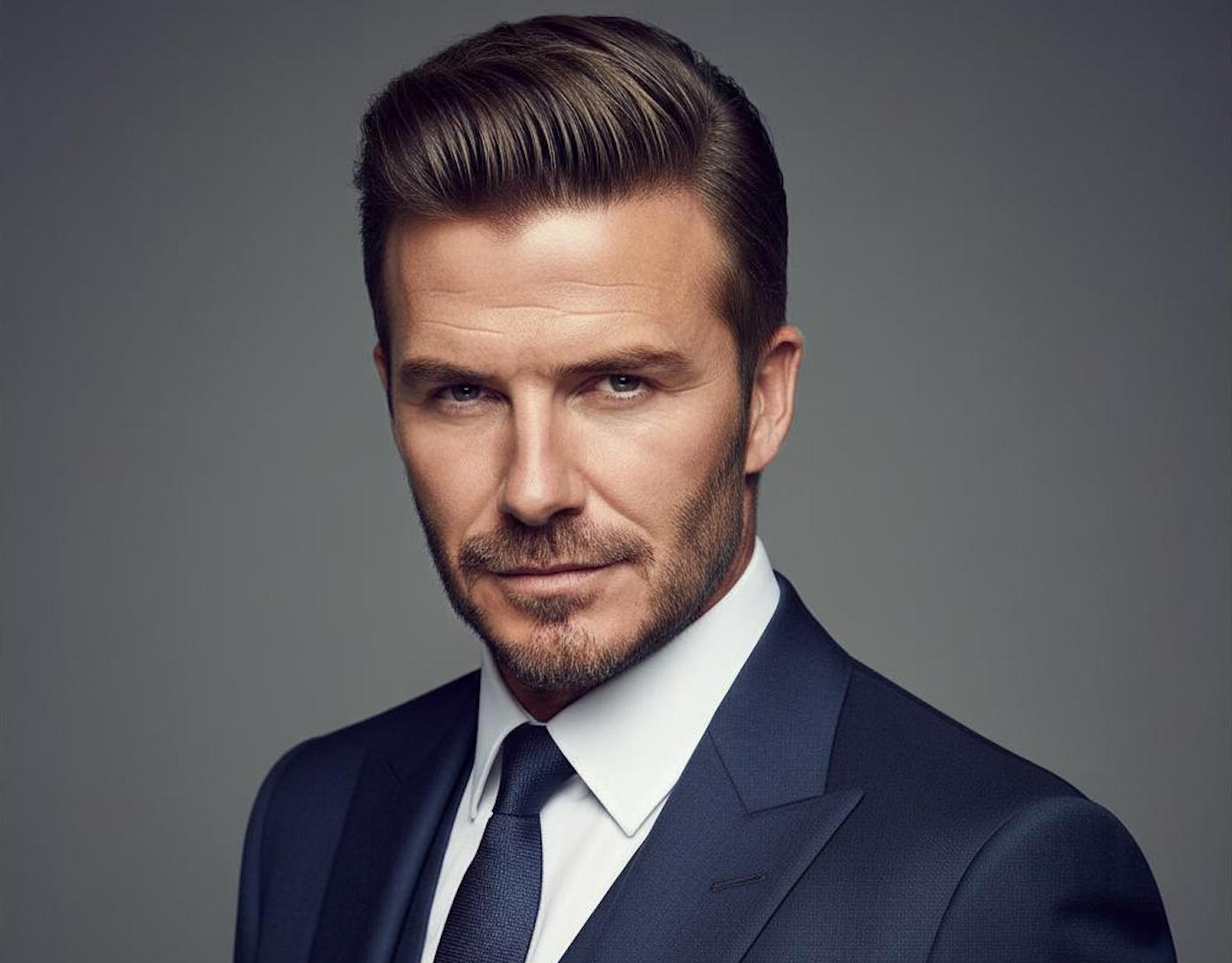
David Beckham
The soccer legend's Pompadour revival in the 2000s brought the style back to mainstream fashion. His variations range from classic to textured, always impeccably styled.
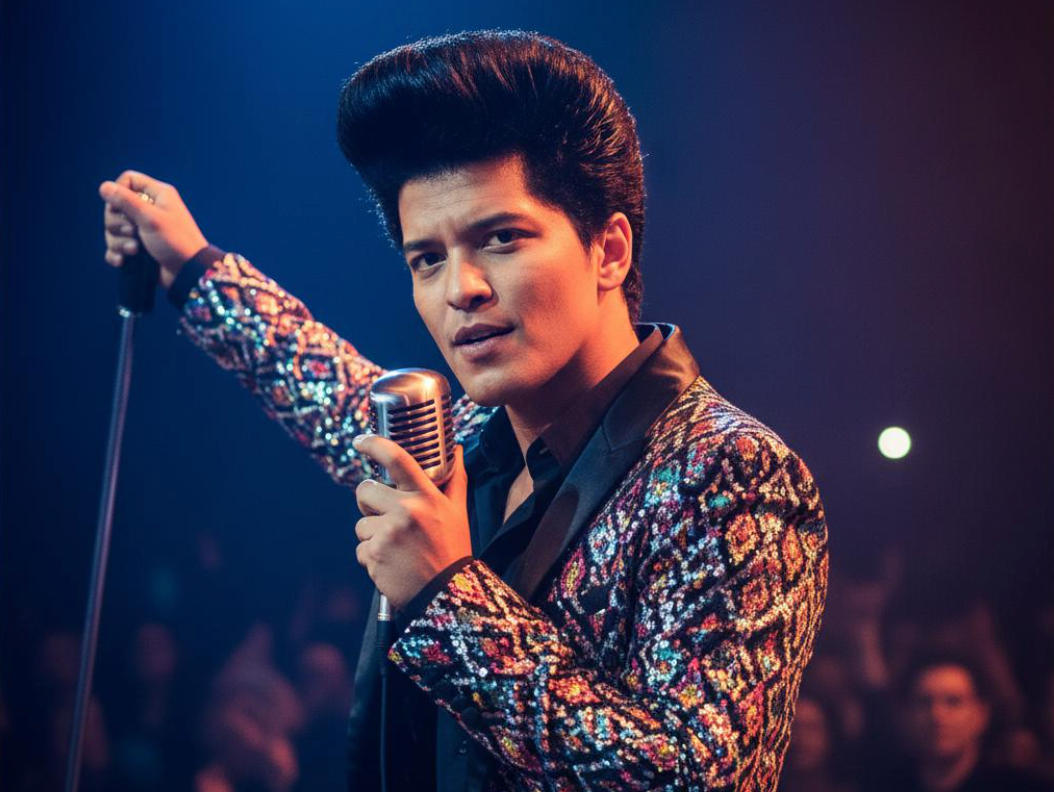
Bruno Mars
The singer's vintage-inspired Pompadour pays homage to the 1950s originals while adding his own modern twist. His high-shine finish is Pompadour perfection.
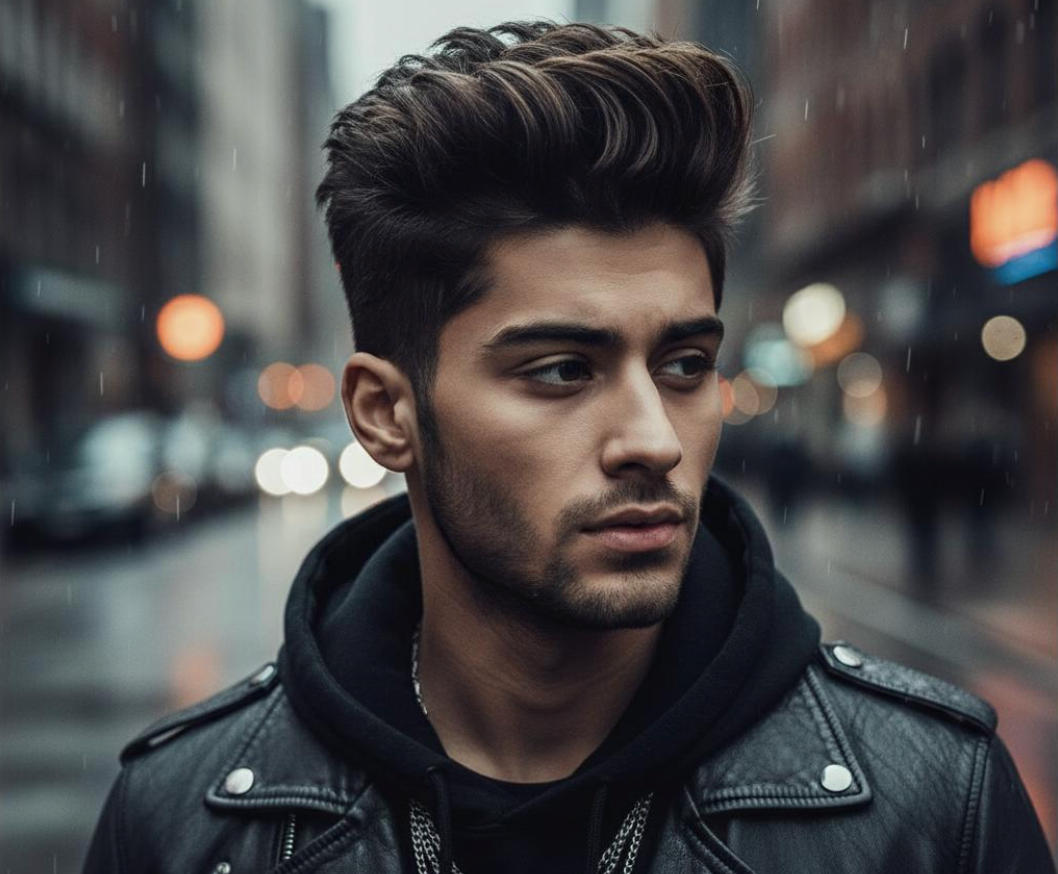
Zayn Malik
The former One Direction member has experimented with countless Pompadour variations, from sleek and sculpted to messy and textured.
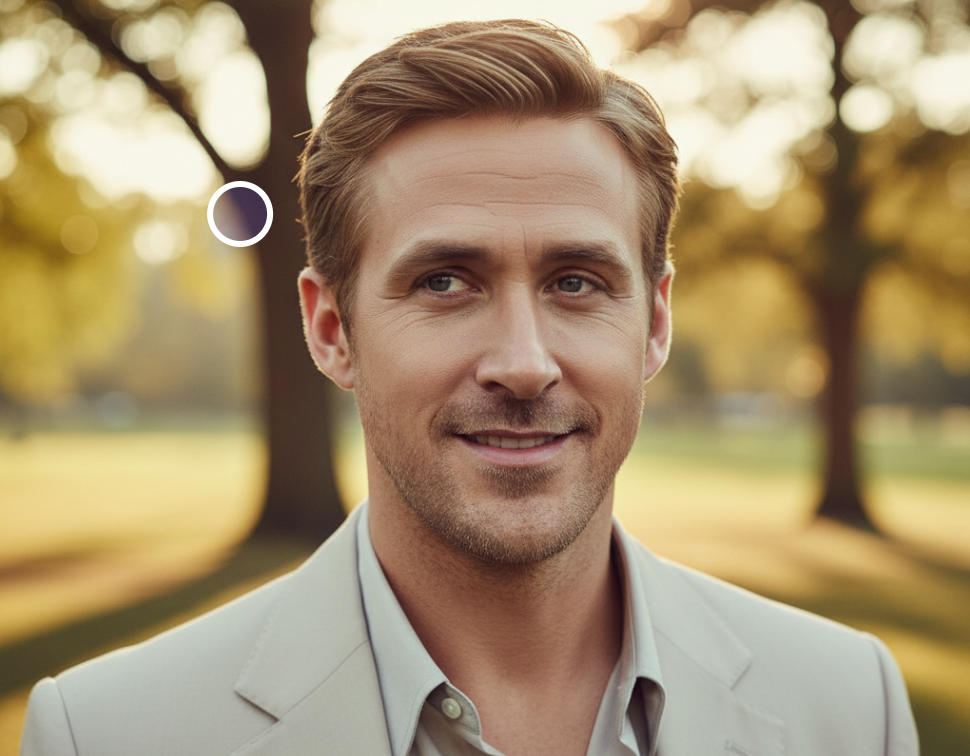
Ryan Gosling
Hollywood's leading man favors a refined, understated Pompadour that works perfectly for red carpets and everyday life alike.
These celebrities demonstrate the Pompadour's incredible versatility. Each has made the style their own, adapting it to their personal brand and lifestyle. Whether you're drawn to Beckham's polished sophistication, Mars's vintage flair, Malik's edgy experimentation, or Gosling's understated elegance, there's a celebrity-inspired Pompadour variation that's perfect for you.
The Future of Hairstyling: How AI is Revolutionizing How We Choose Cuts
For decades, choosing a new hairstyle has been a leap of faith. You browse magazines, save Instagram photos, and try to imagine how a celebrity's cut would translate to your own head. Then you sit in the barber's chair, describe what you want as best you can, and hope for the best. Sometimes it works out. Sometimes... well, we've all had those cuts that looked nothing like the reference photo.
Enter artificial intelligence. Today's AI-powered hairstyle tools are transforming this entire process, making it possible to see exactly how any style—including every Pompadour variation we've discussed—would look on you before a single strand is cut.
How AI Hair Studio Works
Upload Your Photo
Take a selfie and upload it to our secure platform. Our AI analyzes your facial features, hair texture, and current style.
AI Analysis
Our advanced algorithms identify your face shape, measure proportions, and determine which styles will complement your features.
See Your Results
View photorealistic previews of how each Pompadour variation would look on you—before committing to the cut.
This technology represents a fundamental shift in how we approach personal style. No more guesswork. No more disappointing haircuts. No more wondering "what if." With AI-powered virtual try-on, you can explore every Pompadour variation we've discussed in this guide—from the Classic to the Fade to the Textured—and see exactly how each one would look on your unique features.
The future of hairstyling is here, and it's personalized, precise, and powered by artificial intelligence. Whether you're a Pompadour veteran looking to try a new variation or someone who's always been curious about the style but never took the plunge, AI technology gives you the confidence to make informed decisions about your look.
Ready to Find Your Perfect Pompadour?
Join over 500,000 men who have discovered their ideal hairstyle with AI Hair Studio. Upload your photo and see how every Pompadour variation would look on you—instantly, accurately, and completely free.
Try AI Hairstyle Now →Free to use • No credit card required • Results in 10 seconds
Conclusion: The Pompadour's Enduring Legacy
From Madame de Pompadour's court to Elvis Presley's stage, from David Beckham's red carpets to your local barbershop, the Pompadour has proven itself to be far more than a passing trend. It's a hairstyle that has adapted, evolved, and remained relevant across three centuries of changing fashion, social norms, and cultural attitudes.
What makes the Pompadour special is its unique combination of history and versatility. It's a style that connects us to the past—from the powdered wigs of French aristocracy to the rock-and-roll rebellion of the 1950s—while remaining thoroughly modern and adaptable. Whether you prefer the sleek elegance of a classic Pompadour, the edgy contrast of a fade combination, or the natural texture of a curly adaptation, there's a variation that's perfect for your personal style.
The key to Pompadour success lies in understanding your unique features and choosing a variation that complements them. Your face shape, hair texture, and lifestyle all play crucial roles in determining which Pompadour style will look best on you. And now, thanks to AI technology, you can explore all your options with unprecedented precision and confidence.
So whether you're a Pompadour veteran looking to refine your style or someone who's always been curious about this iconic cut, the time has never been better to embrace the volume, the history, and the timeless appeal of the Pompadour. Your perfect style is waiting—and with the right knowledge and tools, it's closer than you think.